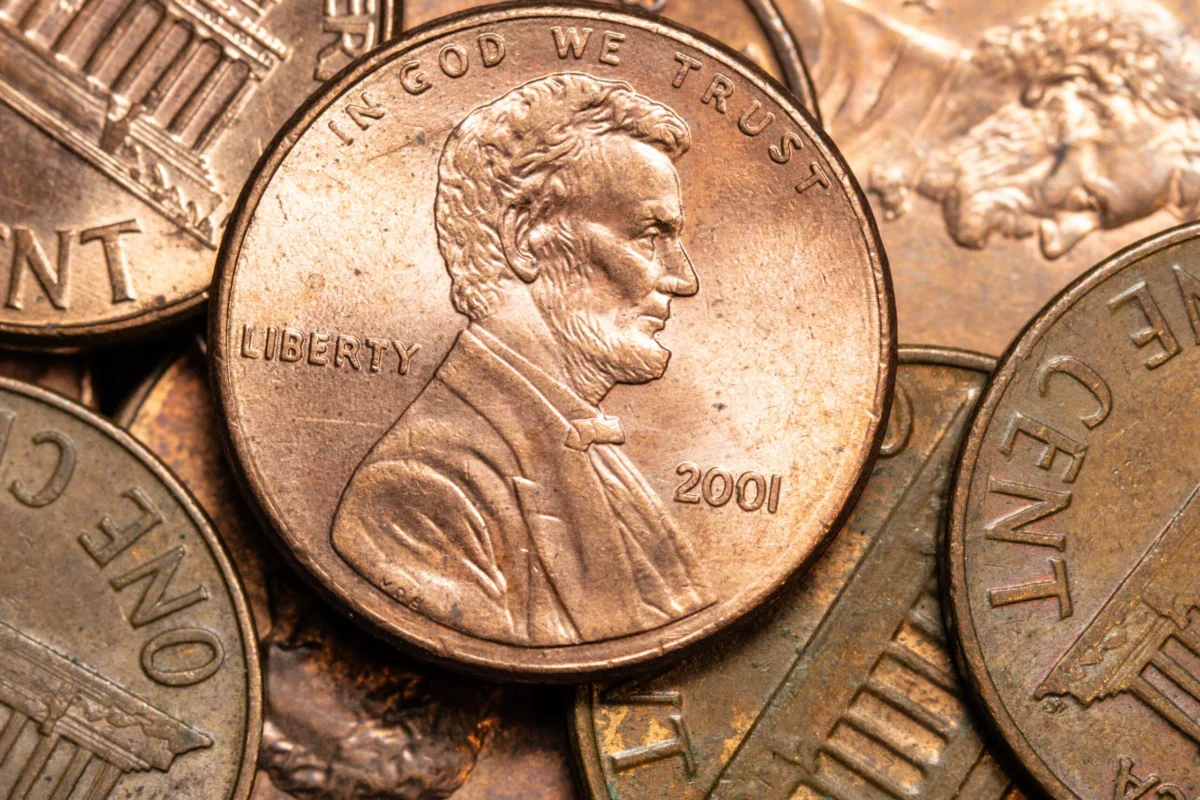
The enactment of H.R. 10167 marks the most significant change to the American coinage system in over a century, concluding years of legislative debate regarding the economic viability and practical utility of the penny. The bipartisan bill, championed by Representatives Lisa McClain (R-Mich.) and Robert Garcia (D-Calif.), mandates that the Treasury Department cease the minting of the one-cent piece while simultaneously providing a standardized mechanism for retailers to round cash payments to the nearest five-cent increment.
Legislative Genesis and Congressional Path
The journey toward the abolition of the penny was neither sudden nor uncontroversial. For decades, economists and budget analysts have argued that the cost of producing a penny far exceeds its face value. Under the provisions of the Common Cents Act, the Treasury Department is now required to halt production, effectively retiring a symbol that has been a fixture of American commerce since the late 18th century.
The bill navigated both chambers of Congress with significant bipartisan support, reflecting a rare alignment between fiscal conservatives concerned with government waste and progressive lawmakers focused on modernization and environmental efficiency. The House of Representatives passed the measure with a comfortable majority, followed by a successful vote in the Senate, signaling broad consensus on the need to update the nation’s circulating currency. The requirement that the Treasury Department provide Congress with 60 days of advance notice before discontinuing any circulating coin was a crucial compromise, ensuring legislative oversight throughout the transition period.
The Economics of the One-Cent Coin
The primary driver behind the passage of H.R. 10167 is the persistent "negative seigniorage" associated with the penny. For fiscal years leading up to the act’s passage, the United States Mint consistently reported that the cost to produce and distribute a single penny was significantly higher than one cent. Factors contributing to this deficit include the rising costs of zinc, copper, and the labor-intensive manufacturing processes required at the Philadelphia and Denver minting facilities.
Data from the Federal Reserve and the Treasury Department indicated that the penny had effectively become a "lost" coin. With inflation eroding the purchasing power of the cent over decades, the coin’s utility in daily transactions diminished, leading to a massive accumulation of pennies in household jars, piggy banks, and automated sorting machines—a phenomenon known in economic circles as "hoarding" due to the coin’s lack of circulation velocity.
By removing the penny from production, the government anticipates a multi-million dollar reduction in annual manufacturing and logistics costs. Proponents of the bill have argued that these funds can be reallocated toward more efficient fiscal operations within the Department of the Treasury.
Implementation and Cash Rounding Protocols
A critical component of the Common Cents Act is the formalization of "cash rounding." To prevent logistical confusion during the transition, the law establishes a clear set of guidelines for businesses. When a transaction is completed using physical cash, the final total is to be rounded to the nearest five-cent increment.
Specifically, the act stipulates:
- Totals ending in 1 or 2 cents are rounded down to the nearest 0.
- Totals ending in 3 or 4 cents are rounded up to the nearest 5.
- Totals ending in 6 or 7 cents are rounded down to the nearest 5.
- Totals ending in 8 or 9 cents are rounded up to the nearest 10.
Critically, the law explicitly clarifies that these rounding rules apply exclusively to cash transactions. Payments made via credit card, debit card, digital wallets, bank checks, or electronic funds transfers remain subject to exact-cent accounting. This distinction was designed to protect the integrity of financial systems, interest calculations, and tax reporting, which rely on precise decimal accounting.
Institutional Responses and Stakeholder Perspectives
The American Bankers Association (ABA) was among the first industry groups to voice support for the legislation. In an official statement released via the social media platform X, the association praised the bill for providing the necessary legal clarity to manage the transition smoothly.
"This bipartisan legislation provides clarity on cash rounding, reduces unnecessary costs, and helps ensure a smooth transition away from the penny," the ABA stated. Financial institutions have long advocated for the removal of the penny, noting that the costs of processing, transporting, and counting low-denomination coins represent a significant operational burden for commercial banks.
Retailers, represented by various trade associations, have also expressed cautious optimism. While the implementation of new point-of-sale software to accommodate rounding will require a one-time adjustment, many retailers suggest that the long-term benefits—including faster checkout lines and reduced handling of bulky, low-value currency—will yield operational efficiencies.
Historical Context and Precedent
The United States is not the first nation to retire a low-denomination coin. Similar moves have been successfully implemented in countries including Canada, Australia, and New Zealand. In 2013, Canada ceased the distribution of its penny, citing similar concerns regarding production costs and the diminished purchasing power of the coin. Studies following the Canadian transition found that the public adapted to the rounding system quickly and that inflationary impacts were negligible, as the rounding occurred on the total bill rather than individual items.
Historically, the U.S. penny has undergone numerous iterations, from the large copper "half-cent" to the current zinc-coated steel composition. Throughout the 20th century, there were several legislative attempts to eliminate the coin, though each failed to gain the necessary traction. The Common Cents Act succeeds where others failed by coupling the cessation of production with a clear, standardized rounding policy, thereby addressing the "how" of the transition rather than merely the "if."
Broader Implications and Long-Term Impact
The retirement of the penny is expected to have a cascading effect on several sectors. From a public utility standpoint, the change simplifies the physical currency landscape, leaving the nickel as the base unit for cash transactions.
Environmental Impact: The reduction in mining, smelting, and the transportation of coins is expected to lower the carbon footprint associated with the Mint’s supply chain. The mining of zinc, in particular, is an energy-intensive process that will see a localized reduction in demand.
Logistical Shifts: The armored car industry, which manages the movement of cash between the Federal Reserve and commercial banks, will see a decrease in the volume and weight of coins transported. This adjustment is expected to lower transportation costs and increase security efficiency within the cash cycle.
Technological Integration: The transition will accelerate the shift toward digital payment methods. As the physical utility of cash diminishes, consumers and businesses are likely to lean further into contactless and electronic payments, a trend that has been consistent with broader global economic developments.
Challenges and Future Considerations
Despite the widespread support for the act, critics have pointed to potential challenges during the implementation phase. A primary concern is the potential for consumer confusion during the initial transition period. To mitigate this, the Treasury Department is expected to launch a public education campaign to inform citizens about the rounding protocols and the continued validity of existing pennies.
There is also the matter of the penny’s legacy. Numismatists and historical preservationists have noted the cultural significance of the coin, which features the likeness of President Abraham Lincoln. While the production of new pennies will cease, the existing supply remains legal tender. The law does not mandate a recall or immediate destruction of coins currently in circulation; rather, it allows for a gradual "sunset" phase where pennies will naturally leave circulation as they are deposited and taken out of the system by the Federal Reserve.
Conclusion: A New Chapter in American Finance
The signing of the Common Cents Act marks a definitive step toward a more efficient and modern American economy. By aligning the nation’s currency policy with current economic realities, the federal government has addressed a persistent source of fiscal inefficiency.
As the Treasury Department prepares to implement the mandates of H.R. 10167, the focus will shift to the logistical execution of the transition. The success of the Common Cents Act will ultimately be measured by the seamlessness with which the retail sector adopts the rounding framework and the degree to which the public embraces the removal of the one-cent coin from daily life. With the legislative framework now firmly in place, the United States moves forward into an era where the penny, once the cornerstone of small-scale commerce, takes its place in the history books, marking the end of an era and the beginning of a simplified, more streamlined approach to the nation’s financial transactions.