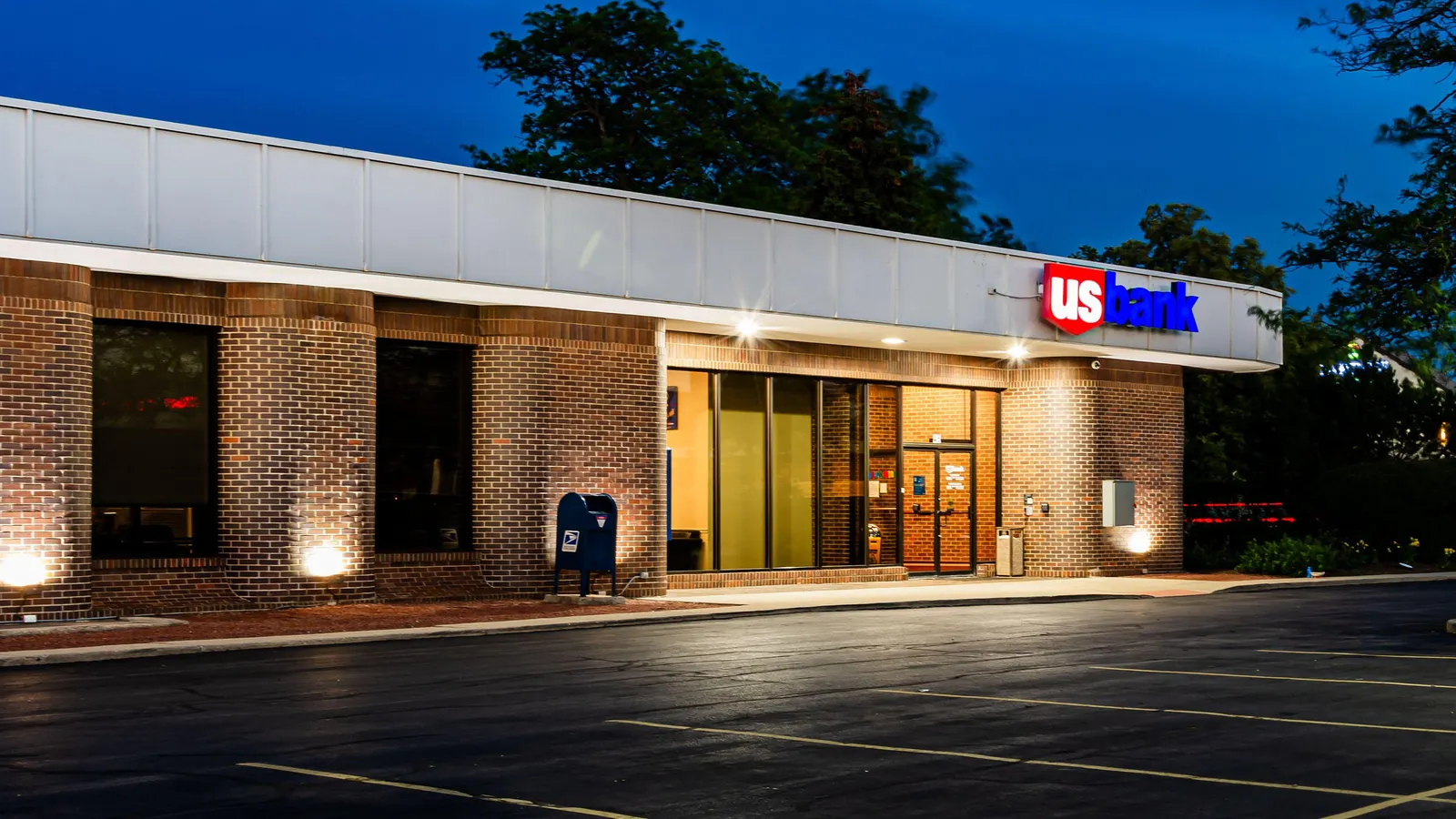
Minneapolis-based U.S. Bank has launched the most ambitious middle-market hiring initiative in its corporate history, adding 60 specialized roles to expand its commercial footprint nationwide. The expansion brings seasoned relationship managers and business development executives to key economic hubs across the country, including critical targets in Florida, Texas, and California. This strategic push represents a foundational shift in how the nation’s fifth-largest commercial bank by assets aims to capture market share among growing enterprises, directly challenging regional and national competitors for lucrative corporate clients.
The newly created positions are specifically dedicated to servicing mid-sized businesses—defined by the bank as companies generating between $50 million and $1 billion in annual revenue. While U.S. Bank already maintains a dominant retail and commercial presence in several Midwestern and Western states, the decision to deploy specialized bankers into non-branch markets like Florida and Texas highlights an aggressive pivot toward asset-light, relationship-driven commercial expansion. By bypassing the immense capital expenditures required to build physical brick-and-mortar branch networks in these fast-growing southern states, the bank is leveraging elite talent to establish an immediate, high-impact corporate presence.
Strategic Imperatives and Leadership Vision
For U.S. Bank, the middle-market sector represents an untapped reservoir of fee income, lending opportunities, and cross-selling potential for treasury management, foreign exchange, and capital markets solutions. Hassan Salem, head of middle market for the U.S. Bank Institutional Client Group, emphasized that scaling this segment is a top institutional priority. According to Salem, the overarching objective is to deepen support for clients and communities while aggressively growing market share in both legacy strongholds and emerging economic corridors.

Industry analysts note that mid-sized companies are increasingly seeking sophisticated banking partners capable of scaling alongside their regional and global ambitions. Salem underscored this philosophy, pointing out that physical proximity to clients remains a baseline expectation, but true differentiation stems from pairing local market knowledge with the extensive balance sheet and technological capabilities of a major national institution. The strategy relies on deploying veteran bankers who possess deep local networks, enabling the bank to originate complex commercial loans, structure sophisticated cash-management agreements, and advise on corporate restructuring or mergers and acquisitions.
A Favorable Macroeconomic Backdrop and CFO Optimism
The timing of U.S. Bank’s expansion aligns with a measurable resurgence in business confidence across the middle market. Despite lingering macroeconomic anxieties, persistent interest rate fluctuations, and regulatory complexities, corporate financial chiefs are demonstrating a pronounced willingness to invest and grow.
Data from a proprietary U.S. Bank survey published in late 2026 illustrates this growing optimism. Approximately 71% of surveyed chief financial officers reported a positive outlook regarding their companies’ financial prospects over the subsequent three-year horizon, marking a notable increase from the 64% recorded in the spring of the same year. This rising tide of corporate confidence has manifested in increased capital expenditures, supply chain diversification efforts, and strategic corporate acquisitions—all of which require sophisticated commercial banking guidance and credit facilities.
This sentiment is echoed industry-wide. Peer institutions have made similar strategic maneuvers to capture middle-market momentum. Earlier in the year, KeyBank reported that middle-market business confidence hovered near record highs as firms continued investing despite economic uncertainty. KeyBank matched this sentiment by aggressively expanding its own footprint, establishing a high-impact five-person middle-market team in Atlanta to accelerate growth in the Southeast, following similar specialized team launches in Chicago, Southern California, and the Kansas City metropolitan area.

The Broader Banking Landscape and National Ambitions
U.S. Bank’s historic middle-market hiring spree does not exist in a vacuum; it is part of a broader, multi-year strategic roadmap designed to transform the regional institution into a truly national commercial powerhouse. Under the leadership of CEO Gunjan Kedia, the bank has systematically focused on scaling its business banking and commercial segments. Following robust growth in small-business banking recorded in preceding quarters, executive leadership has set its sights on capturing a larger share of the commercial continuum, bridging the gap between small-scale business accounts and massive corporate institutional banking.
The decision to scale up in states devoid of traditional consumer retail branches—most notably Texas and Florida—reflects a broader evolution in modern commercial banking. Historically, commercial lending was tethered directly to retail deposit footprints. However, advances in digital banking, remote treasury platforms, and the increasing mobility of corporate finance have decoupled corporate relationship management from physical branch locations. By deploying elite relationship managers directly into high-growth metroplexes like Dallas, Houston, Miami, and Orlando, U.S. Bank can effectively compete for corporate clients without incurring the operational overhead associated with retail branch maintenance.
Implications for the Competitive Environment
The aggressive pursuit of middle-market talent by U.S. Bank and its competitors has transformed the recruitment landscape for commercial bankers. Financial institutions are actively bidding for seasoned relationship managers who bring established client portfolios and deep industry expertise in sectors such as healthcare, logistics, technology, and manufacturing. This talent war is expected to drive up compensation costs for major lenders in the near term, but banks view the expense as a necessary catalyst for long-term loan book expansion and non-interest income growth.

For mid-sized corporations, the intensification of competition among national lenders is an overwhelmingly positive development. Companies generating hundreds of millions in revenue now have access to a wider array of credit options, bespoke treasury management solutions, and specialized advisory services. As national banks like U.S. Bank push aggressively into non-traditional territories, regional banks and specialized boutiques will be forced to elevate their service models and sharpen their pricing strategies to defend their home turf.
Looking Ahead to 2027 and Beyond
As U.S. Bank integrates its 60 newly hired middle-market professionals into its institutional client group, executive leadership will closely monitor the return on investment across these targeted expansion zones. The success of this initiative will likely serve as a blueprint for future commercial expansions into other underserved or branch-free metropolitan areas.
With CEO Gunjan Kedia signaling continued focus on small-business and mid-market segments moving into 2027, U.S. Bank is positioning itself to capitalize on sustained corporate growth cycles. By pairing localized relationship management with national scale, the institution aims to cement its status as an indispensable financial partner for the nation’s most dynamic and rapidly expanding mid-sized enterprises.