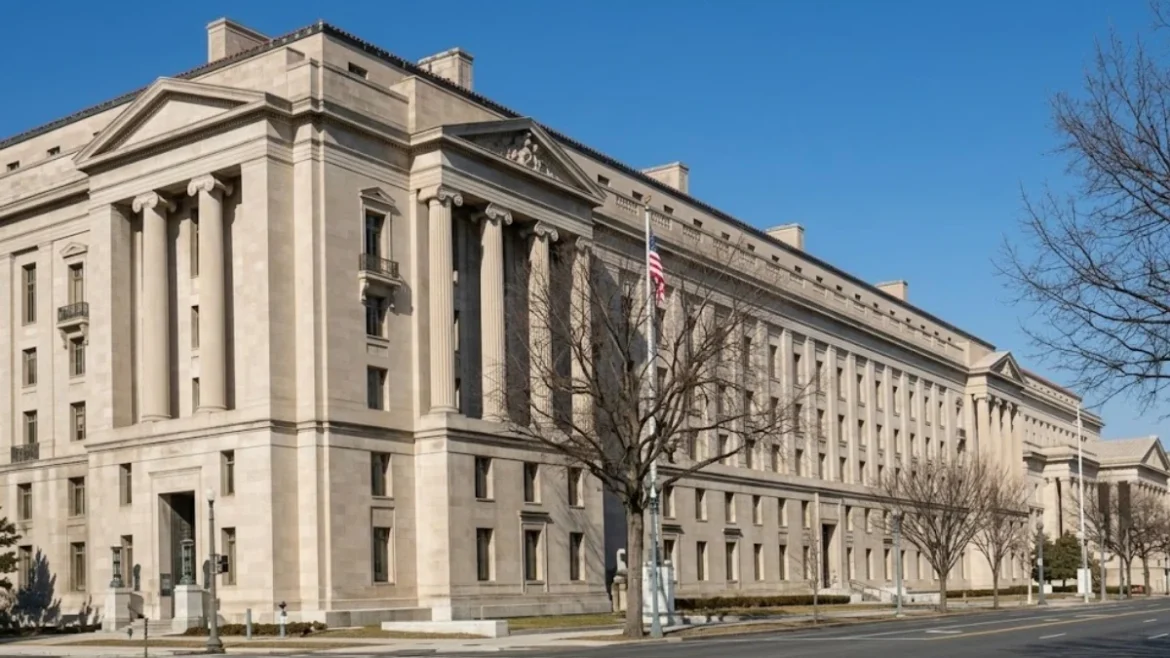
Pennsylvania-based health insurance provider Independence Blue Cross (IBX) has agreed to a $22.5 million settlement with the United States Department of Justice to resolve allegations that the company violated the False Claims Act. The settlement brings to a close a protracted legal battle stemming from accusations that IBX knowingly failed to withdraw inaccurate and untruthful diagnosis codes submitted under its Medicare Advantage Plan, thereby improperly retaining millions of dollars in federal overpayments.
The resolution highlights the federal government’s intensified scrutiny of the trillion-dollar Medicare Advantage program, commonly known as Medicare Part C. Under this framework, private insurance companies—legally referred to as Medicare Advantage Organizations (MAOs)—contract with the federal government to provide health care benefits to enrolled beneficiaries as an alternative to traditional, government-run Medicare.
Background of the Medicare Advantage Risk Adjustment Model
To understand the core of the allegations against Independence Blue Cross, it is necessary to examine the financial mechanics governing the Medicare Advantage program. The Centers for Medicare & Medicaid Services (CMS) compensates MAOs through a fixed monthly payment per enrollee. However, these payments are not uniform; instead, they are subject to a complex "risk adjustment" model designed to account for the varying health statuses and expected medical costs of individual beneficiaries.
Under the risk adjustment system, CMS pays higher monthly rates to MAOs for sicker patients who are statistically projected to incur greater healthcare utilization and costs. Conversely, healthier beneficiaries command lower monthly payments. To accurately calculate these adjustments, CMS relies heavily on medical diagnosis codes submitted directly by the private insurers. These codes are generated from patient medical records, charts, and clinical encounters.
Because the financial incentives tied to risk adjustments are substantial, the integrity of the data submitted by insurers is paramount. Submitting unsupported, inaccurate, or exaggerated diagnosis codes artificially inflates a beneficiary’s risk score, leading to higher monthly payments from the federal government than the insurer is legally entitled to receive. Under federal regulations, when an insurer discovers that previously submitted diagnosis codes are unsupported by underlying medical records, it has a legal obligation to delete or withdraw those codes and promptly reimburse CMS for the resulting overpayments.
The Mechanics of the Alleged Fraud: The Chart Review Program
According to allegations set forth by the United States government, Independence Blue Cross systematically subverted this reimbursement requirement between payment years 2017 and 2021. During this four-year period, IBX operated what it termed a "chart review" program. As part of this internal quality assurance and auditing process, professional nurse reviewers examined patient medical records—commonly referred to as charts—to identify all medical conditions and diagnoses supported by clinical documentation.

IBX utilized the findings of these chart reviews as a one-way mechanism for financial enrichment. When the nurse reviews revealed additional medical conditions that had not been previously reported to CMS, IBX leveraged those newly discovered codes to submit supplemental data and secure higher risk-adjustment payments from the federal government.
However, the federal investigation revealed a significant double standard in how IBX handled its audit data. In numerous instances, the very same chart reviews indicated that diagnosis codes previously reported to CMS were entirely unsupported by the underlying medical documentation. Rather than deleting these invalid codes—an action that would have triggered a mandatory reimbursement to CMS—IBX allegedly ignored the negative findings. By retaining the unsupported codes while aggressively adding new ones, IBX maintained inflated risk scores and wrongfully retained millions of dollars in federal funds.
Whistleblower Involvement and the Qui Tam Lawsuit
The legal action against Independence Blue Cross did not originate from a routine federal audit; rather, it was brought to light through the whistleblower provisions of the federal False Claims Act. The statute includes a unique qui tam provision, which permits private individuals—often current or former employees with firsthand knowledge of corporate malfeasance—to file lawsuits on behalf of the United States government against entities submitting false claims for federal funds. Whistleblowers, known as relators, are entitled to a substantial percentage of any eventual financial recovery secured by the government.
The civil lawsuit against IBX was formally captioned as United States ex rel. Independence Blue Cross, No. 20-cv-5818, and was filed in the U.S. District Court for the Eastern District of Pennsylvania. Under the terms of the newly announced civil settlement, the whistleblower—identified as a former employee of the insurance company—will receive a substantial reward of $3,825,000 for bringing the allegations to light and assisting federal investigators.
Official Statements and Enforcement Priorities
The resolution of the IBX case reflects a coordinated interagency enforcement strategy involving the Department of Justice’s Civil Division, the Commercial Litigation Branch (Fraud Section), the U.S. Attorney’s Office for the Eastern District of Pennsylvania, and the Office of the Inspector General for the Department of Health and Human Services (HHS-OIG). Senior federal officials utilized the announcement of the settlement to send a stern message to the broader healthcare and insurance industries.
"The government pays private insurers over $530 billion each year to care for Americans enrolled in Medicare Advantage," stated Assistant Attorney General Brett A. Shumate of the Justice Department’s Civil Division. "When insurers knowingly and improperly retain inflated payments based on inaccurate and untruthful diagnoses, we will hold them accountable whether they are a small regional plan or a large nationwide organization."
U.S. Attorney David Metcalf for the Eastern District of Pennsylvania echoed these sentiments, emphasizing the critical nature of reliable healthcare data. "The Medicare Advantage program depends on accurate data about patient health," Metcalf noted. "When insurers inflate their profits and the government’s costs by submitting or failing to correct unsupported diagnoses, my office will continue to hold them accountable."
Acting Deputy Inspector General for Investigations Miranda L. Bennett of HHS-OIG emphasized that operating within government-funded healthcare programs is a privilege contingent upon strict compliance. "Private insurers enrolled in the Part C program purposely inflating diagnoses for financial gain is unacceptable," Bennett said. "Today’s settlement demonstrates our commitment to ensuring the integrity of the Medicare program and to partnering with the Department of Justice to pursue allegations of risk adjustment fraud."
Broader Context: The Administration’s War on Healthcare Fraud
The settlement with Independence Blue Cross arrives amid a broader, highly coordinated federal campaign to eliminate waste, fraud, and abuse across all federal programs. In recent months, the current administration has launched specialized enforcement bodies, including the Task Force to Eliminate Fraud and the National Fraud Enforcement Division, designed to deploy advanced data analytics and investigative resources against corporate wrongdoers.
Healthcare fraud, particularly within the Medicare Advantage sector, remains a top priority for federal law enforcement agencies. With tens of millions of elderly and disabled Americans relying on Medicare, federal expenditures have reached historic highs. Consequently, safeguarding these funds from corporate overreach is viewed as essential to the long-term fiscal solvency of the program.
Legal experts note that False Claims Act enforcement actions targeting Medicare Advantage risk-adjustment practices have accelerated dramatically over the last decade. Insurers across the country have increasingly found themselves the subjects of whistleblower lawsuits and Department of Justice investigations for similar chart-review methodologies. The legal consensus is that courts and regulators expect private health plans to maintain symmetrical auditing standards—meaning that insurers have an affirmative legal duty to correct both under-reporting and over-reporting errors discovered during internal compliance reviews.
Implications for Independence Blue Cross and the Insurance Industry
For Independence Blue Cross, a prominent regional insurer with a long history in the Pennsylvania healthcare market, the $22.5 million payout represents a significant financial penalty, alongside the reputational fallout associated with resolving a major federal fraud investigation. While the settlement agreement includes no formal admission of criminal wrongdoing—as is standard in civil False Claims Act resolutions—the financial and administrative terms require the company to internalize the cost of its past auditing practices. Furthermore, companies caught in such settlements often find themselves subject to enhanced corporate integrity agreements or heightened regulatory oversight by CMS to ensure that internal compliance programs are restructured effectively.
For the wider managed care industry, the IBX settlement serves as a clear cautionary tale. Health insurance executives must review their internal risk-adjustment methodologies, chart review protocols, and data submission pipelines to ensure absolute compliance with federal standards. The message from federal prosecutors is unequivocal: utilizing internal audits exclusively to maximize revenue while ignoring negative findings will be treated as a knowing violation of the False Claims Act, inviting swift and costly federal intervention.