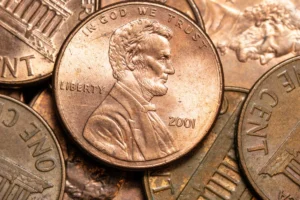
The United States currency system is set to undergo a historic transformation following President Trump’s signing of legislation mandating the phase-out of the one-cent coin, commonly known as the penny. This landmark bill, which has been debated by economists and lawmakers for decades, officially concludes the production of the low-denomination coin and establishes a comprehensive framework for cash rounding in retail transactions where exact change cannot be provided. The move marks a significant shift in American monetary policy, reflecting broader trends toward digital payments and the diminishing purchasing power of the penny due to decades of cumulative inflation.

The legislative passage represents the culmination of a long-standing movement to modernize the nation’s coinage. Supporters of the bill have frequently cited the high cost of production—which has consistently exceeded the face value of the coin—as a primary justification for its elimination. According to historical data from the U.S. Mint, the cost to produce and distribute a single penny has remained well above one cent for many years, creating a structural deficit in the production of small-denomination currency.
A Chronology of the Penny Debate
The push to retire the penny is not a new phenomenon; it has been a topic of discussion in legislative circles since the late 20th century. In 1990, the General Accounting Office (now the Government Accountability Office) issued a report suggesting that the penny’s utility was dwindling. Throughout the 2000s and 2010s, various bipartisan groups introduced bills to suspend production, though these efforts frequently stalled due to public attachment to the coin and concerns regarding the potential impact on low-income consumers and retail pricing strategies.

The acceleration toward this final decision began in early 2026, as inflationary pressures tightened household budgets and increased the operational costs for the Federal Reserve and the U.S. Mint. With producer inflation climbing to 6.5% by October 2026—the highest levels seen since 2022—the logistics of maintaining a currency that cost more to create than its face value became increasingly difficult to justify. Following extensive committee hearings and public comment periods, the legislation moved through Congress in the autumn of 2026, culminating in the President’s signature this month.
Economic Implications and the Rounding Framework
Central to the new law is the implementation of a "cash rounding" system. Under this provision, when a cash transaction total ends in a fraction of a nickel, retailers are authorized to round the total to the nearest five-cent increment. For example, totals ending in one or two cents would be rounded down to the nearest nickel, while totals ending in three or four cents would be rounded up.

Financial institutions, including the American Bankers Association (ABA), have been active participants in the transition process. The banking industry has focused heavily on the logistics of deposit services during the phase-out period. Earlier this year, the ABA formally requested that the Federal Reserve and the administration maintain full penny deposit services for as long as possible to ensure that businesses and individuals could offload existing stockpiles of coins without disruption. The transition period, which is expected to span several months, aims to mitigate the burden on financial institutions tasked with processing the gradual withdrawal of the coins from circulation.
Inflationary Context and Monetary Policy
The decision to phase out the penny arrives during a period of complex economic adjustment. The October 2026 data from the ABA DataBank highlights that producer inflation has been significantly influenced by rising costs in energy and transportation, as well as warehousing services. This environment has underscored the diminishing role of physical cash in the American economy.

While the penny’s removal is largely symbolic of shifting economic realities, it also reflects a broader reassessment of regulatory burdens. In a related move, the Office of the Comptroller of the Currency (OCC) recently announced it would freeze civil money penalties for 2026, opting to keep maximum penalties unchanged rather than adjusting them for inflation as is typically required by annual review mandates. This pause, coupled with the penny legislation, suggests a federal strategy aimed at simplifying regulatory and monetary operational frameworks during a time of heightened economic volatility.
Industry and Regulatory Perspectives
The banking sector’s role in this transition is critical. Financial institutions serve as the primary conduit for removing physical currency from the economy. The ABA has emphasized the need for clear communication and standardized procedures to prevent confusion among retail customers. By establishing technical and governance requirements for payment processing, the industry hopes to ensure that the transition remains seamless.

The integration of this policy with other technological shifts, such as the ongoing development of secure electronic channels for ACH exception processing, suggests a move toward a more digitized financial ecosystem. Industry groups have cautioned that while digital transformation is inevitable, regulators must not rush these decisions. The ABA’s recent stance on Nacha’s ACH exception processing, which urges the establishment of robust security and governance requirements before implementation, serves as a blueprint for how the industry intends to handle the broader migration away from traditional, physical payment methods.
The Broader Impact on Retail and Consumers
For the retail sector, the elimination of the penny requires an immediate update to point-of-sale systems. Retailers will need to calibrate their software to automatically perform the rounding calculations mandated by the new federal framework. While some retailers expressed initial concerns regarding consumer perception, the experience of countries like Canada, which phased out its own penny in 2013, suggests that consumers adapt quickly to rounding practices.

Economists note that the impact on individual consumer pricing will likely be negligible. Because rounding applies only to the final cash total—not to individual item prices—the effect on a typical shopping basket is expected to be neutral over time. The primary benefit remains the reduction in the administrative and logistical costs associated with transporting and counting low-value coinage, which has long been a drain on both retail operations and the federal budget.
Conclusion and Future Outlook
The retirement of the penny is more than a change in currency denomination; it is an acknowledgement of the evolution of the U.S. economy. As the nation grapples with the complexities of inflation, digital transformation, and the necessity of efficient regulatory environments, the penny has become a relic of a different economic era.

Looking ahead, the success of this transition will depend on the continued cooperation between the federal government, the Federal Reserve, and the private banking sector. By providing a structured framework for the phase-out and ensuring that financial institutions are supported during the wind-down of deposit services, the government aims to close the book on the one-cent coin without triggering the economic friction that previous administrations sought to avoid. As the coin leaves circulation, it leaves behind a legacy of debate that has shaped the public’s understanding of money, value, and the relentless march of inflation.