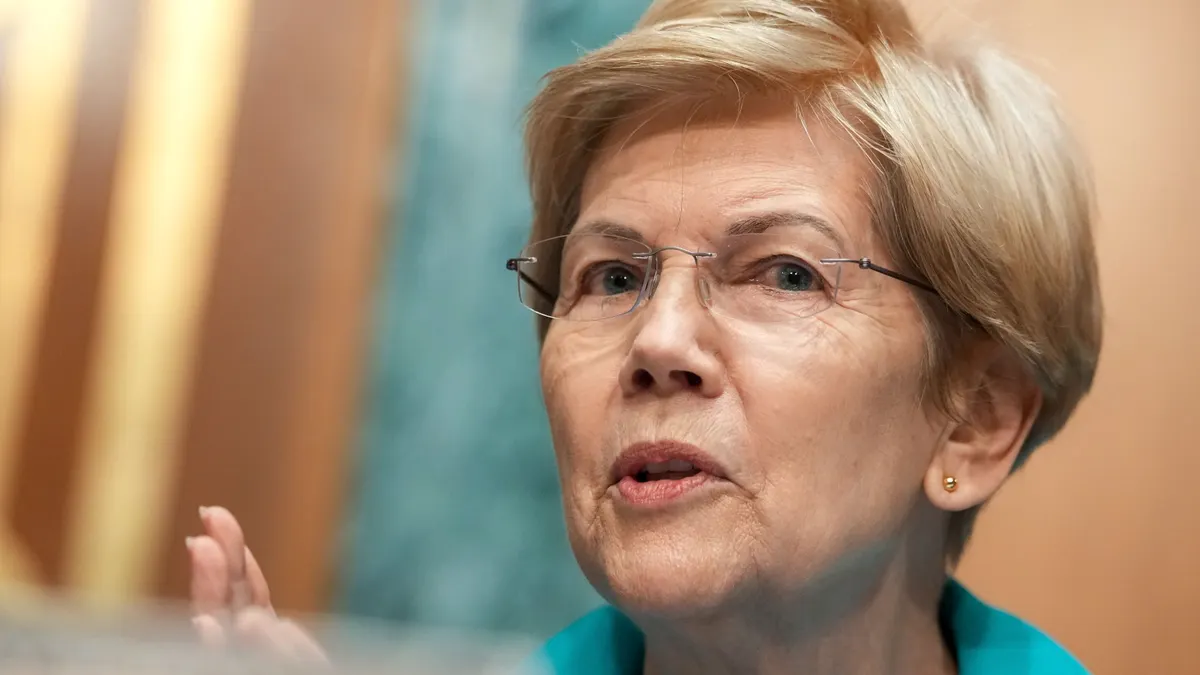
A top Senate Democrat is urging a government watchdog to launch a comprehensive investigation into significant staffing reductions at the Commodity Futures Trading Commission (CFTC) and their potential impact on the agency’s capacity to regulate American derivatives markets. The call comes amid concerns that these cuts are weakening the CFTC’s enforcement capabilities, a critical function for maintaining financial market integrity.
Alarming Staff Reductions and Declining Enforcement
Senator Elizabeth Warren, a prominent Democrat from Massachusetts and a member of the Senate Banking Committee, has formally requested that the Government Accountability Office (GAO) scrutinize the mass layoffs and voluntary departure programs at the CFTC. In a letter dated July 21, 2026, addressed to Orice Williams Brown, the acting Comptroller General of the GAO, Senator Warren expressed grave concerns that the agency’s ability to fulfill its mandate is being compromised.
"The CFTC has simultaneously seen a precipitous drop in enforcement activity," Senator Warren stated in her letter. "Therefore, I request that GAO investigate staffing cuts at the CFTC and their impact on the CFTC’s enforcement capabilities and broader mandate to regulate American derivatives markets."
The scale of the staff reductions is substantial. According to data cited by Senator Warren, agency staff levels have decreased by approximately 25% since the current presidential administration took office in January 2025. This decline is particularly concerning given that the CFTC’s regulatory responsibilities have arguably expanded, particularly with the burgeoning digital asset markets and the potential for new legislative frameworks.
Despite reassurances from CFTC Chairman Michael Selig, who has indicated the agency is actively hiring, reports suggest that the commission was still offering buyouts and early retirement packages to its employees as recently as June 2026, as detailed by Politico. This apparent contradiction between stated hiring efforts and continued voluntary separation programs raises questions about the agency’s strategic approach to staffing and its long-term operational capacity.
A Dramatic Shift in Enforcement Metrics
The impact of these staffing changes on the CFTC’s core mission of enforcement appears to be quantifiable. In 2024, the CFTC was notably active, bringing 58 enforcement actions and successfully recovering $17.1 billion in monetary relief for investors and the market. However, in the twelve months leading up to January 2026, the agency’s enforcement output saw a stark decline. During this period, only 11 enforcement actions were brought, resulting in a significantly lower recovery of $1 billion in monetary relief, according to reporting by Reuters.
This dramatic shift in enforcement metrics—a nearly 85% reduction in monetary relief recovered and a substantial decrease in the number of actions—raises serious questions about the CFTC’s ability to deter misconduct and hold wrongdoers accountable in the complex world of derivatives trading.
Historical Context and Evolving Mandate
Established in 1974, the CFTC has been the primary regulator overseeing futures and options contracts traded on organized exchanges. Following the 2010 passage of the Dodd-Frank Wall Street Reform and Consumer Protection Act, the agency’s purview was expanded to include the regulation of swaps, further increasing its oversight responsibilities within the financial system.
Senator Warren emphasized the critical role of a robust CFTC in her letter: "A well-functioning CFTC is vital to promoting the health and stability and integrity of America’s financial markets. Recent reporting suggests that the CFTC may be inhibited in meeting this mandate due to staffing cuts that threaten to weaken its enforcement."

Adding to the agency’s growing responsibilities, the CFTC asserted exclusive jurisdiction over prediction markets in April 2026. Furthermore, ongoing legislative efforts in Congress concerning the structure of cryptocurrency markets could necessitate significant resources and expertise from the CFTC for implementation and oversight. This expanding regulatory landscape underscores the urgency of ensuring the agency is adequately staffed to meet its evolving obligations.
Allegations of Industry Influence and GAO’s Role
Senator Warren also raised a concerning possibility: that some of the recent staff reductions may have been influenced by external interests. "Some of the recent staff cuts," Warren alleged, "may have aligned with industry interests." This assertion, while not presented with specific evidence in the provided text, points to a broader concern about regulatory capture or undue influence on agency decisions.
The GAO, an independent, non-partisan agency that works for Congress, is tasked with investigating how the federal government spends taxpayer dollars. Senator Warren’s request specifically asks the GAO to conduct a thorough review encompassing several key areas:
- The extent to which the staff cuts complied with federal laws and regulations.
- The impact of these reductions on the agency’s ability to fulfill its statutory mandate.
- The degree to which the cuts have "contributed to, detracted from, or had no impact on the prevalence of fraud, waste, and abuse at the CFTC."
Official Responses and Next Steps
A spokesperson for the GAO confirmed that the agency has received Senator Warren’s letter. "GAO has a process it goes through to determine whether we do work and when, which we are working through right now," the spokesperson stated, indicating that the request is under internal review to determine if and when an investigation will commence. The process for initiating a GAO review can involve assessing the timeliness, significance, and scope of the issues raised.
As of the publication of this article, a spokesperson for the CFTC had not immediately responded to a request for comment on Senator Warren’s letter and the allegations of staffing cuts impacting enforcement.

Broader Implications for Market Stability
The potential weakening of the CFTC’s enforcement arm carries significant implications for the broader financial ecosystem. Derivatives markets, which include futures, options, and swaps, are fundamental to the global economy, providing mechanisms for hedging risk, price discovery, and investment. Robust regulation and vigilant enforcement are crucial for preventing systemic risks, protecting market participants from fraud and manipulation, and maintaining investor confidence.
A decline in enforcement could embolden bad actors, leading to increased market misconduct and potentially jeopardizing the stability of financial markets. This is particularly relevant in today’s rapidly evolving financial landscape, which includes innovative but complex instruments like cryptocurrencies and prediction markets, areas where the CFTC’s regulatory expertise is increasingly vital.
Senator Warren’s intervention highlights a critical juncture for the CFTC, underscoring the delicate balance between fiscal management and the essential regulatory functions required to safeguard the integrity of America’s financial markets. The outcome of the GAO’s review, should it proceed, will be closely watched by market participants, consumer advocates, and policymakers alike. The agency’s capacity to effectively police derivatives markets is not just a matter of internal operations but a cornerstone of national economic security and stability.