Financial crime compliance solutions have decisively outpaced all other segments within the regulatory technology sector, capturing
the highest adoption rate globally as financial institutions grapple with escalating operational burdens and stringent oversight. According to a landmark industry analysis released jointly by RegTech Analyst and Parker & Lawrence Research, the global state of RegTech in 2026 exhibits a widening adoption gap between traditional financial crime prevention tools and emerging compliance domains. While the global RegTech market is projected to expand significantly, reaching an estimated $29.3bn in 2026 and scaling toward $112.1bn by 2033, market participation remains unevenly distributed across various risk and compliance categories.
The comprehensive global study sought to bring architectural clarity and standardization to a historically fragmented marketplace by introducing a unified RegTech taxonomy. This framework categorizes the industry into 24 distinct subcategories distributed across six primary risk and compliance domains. By applying this taxonomy, researchers developed a specialized RegTech Adoption Index to evaluate the relative maturity, implementation depth, and integration scale of technologies across international financial markets.
At the summit of this index sits the financial crime domain, which secured a leading score of 68. This category encompasses a robust suite of technological solutions engineered to identify, mitigate, and resolve illicit financial activities, including money laundering, terrorist financing, sophisticated fraud schemes, and sanctions evasion. Core subcategories within this leading vertical include transaction monitoring, Know Your Customer (KYC), Know Your Business (KYB), and advanced sanctions screening. Payment institutions and major investment banks currently represent the primary adopters of these mission-critical applications.
Understanding the Historical Evolution of RegTech Adoption
The dominant position of financial crime compliance within the broader RegTech ecosystem is not a recent phenomenon, but rather the culmination of a multi-decade evolutionary cycle. Over the past twenty years, anti-money laundering (AML) and counter-terrorist financing frameworks have undergone rigorous regulatory codification across major global jurisdictions. This protracted period of maturation allowed compliance professionals to establish standardized, repeatable workflows that lent themselves naturally to technological automation.
The proliferation of Software-as-a-Service (SaaS) delivery models over the past decade further accelerated this trajectory. Pedro Sousa, CEO of Karavel, noted that the consistent deployment of external SaaS tools to handle high-volume operational workflows familiarized compliance departments with automated processing. Consequently, the psychological and operational barrier to entry for financial crime tooling remains significantly lower than in other, less digitized compliance domains.
In stark contrast, other compliance functions—particularly those situated within the second line of defense—historically lacked structured technological support. Sousa observed that second-line personnel traditionally operated as the analytical thinkers of compliance, relying on tools designed primarily for basic task organization or administrative collaboration rather than end-to-end workflow automation. While artificial intelligence has begun to unlock automation potential for these complex analytical roles, institutional hesitation and the critical necessity for human accountability continue to slow wider integration.
The Economics of Compliance Risk and Regulatory Pressure
Beyond workflow familiarity, the rapid adoption of financial crime solutions is heavily driven by immediate financial exposure and aggressive regulatory enforcement. Lucy Heavens, Chief Marketing Officer at Vixio, emphasized that the operational pain points associated with financial crime management are immediate, tangible, and financially burdensome.
Industry data underscores the scale of this fiscal expenditure. A comprehensive market study published by BioCatch revealed that 58% of surveyed organizations expended between $5m and $25m in direct operational costs during 2023 alone simply to investigate, remediate, and combat financial crime incidents. Furthermore, the financial and reputational penalties for non-compliance have scaled exponentially, turning subpar anti-financial crime infrastructure into an existential enterprise risk.
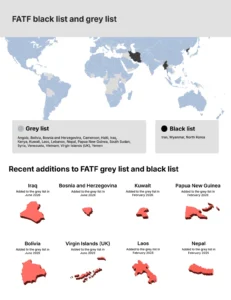
Regulators worldwide—including the Financial Action Network Taskforce (FATF), the Financial Crimes Enforcement Network (FinCEN), the Monetary Authority of Singapore (MAS), and the Financial Conduct Authority (FCA)—are actively compelling institutions to adopt risk-based technological frameworks. This regulatory push is exacerbated by emerging security threats, including synthetic identities and hyper-realistic deepfakes, which have rapidly outstripped the monitoring capabilities of manual compliance teams.
Areg Nzsdejan, CEO of Cardamon, reinforced this perspective, noting that the combination of clear regulatory mandates, well-defined operational problems, and highly visible failure costs creates optimal conditions for rapid technology uptake. Landmark public enforcement actions and severe monetary penalties levied against institutions such as Danske Bank and Swedbank have eliminated any remaining industry complacency. When regulatory expectations are backed by the threat of severe institutional fines or criminal sanctions, financial entities treat technology adoption as an absolute necessity rather than a discretionary upgrade.
The Multi-Jurisdictional Challenge and Evolving Threat Landscapes
For large, globally active financial institutions operating across multiple regulatory jurisdictions, the management of cross-border compliance has become profoundly complex. John Byrne, founder of Corlytics, highlighted that international regulatory bodies, particularly within the United States, continue to enforce stringent penalties for deficiencies in transaction monitoring and sanctions screening.
The geopolitical climate has further compressed implementation timelines. Kevin McGuinness, global head of strategy at Napier AI, pointed out that the rapid escalation of international sanctions since 2022 generated an approximate 30% year-on-year growth in sanctioned entities. This dynamic transformed technology adoption from a strategic roadmap into an urgent operational deadline. Furthermore, legacy screening systems burdened by persistent false positive rates of 5% to 8% provide an immediate, self-funding business case for advanced RegTech deployment.
Comparative Analysis of Lower-Ranking Compliance Domains
While financial crime solutions occupy the top tier of the RegTech Adoption Index with a score of 68, other crucial domains lag significantly behind. Compliance Management sits in the middle tiers with an Index score of 44, while the Environmental, Social, and Governance (ESG) domain anchors the bottom of the list with a score of 40.
The ESG domain encompasses technical solutions designed to measure, manage, and report corporate sustainability metrics, climate risk quantification, and adherence to emerging disclosure mandates. Similarly, Compliance Management solutions assist enterprises in tracking regulatory horizon scanning, regulatory intelligence, and cross-framework compliance orchestration.
Industry experts attribute the sluggish adoption rates in these sectors to a distinct lack of immediate punitive pressure. Lucy Heavens noted that compliance management and ESG initiatives currently lack the immediate threat of license revocation or catastrophic regulatory intervention. While regulatory frameworks for ESG reporting are evolving, institutions have historically treated these budgets as secondary priorities compared to mandatory anti-money laundering controls.
Infrastructure Constraints and the Reality of Legacy Systems
Despite the robust projected growth of the global RegTech market, overall enterprise adoption remains comparatively modest. This restraint does not stem from a lack of executive appetite; extensive industry surveys indicate that approximately two-thirds of financial institutions intend to increase their RegTech expenditures. Instead, the primary bottleneck lies within the structural constraints of legacy enterprise architecture.
Kevin McGuinness explained that purchasing an advanced compliance solution does not guarantee scaled enterprise utilization if underlying core systems cannot support real-time data processing or rapid rule modifications. Many institutions remain constrained by legacy IT stacks where basic configuration changes require months of administrative delay and costly vendor interventions. Consequently, cautious, partial deployments represent a rational corporate response to systemic infrastructural limitations rather than an aversion to innovation.
This sentiment was echoed by Lucy Heavens, who emphasized that structural integration challenges centered around legacy infrastructure and fragmented data silos continue to impede market progression. Rather than demanding costly, disruptive ‘rip-and-replace’ strategies, technology vendors must prioritize API-native solutions capable of seamless integration directly on top of legacy core banking rails.
Strategic Outlook and Future Growth Sectors
Looking toward the horizon, industry leaders anticipate that the next wave of RegTech adoption will be catalyzed by prescriptive regulations, operational resilience mandates, and advanced AI governance frameworks. Legislation such as the European Union’s Digital Operational Resilience Act (DORA) and emerging artificial intelligence regulations are expected to drive significant investment into resilience and third-party risk management.
Regulatory intelligence and automated compliance orchestration are projected to experience the steepest growth curves over the coming decade. As global regulatory frameworks grow increasingly complex, forward-thinking institutions are shifting away from isolated point solutions. Instead, the market is migrating toward unified, platform-based operating models that seamlessly connect regulatory monitoring, risk assessment, automated policy management, and enterprise-wide reporting into a cohesive architectural ecosystem.