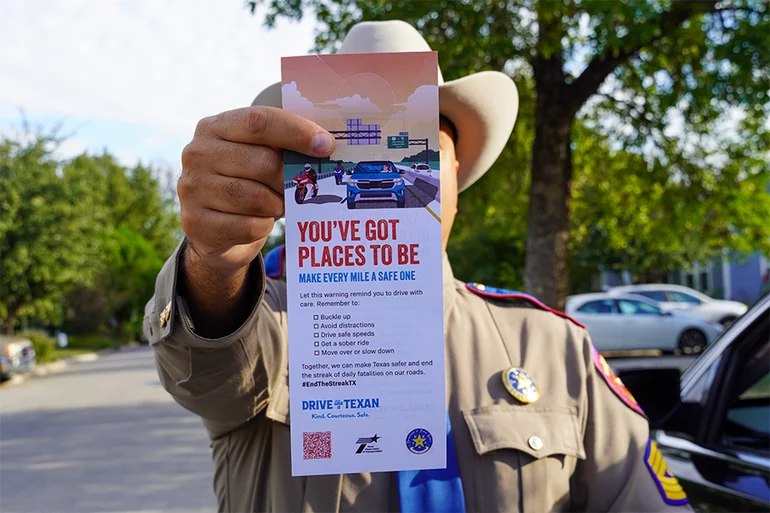
For nearly twenty-six years, the state of Texas has faced a somber and unrelenting statistical reality: not a single day has passed without at least one person losing their life on a Texas roadway. Since November 7, 2000, the cumulative death toll has surpassed 95,000, a figure that represents a profound loss of life, fractured families, and a persistent public health crisis that officials are now aggressively moving to address. As the Texas Department of Transportation (TxDOT) continues its long-running #EndTheStreakTX campaign, the agency is pivoting toward a multifaceted strategy that blends public awareness, infrastructure investment, and technological innovation to break a cycle that has spanned more than a quarter-century.
A Legacy of Loss: The Chronology of a Deadly Streak
The streak began on a seemingly unremarkable Tuesday in November 2000. While the specific details of that first day have faded into the historical record, the subsequent years have been marked by a relentless cadence of accidents. To put the 95,000 fatalities into perspective, this number exceeds the population of many mid-sized Texas cities. Year after year, despite advancements in vehicle safety technology—such as collision avoidance systems, improved airbag design, and reinforced vehicle frames—the daily occurrence of fatal crashes has remained a fixture of life in the Lone Star State.
Public health experts and traffic safety analysts often point to the "Texas Paradox": while the state has invested billions into its expansive highway network, the sheer volume of drivers, the increase in distracted driving, and the geographic vastness of the state create a unique set of challenges. The streak is not merely a reflection of driver error; it is a complex interaction of infrastructure, human behavior, and high-speed transit demands that define the Texas experience.
Data-Driven Insights: The Current Landscape of Road Safety
Recent statistics offer a glimmer of hope, even as the gravity of the situation remains clear. In 2025, Texas recorded 3,763 traffic-related deaths, a notable decrease from the 4,162 fatalities documented in 2024. This nearly 10% reduction is being scrutinized by safety experts as a potential turning point. While the state is far from the "Vision Zero" goal—a global movement to eliminate all traffic fatalities and severe injuries—the downward trend suggests that the combination of public awareness campaigns and targeted law enforcement might be gaining traction.
However, the raw numbers remain staggering. The 3,763 deaths in 2025 equate to an average of more than 10 people dying on Texas roads every single day. The demographic breakdown of these accidents often highlights consistent vulnerabilities: high rates of speed-related incidents, failure to use seat belts, and impairment due to alcohol or controlled substances. By analyzing crash data at the precinct level, the Texas Department of Public Safety (DPS) has identified specific "hot zones" where intervention is most critical.
Official Responses and the Drive Like a Texan Initiative
The response from state leadership has moved beyond standard public service announcements. TxDOT Executive Director Marc Williams has emphasized that the streak is not an abstract statistical phenomenon, but a collection of individual tragedies. "Everyone has so many reasons why they want to get home safely. Remember, so does every driver around you," Williams stated during the launch of the latest phase of the initiative. "Each life lost is a reminder of why we all need to work together to end this streak of daily deaths."
This call to action is supported by the Texas Highway Patrol. Chief Bryan Rippee, reflecting on the grim daily realities faced by his troopers, noted that the difference between life and death often comes down to a few split-second decisions. "Our Texas Highway Patrol troopers see firsthand how everyday decisions behind the wheel can mean the difference between life and death," Rippee remarked. "By buckling up, paying attention and slowing down, never driving impaired and moving over or slowing down for emergency vehicles and roadside responders, every Texan can help make our roads safer."
To enforce these behavioral changes, DPS troopers are currently engaged in a two-week intensive outreach period. During traffic stops, officers are shifting their focus toward education, distributing safety materials and discussing the consequences of common violations. This approach aims to humanize the enforcement process, encouraging drivers to adopt a mindset of being "kind, courteous, and safe" behind the wheel.
Infrastructure Investment: The $16 Billion Commitment
While human behavior is a significant factor in traffic safety, the Texas Department of Transportation recognizes that physical infrastructure plays a vital role in survivability. The state has committed $16 billion over the next decade to comprehensive safety improvements. This massive capital allocation is designed to "forgive" minor driver errors through engineering.
Key features of this investment include:
- Cable Barriers: Installed in medians to prevent crossover accidents, which are frequently the most lethal types of collisions.
- Rumble Strips: Added to highway shoulders and centerlines to alert distracted or drowsy drivers when they are drifting out of their lane.
- Innovative Intersection Design: The state is increasingly favoring roundabouts and displaced left-turn intersections. Data indicates that roundabouts can reduce the occurrence of fatal and injury-producing accidents at intersections by up to 90% by reducing vehicle speeds and eliminating the potential for T-bone collisions.
These projects are part of a broader shift in civil engineering that prioritizes "self-explaining roads"—designs that naturally encourage drivers to travel at safer speeds and maintain better situational awareness.
Technological Frontiers: AI and Modern Traffic Management
Beyond traditional construction, TxDOT is actively exploring the potential of Artificial Intelligence to mitigate the risks of high-speed travel. One of the most promising areas of development is the implementation of automatic incident detection software. By leveraging real-time data from traffic cameras and sensors, this software can identify accidents or stalled vehicles within seconds, allowing for immediate dispatch of emergency services and alerting approaching traffic to slow down, thereby preventing secondary, pile-up crashes.
The agency is also studying the integration of connected vehicle technology, which would allow cars to communicate directly with traffic management systems. In the future, this could allow vehicles to receive alerts about road conditions or debris ahead before the driver can physically see the hazard. While these technologies are currently in the implementation phase, they represent a fundamental change in how the state manages its roadway network.
The Societal Impact: Why the Streak Matters
The economic and emotional toll of 95,000 deaths is difficult to quantify. Beyond the personal grief of families, the economic impact—including medical costs, lost productivity, insurance premiums, and emergency response expenses—costs the Texas economy billions of dollars annually. When a fatal crash occurs, it disrupts the flow of commerce, drains the resources of local first responders, and leaves a lasting psychological impact on survivors and the communities where these events occur.
Advocacy groups and safety organizations have praised the state’s multi-pronged approach but emphasize that lasting change requires cultural shifts. The #EndTheStreakTX campaign is not just a branding exercise; it is an attempt to create a social norm where dangerous driving behaviors, such as texting while driving or driving under the influence, are viewed with the same social disapproval as drunk driving.
The Path Forward
The goal of ending the streak is ambitious, but the recent decline in fatalities offers a roadmap for what is possible. By aligning engineering, enforcement, and public education, Texas is positioning itself to address the crisis from every possible angle. However, the final variable remains the individual driver.
As the state moves further into 2025 and beyond, the success of these initiatives will be measured by the numbers reported in annual safety audits. The hope is that through a combination of personal accountability—manifested in the #EndTheStreakTX social media pledge—and institutional investment, the streak that began in 2000 will finally be broken.
The initiative serves as a somber reminder that the road ahead is long. With every mile driven, Texans are encouraged to reflect on the fact that safe driving is a shared responsibility. Whether it is through the simple act of putting a phone away, ensuring all passengers are buckled, or adhering to speed limits, every individual action contributes to the collective goal of ensuring that everyone makes it home safely. Ending the streak is no longer just a state agency target; it is a mission that requires the participation of every person who shares the Texas roadways.