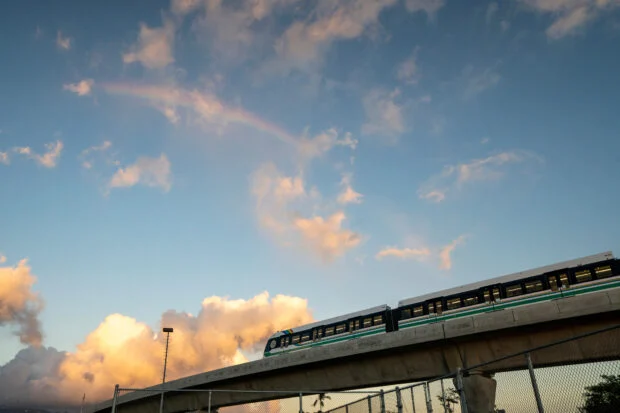
While the American public has grown accustomed to the sight of autonomous robotaxis navigating the complex, unpredictable environments of cities like San Francisco and Phoenix, the nation’s mass transit infrastructure remains remarkably tethered to human operators. Despite the rapid advancement of sensor technology and artificial intelligence in the private sector, the vast majority of U.S. subway, light rail, and bus systems still rely on human intervention to manage speed, braking, and station arrivals. However, a nascent shift is underway as officials in Washington, D.C., and Los Angeles look to replicate the success of automated systems found throughout Europe, Asia, and, more recently, Hawaii.
The movement toward full automation is driven by a desire for operational efficiency and the promise of long-term labor cost savings. Yet, these projects navigate a minefield of technical challenges, legacy infrastructure issues, and fierce opposition from organized labor groups who view the removal of human operators as a significant public safety risk.
A Global Lag in Infrastructure Innovation
For decades, the United States has trailed behind global peers in the adoption of unattended train operations (UTO). Systems in cities such as Tokyo, Singapore, Paris, and Vancouver have operated driverless trains for years, often with higher frequencies and greater reliability than their American counterparts. Proponents of automation argue that the transit industry in the U.S. has suffered from a culture of institutional inertia.
Baruch Feigenbaum, senior managing director of transportation policy at the Reason Foundation, suggests that the transit sector is long overdue for a technological overhaul. "It should be much harder to automate something that’s on-road, that has all of these various obstacles coming at it, compared to a fixed-rail system," Feigenbaum said. "I don’t know a nice way to say this, but basically the transit world is where innovation goes to die."
The logic behind this argument is that fixed-rail environments—where the path is predictable and the environment is controlled—are ideal candidates for automation. By removing the human element, transit agencies can theoretically eliminate the margin for error, improve energy efficiency through optimized acceleration and braking, and increase system capacity by running trains at tighter, more consistent intervals.
The Chronology of Automation: From Early Pilots to Modern Ambitions
The history of automated transit in the U.S. is not a linear progression but a series of fits and starts. In the 1980s, the U.S. experimented with automated people movers in cities like Detroit and Miami. These systems, while limited in scope, demonstrated that driverless technology was viable.
However, major heavy-rail systems remained largely manual. The Washington Metropolitan Area Transit Authority (WMATA) actually implemented automated features when its system opened in the 1970s. These systems were designed to handle routine speed control and station stopping. A catastrophic turning point occurred in 2009, when a collision near the Fort Totten station resulted in nine fatalities. Investigators from the National Transportation Safety Board (NTSB) identified a failure in the automated signaling system that maintained the distance between trains.
In the immediate aftermath, WMATA disabled many automated features, effectively setting back the adoption of autonomous technology in the nation’s capital by over a decade. It was not until 2022 that the agency began the methodical process of restoring these capabilities. Today, the focus has shifted from simple speed control to full-scale, operator-free transit.
Honolulu’s Skyline: A Modern Benchmark
The most significant contemporary success story for U.S. automation is the Skyline system in Honolulu. Opened in 2023, it serves as the largest driverless urban rail system in the country. Spanning an eventual 19 miles, the system was built from the ground up with automation in mind. By avoiding the need to retrofit legacy tracks, Honolulu has been able to maintain a perfect safety record, with no crashes or injuries attributed to its autonomous controls.
Project director Vance Tsuda emphasizes that the system’s architecture inherently mitigates risk. By utilizing platform screen doors—which physically separate passengers from the track until the train has come to a full stop—the system removes the possibility of falls or obstructions. Tsuda argues that humans are the primary point of failure in traditional systems. "If you have somebody making that decision, they could make a wrong decision," Tsuda noted, referring to the potential for human error in signaling departures or monitoring station platforms.
The Road Ahead: D.C. and Los Angeles
In Washington, D.C., the WMATA board has approved a nearly $1 billion investment plan to modernize the Red Line. The project aims to achieve fully automated, driverless operations by 2033. CEO Randy Clarke maintains that the current regulatory environment is far more rigorous than in previous decades. "That was a big failure, there’s no question. We do not do anything like that now," Clarke said, referring to the 2009 tragedy. He noted that the modern iteration of the system is "highly regulated, highly documented, and very proficient."
Meanwhile, in Southern California, the Los Angeles Metro is conducting an environmental review for the Sepulveda Transit Corridor project. This ambitious plan proposes an underground line traversing the Santa Monica Mountains to connect the San Fernando Valley with the Westside. The proposal envisions the use of high-frequency, automated trains that could move thousands of commuters who currently face hours of congestion on the I-405 freeway.
The Human Element: Labor and Safety Concerns
Despite the technical promise, the transition to automation faces significant pushback from labor unions. The Transport Workers Union (TWU) has been a vocal critic of the trend. John Samuelsen, international president of the TWU, argues that the presence of a human operator is essential for passenger security and emergency response.
"Passengers will be left dealing with a self-evacuation, which is a disaster in a system which runs on a third rail," Samuelsen said. His concern centers on the reality of underground environments: if a train loses power or suffers a mechanical failure between stations, a trained operator is the first responder, capable of communicating with passengers, managing the third rail, and facilitating a safe evacuation.
This argument highlights a fundamental tension: while automation can prevent crashes caused by human error, it may complicate the human-centric aspects of emergency management. Proponents of the technology counter that modern automated systems include sophisticated surveillance, two-way communication, and remote-override capabilities that allow dispatchers to guide passengers through an emergency more effectively than a single operator trapped in a cab.
Economic and Societal Implications
The economic argument for automation is largely centered on the high cost of labor. In many transit systems, personnel costs—including salaries, benefits, and training—represent the largest share of operating budgets. By shifting these funds toward system maintenance and infrastructure upgrades, agencies hope to address the chronic budget shortfalls that have plagued public transit across the country.
However, David King, an associate professor of urban planning at Arizona State University, warns that the standard for public acceptance is uniquely high. "We allow a certain amount of failure with private industry that we don’t tolerate when the state does it," King observed. He points out that while the public might forgive a series of failed rocket launches by a private entity like SpaceX, a single, high-profile incident on a government-run automated train could set the technology back by a generation.
Conclusion: A Tipping Point for Transit
The push for automation is not merely about replacing drivers with software; it is about reimagining the reliability and capacity of public transit in a 21st-century urban environment. If D.C. and Los Angeles succeed in their respective goals, it could create a "demonstration effect," encouraging smaller cities to adopt similar technologies.
For these projects to be successful, transit agencies must bridge the gap between technological possibility and public trust. This requires transparent safety protocols, robust investment in redundant systems, and a thoughtful approach to the changing role of the transit workforce. As the U.S. moves toward a future where automated vehicles are common on the road, the transition of the rail systems that move millions of commuters daily seems increasingly inevitable, provided the industry can balance the efficiency of the machine with the essential safety of the passenger.