The modern insurance landscape is defined by continuous digital transformation, yet a critical friction point has persisted stubbornly in the background: the mechanics of moving money. Whether an insurer is collecting monthly premiums, settling complex property and casualty claims, or distributing sensitive life insurance benefits to grieving families, the financial transaction layer has historically been bogged down by administrative inertia. Outdated legacy infrastructure, lingering reliance on paper checks, unpredictable postal delays, and burdensome processing steps have long created friction for policyholders while simultaneously inflating operational overhead for carriers.
In an era where consumers manage their banking, retail shopping, and personal communications instantly via mobile devices, the traditional insurance payment experience frequently feels misaligned with modern expectations. Recognizing this persistent industry bottleneck, InsurTech Express has announced a strategic addition to its growing industry community: the integration of VerityPay, an innovative financial technology provider specializing in SMS-based payment solutions. By bridging the gap between high-security financial transactions and intuitive mobile communication, VerityPay seeks to redefine how insurance capital flows between organizations and their customers.
The Persistence of Friction in Insurance Disbursements
To understand the value proposition of modern payment solutions in the insurance sector, one must examine the operational weight of traditional transaction methods. Industry data consistently highlights that paper checks remain surprisingly prevalent across claims departments and life insurance payouts, despite the widespread availability of digital banking. Issuing, mailing, reconciling, and occasionally re-issuing lost or stolen paper checks costs insurance carriers billions of dollars annually in direct and indirect administrative expenses. Furthermore, when a policyholder is waiting for critical funds—such as emergency property repairs following a natural disaster or beneficiary payouts following the loss of a loved one—delays caused by physical mail delivery or cumbersome banking verification can profoundly exacerbate an already stressful human experience.
On the corporate side, insurance executives face a perpetual balancing act. They are tasked with scaling digital transformation initiatives to meet rising consumer expectations for seamless experiences, yet they must rigorously manage operational budgets and protect legacy architectures from costly, disruptive overhauls. Introducing new proprietary applications or demanding that customers download specialized software portals often yields low adoption rates, as consumers experience application fatigue. Consequently, the industry has spent years searching for a middle ground: a system that offers the speed and convenience of digital delivery without creating new integration burdens for the insurer or technical hurdles for the end user.
The Evolution of Mobile-First Financial Interactions
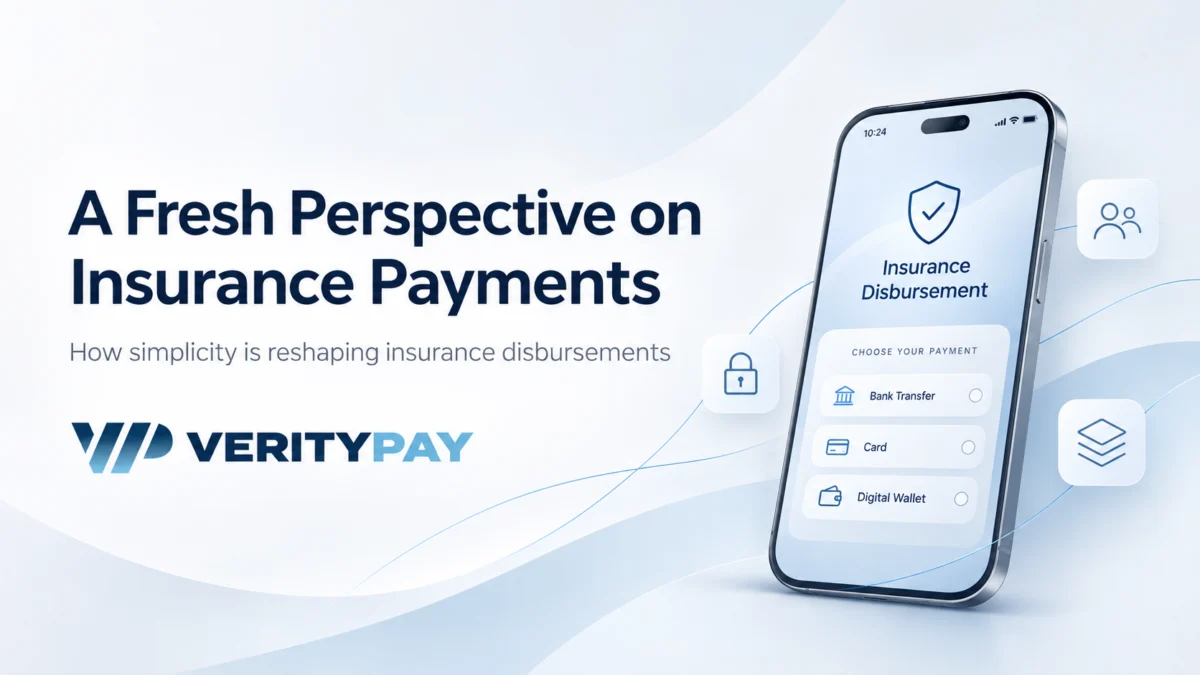
The core innovation introduced by VerityPay centers on a straightforward yet powerful premise: leveraging text messaging, the most ubiquitous and universally adopted mobile communication medium, as the primary conduit for financial transactions. Through its specialized SMS-based platform, VerityPay enables organizations to dispatch funds and request payments directly through text notifications. Crucially, this model eliminates the traditional barriers that hinder digital adoption. Recipients are not required to download a dedicated mobile application, register for a new user account, or remember complex login credentials to access their funds.
When a transaction is initiated, the recipient receives a secure text message prompting them to access a streamlined payout portal directly from their mobile browser. From there, the platform introduces a high degree of consumer agency. Recipients can evaluate their delivery preferences based on their personal financial needs. For those prioritizing immediate access, digital delivery channels such as direct-to-debit card transfers, linked bank accounts, PayPal, or Venmo are readily available, typically subject to a disclosed, nominal processing fee. Alternatively, consumers who prefer traditional methods retain the option to select a physical paper check at absolutely no charge.
A Paradigm Shift: The Zero-Cost Disbursement Model for Businesses
One of the most disruptive aspects of VerityPay’s market entry into the InsurTech Express community is its novel commercial model. Traditionally, businesses looking to upgrade their disbursement infrastructure have had to absorb significant software licensing fees, implementation costs, and per-transaction fees charged by payment gateways. VerityPay recently upended this dynamic by introducing a zero-cost disbursement model for businesses.
Under this structure, enterprises—including insurance carriers, third-party administrators, and brokerages—can send consumer payouts through the platform with no setup fees, no software licensing overhead, and zero per-payout charges levied against the business. This economic realignment alters the cost-benefit analysis for insurance executives. Historically, upgrading payment rails was viewed as an operational expense that required justification through cost-efficiency savings elsewhere. By removing the financial penalty for digital disbursement, VerityPay enables carriers to modernize their back-office operations while simultaneously containing expenditures.
Industry analysts note that this approach delivers secondary cost-saving benefits by mitigating the hidden administrative expenses tied to legacy check processing. By shifting a significant percentage of payout recipients toward instant digital alternatives, insurers drastically reduce the volume of uncashed checks, inaccurate mailing addresses, fraudulent check interceptions, and the extensive labor hours customer service teams spend tracking down delayed payments.
Seamless Integration and Enterprise-Grade Security Architecture
For any technological solution to gain traction within the highly regulated insurance sector, it must seamlessly coexist with existing enterprise systems while maintaining rigorous compliance and security standards. VerityPay was engineered with this operational reality in mind. Rather than demanding a complete overhaul of an insurer’s core administrative systems, the platform is designed to operate alongside established check-issuance workflows. This non-disruptive integration allows companies to introduce advanced digital payment options as an overlay, preserving current accounting and auditing trails while immediately expanding their payout capabilities.
Security and regulatory compliance represent non-negotiable prerequisites for financial transactions in the insurance industry. VerityPay addresses these concerns through a robust operational framework, achieving SOC 2 compliance to validate its internal controls regarding data security, availability, and confidentiality. Furthermore, the platform utilizes a structural safeguard in which the technology provider does not hold or store customer funds. Instead, fund movements are orchestrated securely through regulated banking partners, minimizing systemic financial risk for both the enterprise client and the end consumer.
Broader Implications for Claims, Benefits, and Premiums
The versatility of text-based payment rails extends far beyond standard property and casualty claims, touching nearly every facet of the insurance lifecycle. In the life insurance sector, where the velocity and sensitivity of death benefit distributions are paramount, an SMS-based disbursement model can drastically shorten the timeline between claim approval and family financial relief. By removing the days or weeks historically consumed by physical check clearing, insurers can provide tangible support to beneficiaries precisely when it is needed most.
Similarly, in commercial and personal lines property claims, adjusters can leverage text-based payments to disburse emergency funds for temporary housing or immediate repairs while standing on-site with a policyholder. On the premium collection side, the same infrastructure streamlines recurring or one-off collections, reducing the incidence of policy lapses caused by forgotten billing dates or expired credit cards on file. By unifying disbursements and collections within a single, text-centric ecosystem, carriers can establish a more cohesive and responsive communication channel with their policyholders.
The Philosophy of Simplicity in InsurTech Innovation
The formal welcome of VerityPay into the InsurTech Express ecosystem underscores a broader philosophical shift occurring within the insurance technology sector. For years, industry innovation was frequently conflated with technological complexity—the deployment of heavy enterprise software, artificial intelligence integrations, or sprawling omnichannel customer portals. However, industry leaders increasingly recognize that the most profound technological advancements are often those that abstract complexity away from the user, delivering profound utility through extreme simplicity.
By focusing on the micro-moment where money changes hands, VerityPay addresses a universal pain point that resonates across every demographic of insurance consumers. Whether dealing with digital-native millennials or older policyholders less inclined to adopt complex financial applications, text messaging remains an universally accessible medium.
Looking Ahead: The Future of Insurance Financial Transactions
As the insurance industry navigates an evolving macroeconomic environment marked by inflationary pressures and heightened consumer expectations, operational agility has become a primary competitive differentiator. Carriers are continuously evaluating partnerships that can simultaneously elevate customer satisfaction scores and reduce administrative drag.
The integration of VerityPay into the InsurTech Express network highlights a growing appetite for solutions that harmonize recipient choice with corporate cost-efficiency. By proving that enhanced customer experience does not inherently require inflated operational budgets, platforms like VerityPay are helping to establish a new benchmark for financial transactions in insurance. As more carriers pilot and adopt text-based disbursement models in the coming years, the traditional friction associated with moving money may soon become a relic of insurance history, replaced by the immediacy and simplicity of a standard mobile notification.