In the rapidly evolving landscape of digital finance, the mandate for stringent Anti-Money Laundering (AML) and Know Your Customer (KYC) protocols has moved from a regulatory suggestion to an existential necessity for crypto firms. As global authorities intensify their scrutiny of virtual asset service providers, ComplyAdvantage has introduced its new Starter Plan, a solution engineered to bridge the gap between rigorous compliance requirements and the operational agility demanded by growing financial technology firms.
The new offering arrives at a critical juncture for the cryptocurrency sector. Historically, emerging firms have struggled to balance the rapid onboarding of users with the burdensome, time-consuming requirements of sanctions screening and adverse media monitoring. The Starter Plan is designed to automate these processes, enabling teams managing between 100 and 2,000 entities to maintain an audit-ready trail that satisfies regulators while minimizing friction in the user experience.
The Regulatory Imperative and the Rise of AI
The global regulatory environment is currently defined by an increasing reliance on real-time data. Financial crime investigators and compliance officers are no longer permitted to rely on static, quarterly snapshots of their customer base. Instead, the standard is now perpetual, ongoing monitoring.
ComplyAdvantage’s latest initiative integrates proprietary risk intelligence built on a database of over 25 million entities. By utilizing sub-second response times, the platform allows firms to identify entities owned or controlled by sanctioned persons almost instantaneously. This speed is essential in the crypto market, where transaction velocities can lead to significant financial and reputational exposure if a sanctioned entity interacts with a platform’s liquidity pool before being identified.
The integration of "agentic" AI represents a significant shift in how compliance workflows are managed. These autonomous agents are designed to review cases, cross-reference risk profiles, and—in specific, low-risk scenarios—clear profiles without manual intervention. The company claims this technology can autonomously resolve up to 85% of routine alerts, effectively allowing human compliance officers to pivot away from repetitive "noise" and focus their expertise on high-risk, complex investigations.
A Chronology of Compliance Evolution
To understand the necessity of such automated tools, one must look at the last five years of crypto-compliance history.
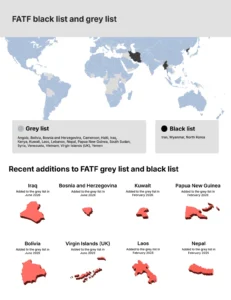
In the period between 2019 and 2021, the sector saw a "Wild West" approach to onboarding, characterized by minimal identity verification. As the Financial Action Task Force (FATF) began implementing the "Travel Rule" across member jurisdictions, the pressure shifted toward identifying not just the primary account holder, but also Ultimate Beneficial Owners (UBOs).
By 2023, the industry reached a tipping point. Major enforcement actions against global exchanges highlighted that a lack of automated, defensible audit trails was the leading cause of massive regulatory fines. The introduction of the Starter Plan in 2025/2026 reflects this pivot toward "compliance as a competitive advantage." Firms that can prove they have screened every client against global watchlists and political exposure lists (PEP) from "day one" are finding it significantly easier to secure banking partnerships and operating licenses compared to those relying on legacy, manual processes.
Data-Driven Risk Management
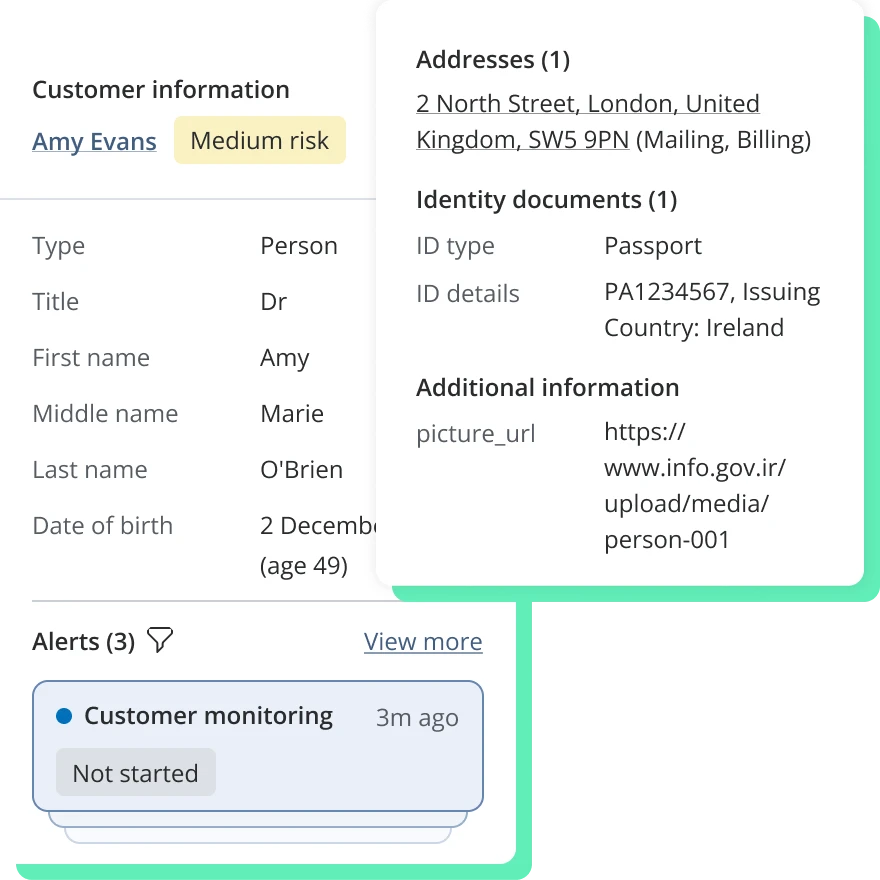
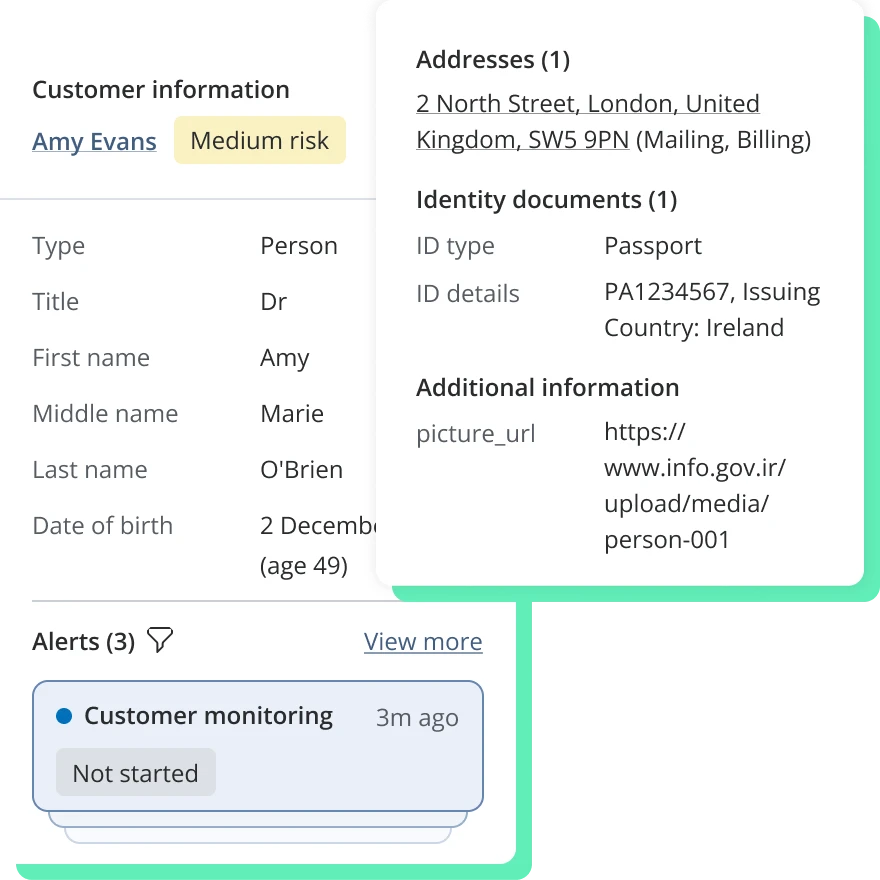
The Starter Plan’s architecture is built on three core pillars: individual customer screening, company entity screening, and continuous monitoring.
Supporting data from industry analysts suggests that the cost of manual compliance—when factoring in the salaries of AML analysts and the potential for human error—far exceeds the cost of a platform-based solution. For a firm handling 1,000 monitored entities, the transition from manual, spreadsheet-based screening to an automated, API-integrated platform can reduce onboarding latency by an estimated 60% to 70%.
The financial structure of the plan is tiered to reflect this scale. With entry points starting as low as $99 per month for annual subscribers, the barrier to entry has been lowered significantly. This creates a scalable path for startups: as a firm grows from 100 to 2,000 entities, the platform expands with them. For entities exceeding this volume, the transition to an Enterprise tier ensures that the compliance infrastructure remains robust, adding capabilities like advanced transaction monitoring and bespoke regulatory reporting.
Operational Implications and Expert Perspectives
The shift toward agentic workflows has sparked debate within the compliance community regarding the "human in the loop" principle. However, industry leaders like AUSIEX have noted that the value of such systems lies in their flexibility and the quality of their data.
"The decision to choose ComplyAdvantage came down to two things: quality and flexibility," noted a Senior Manager of Financial Crime Compliance at AUSIEX. "It really felt like a solution that would grow with us and support our evolving needs."
The implications for the broader market are profound. By offloading routine alert resolution to AI agents like "Cassie" or "Otto," firms are essentially insulating themselves from the "alert fatigue" that often leads to burnout and oversight errors in compliance departments. Because every agentic decision is logged within a tamper-proof audit trail, firms maintain full control and oversight, ensuring that they can explain every decision to a regulator years after the initial onboarding took place.
The Technical Edge: Why Integration Matters
One of the key technical differentiators for this platform is its native integration. Unlike many third-party overlays that simply scrape data and apply it to a client’s existing workflow, ComplyAdvantage’s system—referred to as "Mesh"—is built as a unified environment.
This integration ensures that the data being used to screen a customer is the exact same data being used for ongoing monitoring. When a person or entity’s risk status changes—for instance, if they appear on a new sanctions list—the system flags the change immediately across all records. This eliminates the "data silos" that often occur when firms use separate vendors for KYC, PEP screening, and transaction monitoring.
The rigorous testing process for these AI agents involves "back-testing" against thousands of historical, human-made decisions. By analyzing performance metrics such as the false-positive rate, the platform ensures that the automation is not just fast, but accurate. This minimizes the risk of "de-risking"—where legitimate customers are incorrectly flagged and banned—which is a critical concern for firms attempting to maintain a positive user experience.
Looking Ahead: The Future of Automated Compliance
As regulatory scrutiny continues to tighten, the divide between firms that view compliance as a burden and those that view it as a foundational pillar of their business will widen. The Starter Plan is clearly targeting the latter group.
For crypto firms, the ability to demonstrate, at any given moment, that they possess a complete, auditable history of their AML efforts is no longer a luxury. It is a fundamental requirement for long-term viability in the digital asset space. By combining the agility of cloud-based subscription models with the sophisticated, AI-driven intelligence of enterprise-grade security, the industry is entering a new phase of maturity.
Ultimately, the goal of these systems is to foster a safer financial ecosystem. By automating the identification of financial crime, firms can contribute to the legitimacy of the cryptocurrency market, potentially unlocking the next wave of institutional adoption. For the firms currently operating in the 100 to 2,000 entity range, the choice of a compliance partner will likely define their trajectory for the coming decade, separating the long-term survivors from those that struggle to keep pace with the shifting global regulatory tide.