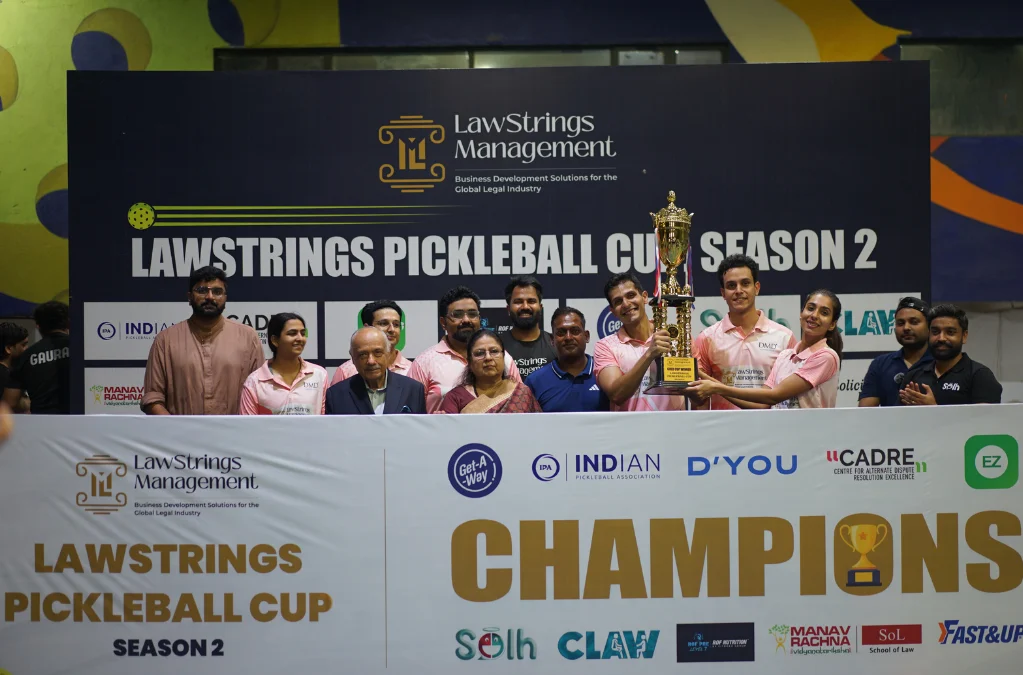
The legal fraternity of India traded their formal black robes and high-stakes courtrooms for athletic wear and pickleball paddles as the LawStrings Pickleball Cup: Season 2 drew to a thrilling conclusion in New Delhi. Over the course of two action-packed days, the premier sporting event successfully brought together leading corporate law firms, independent practitioners, and elite in-house legal teams from across the nation. Designed to promote physical wellness, camaraderie, and organic networking outside the traditional professional environment, the tournament has quickly established itself as a premier fixture on the annual legal calendar.
As pickleball continues its meteoric rise in popularity across India, the second iteration of this championship demonstrated how non-traditional sports can serve as powerful catalysts for community building within high-pressure professions. Sanctioned officially by the Indian Pickleball Association (IPA)—the recognized National Sports Federation for the sport under the aegis of the Ministry of Youth Affairs and Sports, Government of India—the event met the highest standards of competitive athletic governance.
A Grand Gathering of India’s Legal Elite
The two-day tournament witnessed an unprecedented level of participation from the upper echelons of India’s corporate and litigation ecosystem. Prominent names representing the pinnacle of legal practice descended upon the venue, creating an environment where friendly rivalry on the court translated into robust professional networking off it.
The competitive roster featured an impressive lineup of top-tier domestic and international law firms alongside powerful corporate legal departments. Among the distinguished participating organizations were Cyril Amarchand & Mangaldas, AZB & Partners, Luthra & Luthra, Talwar Thakore & Associates, JSA Advocates & Solicitors, Lakshmikumaran & Sridharan, DSK Legal, DMD Advocates, Fox & Mandal, Aekom Legal, Obhan & Mason, SKV Legal, Foresight Legal, the Law Offices of Gaurav H Sethi, Advocates and Solicitors India, and the in-house legal powerhouse of the Bharti Airtel Group.
The inclusion of both litigation experts and corporate dealmakers highlighted the universal appeal of the sport, bridging generational divides and hierarchies within firms as partners, associates, and corporate counsel teamed up in pursuit of championship glory.
Chronology of the Championship: How the Trophies Were Won
The tournament followed a rigorous knockout and round-robin format, ensuring that teams were tested on their endurance, tactical awareness, and synergy under pressure. Matches were fiercely contested from the opening serve on Day One to the final points of Day Two, reflecting the competitive drive inherent to legal professionals.
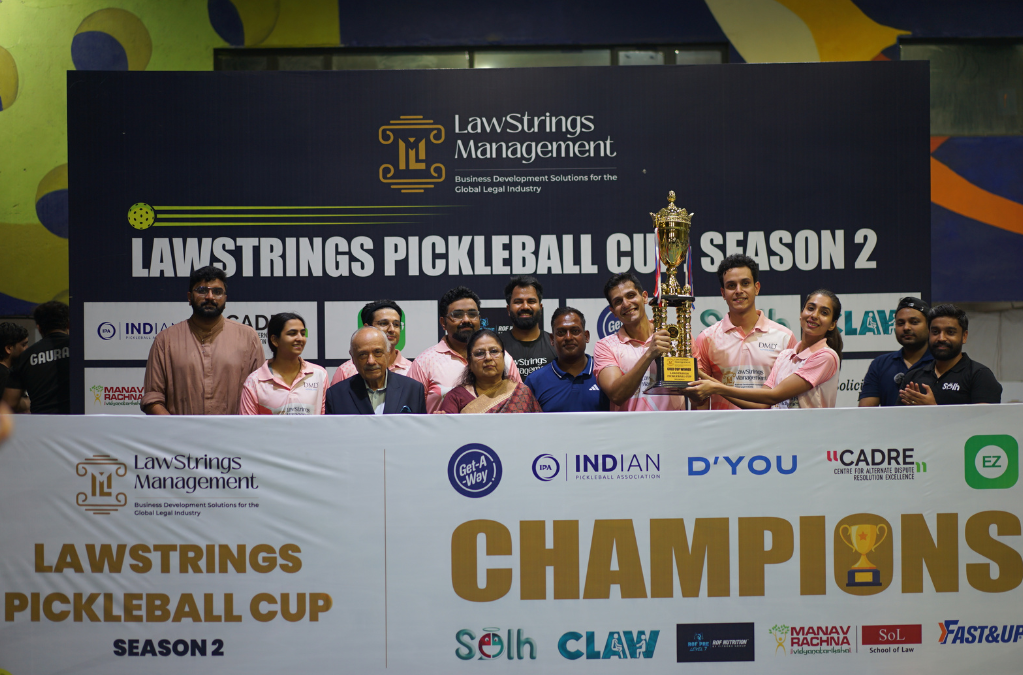
In the premier category of the tournament, DMD Advocates delivered a masterclass in teamwork and resilience. Outclassing a formidable field, the team successfully defended their crown to clinch back-to-back titles, emerging as the undisputed Gold Cup winners of Season 2. The championship-winning squad comprised Kunal Dutt, Chaitanya Kaushik, Haaris Faazili, Suman Yadav, Veni Tandon, Raghav Dutt, Sanya Dhir, and Saurabh Singh Ahluwalia. Their cohesive strategy and steady composure under pressure set the benchmark for the entire tournament.
Meanwhile, the Silver Cup was fiercely contested by AZB & Partners, who put up a stellar campaign throughout the two-day event. Securing a well-deserved second-place finish in the primary tier, the dynamic silver-winning team included Rachit Bahl, Ayush Tandon, Jatinder Singh Saluja, Shagun Badhwar, Arjun Narang, Ananya Singh, Shivangi Bhardwaj, Dhruv Mehta, and Paridhi Gupta.
The Bronze Cup was ultimately claimed by Aekom Legal following a series of hard-fought encounters that showcased exceptional grit. The bronze-winning roster featured Jasjeet Singh, Shubham Raghuwanshi, Vibhor Kapoor, Kinjal Sharma, Kinjal Goyal, Advityaa Makkar, Teena Malhotra, Amisha Ray, Sujoy Datta, and Aarsheya Sharda.
A Star-Studded Award Ceremony and Industry Recognition
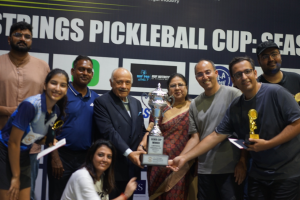
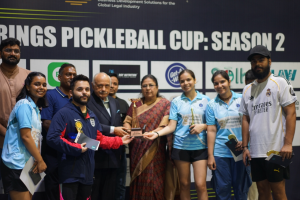
The conclusion of the tournament was marked by a glittering award distribution ceremony that underscored the institutional significance of the event. The ceremony was graced by prominent luminaries from both the judiciary and the national sports administration.
Among the distinguished guests were Hon’ble Justice Sangita Dhingra Sehgal (Retd.), Former Judge of the Delhi High Court and President of the State Commission of India; Dr. Lalit Bhasin, President of the Society of Indian Law Firms (SILF); and Mr. Dilip Mohanty, Director of Competition & Development at the Indian Pickleball Association. They were joined by Shubham Malhotra, Founder of LawStrings Management.
The presence of such esteemed figures lent considerable weight to the proceedings, highlighting the growing recognition of wellness, sports diplomacy, and lifestyle balance within the legal profession. Speakers noted that legal practices are increasingly prioritizing mental and physical health initiatives to combat burnout among practitioners.
Multi-Sectoral Partnerships and Ecosystem Support
The success of the LawStrings Pickleball Cup: Season 2 was significantly bolstered by a diverse array of strategic partners who ensured that players and attendees enjoyed a world-class experience. The collaborative backing of brands spanning dispute resolution, legal technology, health, and lifestyle highlighted the event’s broad commercial and institutional appeal.
CADRE ODR served as the official Dispute Resolution Partner, lending an ironic and fitting nod to the legal backgrounds of the participants. EZ Notary facilitated operations as the Document Execution Partner, while ROFF and Fitbox energized the athletes as the official Nutrition Partners. GETAWAY Ice Creams & Desserts provided sweet relief as the Dessert Partner, and Solh Wellness championed mental health as the Wellness Partner.
On the technological and academic fronts, CLAW Legaltech stepped in as the LegalTech Partner, and Manav Rachna University contributed as the Education Partner. Personal care and physical stamina were well-catered for by D’YOU as the Skincare Partner and Fast&Up as the Hydration Partner. This multifaceted corporate backing reinforced the tournament’s evolution from a simple recreational meet into a holistic lifestyle and networking ecosystem.
Vision for the Future: Bridging Wellness and Professional Networking
Reflecting on the overwhelming success of the second season, Shubham Malhotra, Founder of LawStrings Management, shared his perspective on the initiative’s core philosophy and future trajectory.
"When we started this initiative, our vision was simple: to create a platform where lawyers could step away from the confines of the courtroom and boardroom, come together through sport, and build genuine connections in a more informal environment," Malhotra stated.
"The response to Season 2 has been incredibly encouraging and is a strong validation of that vision. Seeing leading law firms and in-house legal teams compete, support one another, and enjoy the spirit of the game has been immensely rewarding. We are already looking forward to making Season 3 bigger, stronger, and even more engaging for the legal community."
Broader Implications for the Legal Ecosystem
The smooth execution and enthusiastic reception of the LawStrings Pickleball Cup: Season 2 point to a broader cultural shift within the Indian legal industry. Traditionally viewed as a high-stress, sedentary profession characterized by grueling work hours and intense litigation battles, the legal sector is experiencing a paradigm shift toward holistic employee wellness, work-life integration, and community engagement.
By institutionalizing sports events that draw participation from competing firms, organizers are fostering a culture of collegiality that transcends billable hours and case files. Furthermore, the involvement of national sporting bodies like the IPA and high-profile institutional leaders like SILF’s Dr. Lalit Bhasin signals that corporate wellness initiatives within the legal sector are moving from the periphery to the mainstream.
As preparations for Season 3 begin, the LawStrings Pickleball Cup has successfully carved out a unique niche, proving that the competitive spirit of a lawyer is just as potent on a pickleball court as it is before a bench of judges.