The Financial Action Task Force (FATF) concluded its October 2026 plenary session in Paris on October 30, marking a pivotal moment in the organization’s ongoing effort to fortify the global financial integrity landscape. This session, spanning three days of intensive deliberation, represented the inaugural plenary under the leadership of UK President Giles Thomson. Thomson, who assumed the presidency in June 2026, has signaled a strategic shift toward modernizing how the FATF addresses emerging digital threats, specifically targeting the intersection of virtual assets, organized fraud, and systemic financial crime.
The summit convened delegates from over 200 jurisdictions and international observers, solidifying the FATF’s position as the primary architect of global AML/CFT/CPF (anti-money laundering, countering the financing of terrorism, and countering proliferation financing) standards. A notable development during this session was the formal participation of Barbados, Namibia, and Thailand under the FATF Guest Initiative, a move intended to foster deeper cooperation with emerging markets that have demonstrated a commitment to enhancing their regulatory frameworks.
The Evolving Landscape of the Grey List
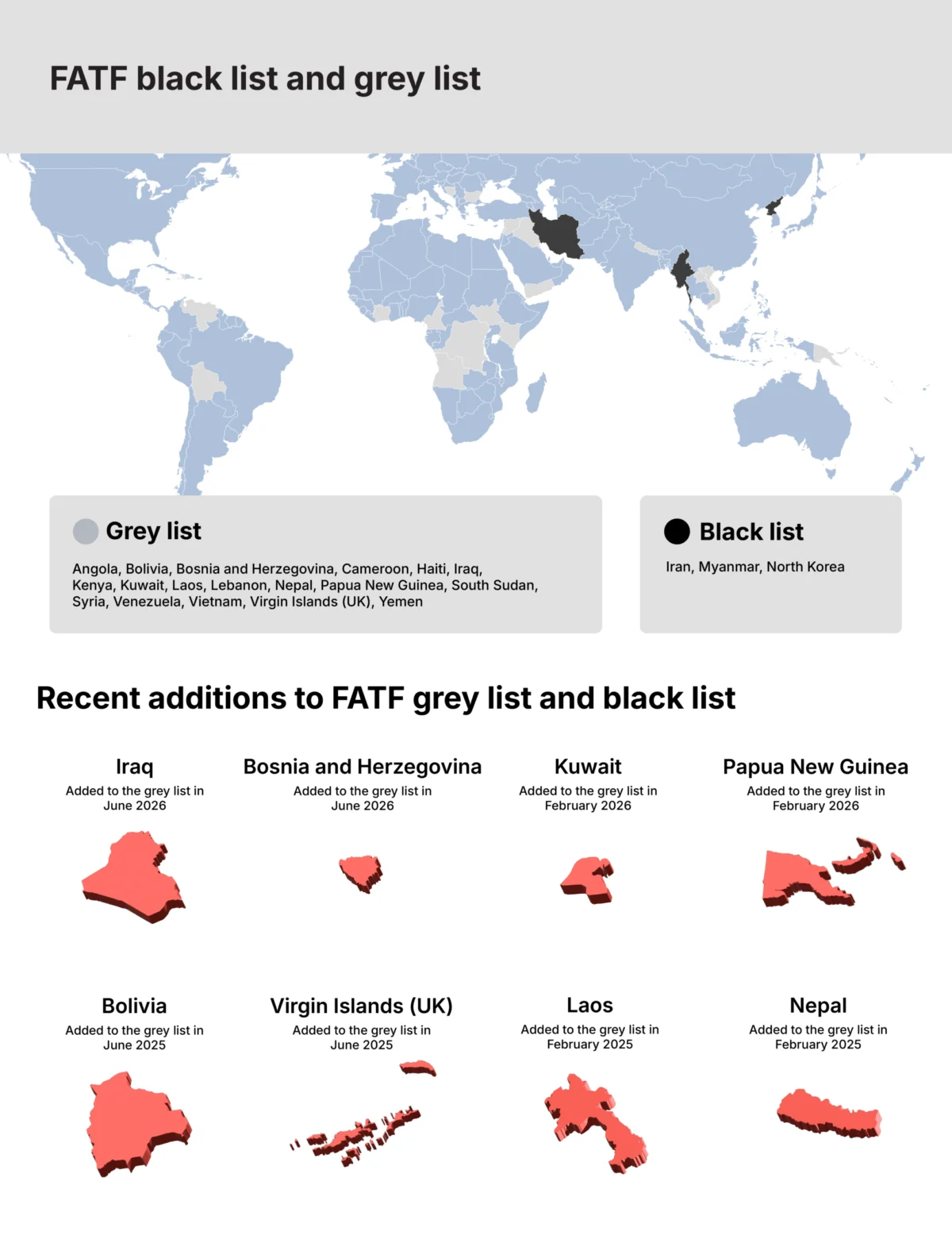
The grey list—formally designated as jurisdictions under increased monitoring—serves as a critical barometer for institutional risk assessments. Inclusion on this list often triggers mandatory enhanced due diligence (EDD) for financial institutions, leading to increased operational costs and restricted access to international capital markets.
In a move signaling progress in global oversight, the FATF removed four jurisdictions from the grey list during the October session: Bulgaria, Côte d’Ivoire, the Democratic Republic of the Congo, and Monaco. Each of these nations underwent rigorous on-site verification to confirm the successful implementation of their respective action plans.
Bulgaria, which entered the list in October 2023, satisfied the FATF’s requirements by reforming its beneficial ownership registries and implementing risk-based supervision across high-risk sectors, including real estate and virtual asset service providers (VASPs). Similarly, Monaco’s removal followed a concerted effort to enhance the investigative capacity of its judiciary and improve the efficacy of its suspicious transaction reporting mechanisms. The departure of these nations from the list reduces the total count of monitored jurisdictions from 22 to 18, providing a degree of relief for global firms with exposure to these markets.
However, the plenary was not without its warnings. The FATF issued a stern rebuke to Vietnam, which has remained on the grey list since June 2023. With all previously agreed-upon deadlines having expired in May 2025, the FATF noted that Vietnam’s failure to implement promised reforms regarding virtual asset regulation and international cooperation is no longer tenable. The organization has set a deadline of February 2027 for "tangible improvements," hinting that failure to comply could result in more severe restrictive measures. For multinational firms, this warning serves as a clear indicator that transaction monitoring related to Vietnam should remain at an elevated risk level through the first quarter of 2027.
Stagnation on the Black List
While the grey list saw reductions, the "black list"—the list of high-risk jurisdictions subject to a call for action—remains unchanged, housing the Democratic Republic of the Congo, Iran, and the DPRK.
The FATF reiterated its call for the application of comprehensive countermeasures against the DPRK and Iran, citing the persistent threat of proliferation financing. In the case of Iran, the organization noted that despite a September 2026 update, the country’s legal framework remains fundamentally deficient, specifically regarding the criminalization of terrorist financing and the absence of a robust, standard-aligned targeted financial sanctions regime.
Myanmar, while not subject to the same level of countermeasures as Iran, remains under heavy scrutiny. The FATF emphasized that Myanmar must address the systemic illicit finance risks emanating from its burgeoning "scam compound" industry. The organization has explicitly signaled that if significant progress is not observed by February 2027, it will consider escalating its response, potentially moving Myanmar toward the more restrictive tier of countermeasures.
Strategic Priorities: Digital Assets and Fraud Compounds
A central theme of the October 2026 plenary was the modernization of the FATF’s approach to technology-enabled crime. Responding to the Ministerial Declaration of April 2026, the organization has accelerated its timeline for the implementation of standards regarding virtual assets. Recognizing that criminal networks are increasingly utilizing cryptocurrencies to bypass traditional banking controls, the FATF will launch a targeted, criteria-based review of jurisdictions with high volumes of virtual asset activity.
The findings from this review, slated for publication in June and October 2027, are intended to provide a granular look at how well jurisdictions are mitigating the risks of VASP-related money laundering. By establishing an accelerated follow-up process, the FATF aims to close regulatory gaps before they can be exploited by illicit actors.
Furthermore, the plenary addressed the rise of "scam compounds," which the FATF identifies as one of the fastest-growing sectors of organized crime. The upcoming publication of a comprehensive report on the illicit financial flows linked to these compounds marks the first major deliverable of the UK Presidency’s anti-fraud roadmap. By mapping the "crime-as-a-service" economy that underpins these scams, the FATF hopes to provide law enforcement agencies with the intelligence necessary to dismantle the business models of these criminal syndicates rather than merely reacting to individual fraud cases.
Mutual Evaluations and Institutional Capacity
The plenary saw the formal adoption of mutual evaluation reports for the United States and Mexico. These evaluations, conducted in partnership with regional bodies like GAFILAT, represent a "deep dive" into the effectiveness of national AML/CFT frameworks. Both nations have been issued a "Roadmap of Key Recommended Actions," with a three-year window to address identified shortcomings. These reports are expected to be released in December 2026, providing the private sector with critical insights into the evolving regulatory expectations within two of the world’s largest economies.
In an effort to ensure that international standards do not unfairly penalize developing nations, the FATF has introduced a new, tailored approach to mutual evaluations for low-capacity jurisdictions. By improving training for assessors and emphasizing a risk-based approach (RBA) that accounts for domestic constraints, the FATF intends to improve the quality of compliance without stifling economic development. This shift will culminate in the Learning and Development Forum in Dallas, Texas, in December 2026, where stakeholders will work to synthesize these findings into a universal policy statement on the practical application of the RBA.
Implications for the Compliance Industry
The outcomes of the October 2026 plenary carry significant weight for compliance teams globally. The removal of four countries from the grey list necessitates an immediate review of internal risk ratings and automated screening parameters. Firms that maintain restrictive policies toward, for instance, Monaco or Bulgaria, may now consider recalibrating their exposure, potentially streamlining trade and banking relations.
Conversely, the warning issued to Vietnam suggests that compliance departments should prepare for the possibility of heightened regulatory scrutiny or potential re-categorization in early 2027. The continued emphasis on virtual assets and scam compounds confirms that financial intelligence units must move beyond static compliance checklists toward a more dynamic, behavior-based monitoring system.
As the FATF moves toward its next plenary in February 2027, the focus remains firmly on efficacy and adaptation. The organization is no longer just concerned with the existence of laws, but with the practical ability of states to use those laws to seize assets, prosecute offenders, and disrupt the financial arteries of organized crime. For the private sector, the message is clear: the era of "box-ticking" is over, replaced by an expectation of proactive risk management and continuous engagement with an increasingly complex global financial landscape.