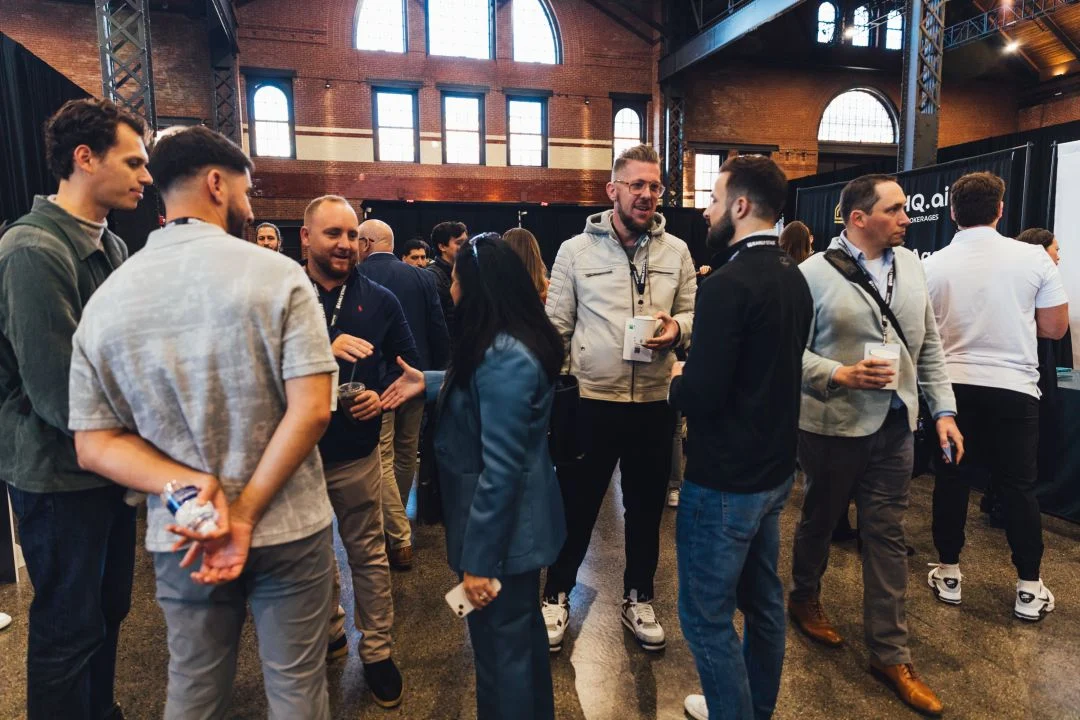
The innovation ecosystem is converging in Massachusetts today as the TechCrunch Founder Summit 2026 officially opens its doors at the historic SoWa Power Station in Boston. Bringing together hundreds of ambitious entrepreneurs, angel investors, venture capitalists, and industry leaders, the one-day immersive bootcamp is designed to cut through theoretical business advice and deliver actionable, real-world frameworks for scaling high-growth enterprises. Against a backdrop of shifting macroeconomic conditions and rapid technological disruption—particularly in artificial intelligence and enterprise software—this year’s summit arrives at a critical juncture for early-stage founders navigating a complex capital-raising landscape.
A Comprehensive Agenda Tailored for Modern Founders
Designed to address every phase of the entrepreneurial lifecycle, the summit’s programming is meticulously split across multiple dedicated tracks: the Build Stage, the Impact Stage, intimate peer-led roundtables, live pitch competitions, and specialized networking sessions powered by Braindate.
The rationale behind this multi-tiered format is clear: while keynote presentations and macro panel discussions offer broad strategic insight, the granular problems founders face require specialized, highly interactive environments. Organizers structured the event to ensure that attendees transition seamlessly from high-level vision casting to tactical execution.
The Build Stage: Mechanics of Early-Stage Execution
Kicking off the morning sessions, the Build Stage focuses squarely on the foundational mechanics of early-stage company building. Rather than dwelling on vague growth metrics, speakers and moderators on this stage drill down into distribution, fundraising dynamics, and team composition.
Hunter Worland of NEA opened discussions by challenging the traditional Silicon Valley playbook that prioritizes raw technological superiority above all else. Worland argued that in today’s crowded marketplace, distribution must be engineered as a core competitive advantage from day one. Without a clear, repeatable path to the customer, even the most innovative products risk stalling out.

Following this, Kristen Craft of Fidelity Private Shares delivered an exhaustive overview of current venture capital trends. Craft noted that while capital is available for fundamentally sound businesses, investors are exercising significantly higher levels of due diligence compared to previous market cycles. Founders are being urged to demonstrate clear paths to profitability and capital efficiency rather than chasing top-line growth at all costs.
The Build Stage also tackled the art of persuasion. Dave Balter of True Ventures and Edisyl led a tactical seminar addressing a fundamental anxiety for every entrepreneur: Does your pitch genuinely earn the next conversation? Balter dissected the structural components of successful investor decks, emphasizing that clarity, narrative economy, and problem validation consistently outweigh exaggerated market projections.
The Impact Stage: Navigating Scale and Long-Term Viability
As startups transition from initial product validation to sustained market penetration, a new suite of operational and organizational challenges emerges. To address this phase, the Impact Stage shifts focus toward product-market fit, enterprise relationships, and leadership scaling.
Steve Fredette, president, co-founder, and director of Toast, provided a masterclass in regional ecosystem building, drawing on his experience scaling one of Boston’s most prominent tech success stories. Fredette emphasized the importance of resilience and deep customer empathy, noting that localized support networks can provide a powerful launchpad for enterprise software companies.
Addressing the delicate balance of corporate growth, Rudina Seseri, founder and managing partner of Glasswing Ventures, explored the strategic necessity of knowing when to pump the brakes. Seseri noted that prematurely scaling an organization before its unit economics are fully optimized can burn through precious runway and destabilize company culture.
Kent Bennett of Bessemer Venture Partners reinforced this sentiment during his session on validating product-market fit prior to aggressive scaling. Bennett outlined quantitative and qualitative markers that indicate a product is truly pulling demand from the market, advising founders to resist external pressures to expand until core retention metrics validate the move.

Rounding out the stage panels, Chase Garbarino, CEO and co-founder of HqO, presented the "Boston Founder Playbook," highlighting the distinct advantages of building ambitious, category-defining companies outside traditional West Coast technology hubs.
Deep-Dive Roundtables: Solving Niche Challenges
Complementing the broader stage presentations, the summit’s curated roundtables offer attendees an opportunity to workshop specific operational hurdles in closed-door, peer-led settings.
Among the most heavily attended roundtables was a session led by Chirag Shah of Define Ventures, which addressed the complexities of entering highly regulated vertical markets. Selling into healthcare, finance, or heavy industry presents distinct regulatory and cultural barriers that standard go-to-market strategies often fail to address.
In the technology track, Shishir Tewari of Procore Technologies led a pragmatic discussion on artificial intelligence. Moving past the broad hype surrounding generative AI models, Tewari focused on the rigorous technical challenge of reducing model hallucinations through the integration of robust enterprise context.
Similarly, Merve Kitapci of ADIN.AI shared actionable strategies for enterprise sales execution, detailing the rigorous roadmap required for early-stage startups to secure global enterprise clients well in advance of a Series A funding round.
Forward-looking technical sessions also explored uncharted territory. Andy Tang of Draper Associates moderated a discussion on pioneering markets that currently lack established category definitions, while Linden Tibbets of IFTTT reexamined long-held assumptions regarding team sizing, operational productivity, and the evolving leverage small teams gain through modern automation tools.

Live Pitch Scrutiny: "So You Think You Can Pitch?"
One of the most anticipated interactive segments of the summit is the live startup pitch competition, aptly titled “So You Think You Can Pitch?”
Featuring a panel of active institutional investors—including Dave Balter, Chirag Shah, and Simran Suri of Maveron—the session provides a transparent window into the minds of venture capitalists. Selected founders pitch their businesses in real time, receiving immediate, unvarnished feedback on their narrative structure, value proposition, and risk profile.
For the audience, observing live evaluations serves as an invaluable educational tool. Attendees gain direct insight into precisely which elements capture an investor’s attention, where founder narratives typically lose momentum, and what critical questions anticipate institutional diligence.
Intentional Networking Through Braindate and Evening Receptions
Recognizing that industry breakthroughs frequently occur away from the podium, the TechCrunch Founder Summit integrates structured networking mechanisms designed to maximize peer-to-peer engagement.
The Networking Lounge, powered by Braindate, enables attendees to pre-schedule one-on-one meetings or join small group discussions targeted at precise operational challenges. Whether founders want to compare notes on fundraise preparation, debate technical architecture, or discuss regional expansion strategies, the platform converts passive conference attendance into active collaboration.
The day’s formal activities conclude with an exclusive closing reception presented by Fidelity Private Shares. By providing an unstructured environment for relaxed dialogue, the reception ensures that the relationships forged during workshops, panels, and roundtables can solidify into lasting professional partnerships.

Broader Implications for the Tech Ecosystem
The timing of the TechCrunch Founder Summit 2026 underscores a maturing startup economy. As venture financing normalizes following the volatility of recent years, events that emphasize capital efficiency, sustainable growth, and tactical execution have become indispensable for emerging companies.
By combining high-level macroeconomic analysis from top-tier institutional investors with the tactical, in-the-trenches experiences of successful operators, the summit bridges the gap between vision and execution. For the founders gathered at the SoWa Power Station, the insights gained today will directly influence product roadmaps, hiring strategies, and fundraising trajectories for the quarters ahead.