The landscape of financial crime is undergoing a perilous metamorphosis, driven by rapid technological advancements and the democratization of artificial intelligence. In response to this shifting paradigm, anti-money laundering (AML) and compliance technology provider ThirdEye has announced a strategic partnership with global identity verification leader ID-Pal. This collaboration aims to revolutionize Know Your Customer (KYC) and Know Your Business (KYB) capabilities across Australia, New Zealand, and the United Kingdom.
By integrating ID-Pal’s sophisticated document authentication, biometric verification, and address validation engines into its existing compliance architecture, ThirdEye is equipping regulated entities in these key international markets with an upgraded, multi-layered defense system. The alliance comes at a critical juncture for financial institutions, law enforcement agencies, and regulatory bodies worldwide, all of which are racing to outpace increasingly sophisticated threat actors who leverage generative AI to fabricate identities and bypass legacy onboarding controls.
The Mechanics of the Partnership: Bridging Gaps in Compliance
Financial institutions operating in Australia, New Zealand, and the UK face an intricate web of regulatory mandates designed to suppress illicit financial flows, terrorist financing, and corporate fraud. Meeting these obligations requires robust technological infrastructure capable of handling large volumes of customer data with absolute precision and speed.
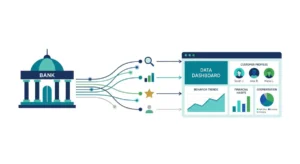
Through this integration, clients utilizing ThirdEye’s comprehensive AML platform will gain seamless access to ID-Pal’s suite of verification tools. These include real-time biometric matching, deep document forensics capable of detecting synthetic media and sophisticated forgeries, and cross-referencing against thousands of trusted global data sources. Rather than forcing compliance officers to juggle disparate software solutions for transaction monitoring, watchlist screening, and initial identity proofing, the combined offering delivers an end-to-end ecosystem. This environment manages risk continuously throughout the entire customer lifecycle, beginning from the initial onboarding handshake through to ongoing transactional oversight.
The partnership leverages ThirdEye’s deep local expertise in the Antipodean and British markets alongside ID-Pal’s globally recognized, ISO-certified identity verification framework. The result is a streamlined solution that reduces friction for legitimate customers while erecting formidable barriers against professional money launderers and cybercriminals.
Background and Evolution of the Collaborating Entities
To understand the weight of this strategic alliance, it is helpful to examine the institutional foundations and trajectories of both organizations.
ThirdEye operates as a specialized division within Jade Software Corporation, a prominent enterprise software development firm that forms part of the UK-based Skipton Group. Founded in 2012 and headquartered in Christchurch, New Zealand, ThirdEye was built with a specific purpose: to provide highly regulated organizations—ranging from retail banks and credit unions to wealth management firms and real estate agencies—with intelligent, flexible tools to defend against financial crime. Its modular platform combines smart automation with localized regulatory intelligence, offering customer screening, transaction monitoring, dynamic case management, and automated regulatory reporting.
On the other side of the partnership is ID-Pal, a Dublin, Ireland-headquartered identity verification specialist founded in 2016. Certified to ISO 27001 and ISO 9001 standards, ID-Pal has carved out a distinct niche in the RegTech sector by delivering a privacy-first, zero-data-access verification solution. The company’s architecture combines document, biometric, and database checks into a single, GDPR-compliant platform. Available out-of-the-box, via robust APIs and SDKs, or through native integrations such as Salesforce AppExchange, ID-Pal supports over 16,000 distinct identity documents across more than 400 verified global data sources.
ID-Pal’s international reputation has scaled rapidly in recent years. The company recently reinforced its market standing by being named a High Performer in G2’s Fall 2026 Identity Verification report, where it outperformed category benchmarks across implementation, usability, administrative control, and customer support. Furthermore, ID-Pal showcased its forward-looking capabilities at the FinovateFall 2025 conference in New York, demonstrating its proprietary ID-Detect solution—a specialized layer designed specifically to unmask AI-generated fake documents and deepfake biometric attempts during the remote onboarding process.
The Growing Menace of AI-Driven Financial Crime
The timing of the ThirdEye and ID-Pal partnership is far from coincidental. Global financial systems are currently navigating an unprecedented wave of financial crime fueled by artificial intelligence. Generative AI tools, once restricted to advanced technological laboratories, are now readily accessible to underground syndicates. These tools enable malicious actors to generate hyper-realistic synthetic identities, forge complex corporate ownership documents for shell companies, and execute sophisticated business email compromise (BEC) and synthetic fraud schemes at scale.
Traditional KYC solutions, which often rely on static database checks or rudimentary optical character recognition (OCR), struggle to keep pace with these dynamic threats. Static documents can be easily manipulated using commercially available editing software, and deepfake video technology can successfully spoof basic liveness detection tests.
Regulatory bodies across the globe have taken notice. Financial intelligence units and prudential regulators in Australia (AUSTRAC), New Zealand (DIA and the Reserve Bank of New Zealand), and the United Kingdom (FCA) have steadily escalated compliance expectations. Institutions failing to deploy advanced verification and monitoring technologies face severe regulatory penalties, reputational damage, and financial losses. Consequently, regulated entities are increasingly demanding modular, agile compliance stacks that can adapt to emerging threats without creating cumbersome operational bottlenecks that drive away legitimate consumers.
Executive Insights and Official Reactions
Industry leaders from both organizations have emphasized the strategic imperative of this collaboration in addressing modern security challenges.
Colum Lyons, CEO and Founder of ID-Pal, highlighted the borderless nature of contemporary financial crime and the necessity of unified defense strategies.
"Fraud and financial crime know no borders, and increasingly, neither does the technology used to commit them," Lyons stated. "ThirdEye has built a strong AML proposition across Australia, New Zealand, and the UK, and we’re delighted they’ve chosen ID-Pal to power identity and business verification within it. Together, we can help organizations establish trust at onboarding and manage fraud and compliance risk throughout the customer lifecycle."
Echoing these sentiments, Hamish Shaw, General Manager at ThirdEye, pointed to the accelerating pace of technological threats facing compliance officers and the importance of cross-industry collaboration.
"The financial crime landscape has never been static; bad actors are always evolving new techniques to keep us on our toes," Shaw noted. "Now, with AI accelerating the threats, it’s so crucial for those of us on the right side to work together to ensure we stay ahead."
Broader Market Implications and Future Outlook
The integration of ID-Pal’s technology into ThirdEye’s ecosystem carries several profound implications for the RegTech landscape and the broader financial services sector in the UK and Australasia.
First, it signals a broader industry shift toward platform consolidation and interoperability. Financial institutions are increasingly suffering from "vendor fatigue," a phenomenon where compliance departments must manage dozens of separate point solutions for KYC, KYB, transaction monitoring, and sanctions screening. By embedding best-of-breed identity verification directly into a comprehensive AML workbench, ThirdEye and ID-Pal reduce administrative friction and lower the total cost of compliance ownership for regional banks and financial intermediaries.
Second, the partnership addresses the delicate balance between stringent security and frictionless customer experience. In competitive retail banking and fintech markets, consumer drop-off rates during lengthy or confusing onboarding procedures can severely impact customer acquisition. By utilizing AI-powered, real-time verification that completes in seconds, institutions utilizing the combined platform can achieve high rates of straight-through processing while maintaining ironclad adherence to regulatory standards.
Finally, the inclusion of robust Know Your Business (KYB) capabilities alongside traditional KYC acknowledges the rising tide of corporate fraud. As criminal syndicates increasingly utilize complex corporate structures, multi-layered shell companies, and nominee directors to launder illicit funds, the ability to rapidly verify ultimate beneficial ownership (UBO) and corporate legitimacy has become paramount. The combined ThirdEye and ID-Pal offering provides financial institutions with the investigative depth required to pierce corporate veils and identify hidden risks before establishing business relationships.
As financial institutions in Australia, New Zealand, and the United Kingdom continue to grapple with an evolving threat matrix defined by artificial intelligence and borderless cybercrime, strategic alliances such as the one forged between ThirdEye and ID-Pal represent a vital line of defense. By uniting specialized identity verification with intelligent anti-money laundering frameworks, both companies are helping to establish a new benchmark for corporate security, regulatory compliance, and trust in the digital economy.