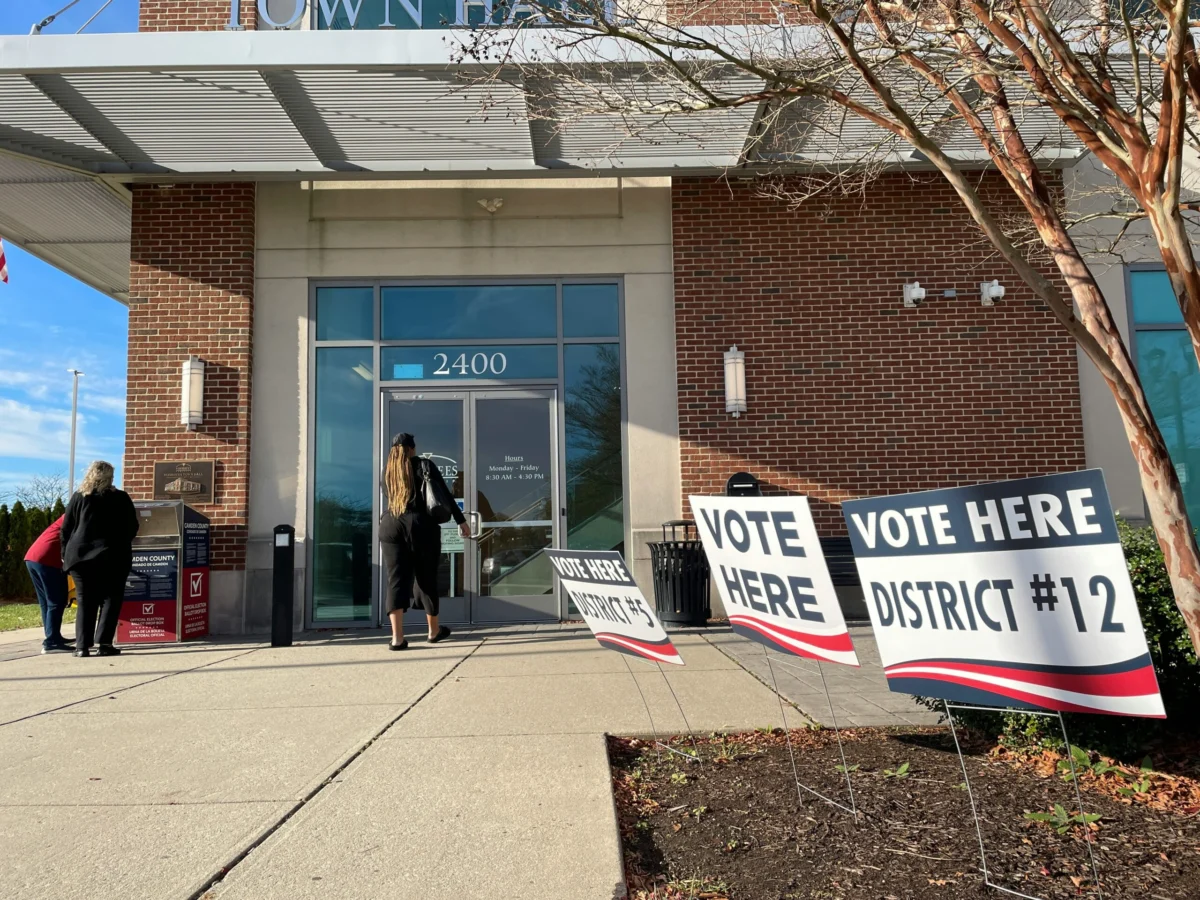
The American electorate has delivered a definitive verdict on a wide-ranging slate of state and local ballot measures that carry profound implications for the future of community development, public finance, and impact investing. As citizens across the country weighed in directly on pressing public policy questions—ranging from the aggressive nationwide buildout of artificial intelligence data centers and localized school bond offerings to green infrastructure funding and innovative public banking structures—the results have revealed a complex landscape of grassroots pushback, progressive climate financing, and institutional caution.
For impact investors, municipal finance professionals, and clean energy developers, these midterm and off-cycle election outcomes offer critical insights into shifting community priorities. While local populations increasingly demand accountability, financial guarantees, and environmental safeguards from rapid technological expansion, they are simultaneously pioneering novel revenue models to fund the green transition. At the same time, efforts to reshape public finance through novel municipal banking structures and state-level sovereign wealth funds faced formidable political and structural headwinds.
Examining the intersection of these ballot results provides a comprehensive roadmap of where public sentiment aligns with sustainable capital deployment—and where friction points between high-tech infrastructure and local communities are intensifying.
The Data Center Backlash: Citizens Draw the Line on AI Infrastructure
One of the most striking trends to emerge from the recent election cycle is the widespread, coordinated resistance to the rapid physical expansion of AI data centers. Driven by concerns over staggering energy consumption, water usage, noise pollution, and strain on local electrical grids, voters in multiple states overwhelmingly rejected unbridled data center development.
According to a comprehensive post-election analysis by Ballotopedia, voters in 10 states rejected or placed strict limitations on data center buildouts across 41 distinct local ballot measures. More than half of these initiatives were concentrated in Ohio, where full or partial bans successfully passed in 13 cities and towns, including Granville, Urbana, and Trenton. Furthermore, several municipalities opted for restrictive compromises, passing legislation that caps data center energy consumption at 25 megawatts.
In Perry, Village of Perry voters approved a pivotal measure that fundamentally alters the risk-reward calculation for developers. The new ordinance requires data center developers to provide substantial financial guarantees before they can become eligible for local tax breaks. Additionally, the measure establishes stringent noise pollution limits, addressing a frequent complaint from residents living adjacent to massive server farms humming with industrial cooling fans.
The anti-data center wave also swept up adjacent sectors critical to the broader energy transition, most notably battery energy storage systems (BESS). In El Dorado, Kansas, voters approved a citizen-led initiative that enacts a sweeping ten-year ban on both data centers and battery energy storage systems with an aggregate energy capacity greater than 80 kilowatt-hours. A remarkably similar citizen-led initiative also passed in Emporia, Kansas, underscoring a deep-seated regional skepticism toward large-scale electrochemical energy storage infrastructure despite its necessity for stabilizing intermittent renewable energy sources.
The lone bright spot for the pro-data center and industrial development lobby occurred in Harwood, North Dakota. There, voters rejected a proposed ballot measure that would have mandated an extra layer of regulatory review and public scrutiny for large-scale industrial projects. Nevertheless, the overarching national narrative remains clear: communities are increasingly unwilling to host heavy digital infrastructure without binding guarantees of local benefit and environmental mitigation.
Clean Energy Funding Innovation: Eugene Paves the Way with Corporate License Fees
While industrial data centers faced fierce resistance, communities are actively finding innovative ways to finance local sustainability and clean energy transitions. A prime example of this trend unfolded in Eugene, Oregon, where voters decisively approved a progressive ballot initiative establishing the Eugene Clean Energy Fund.
Beginning in 2029, large-scale retail corporations operating within Oregon’s second-largest city will directly fund municipal green initiatives. The ordinance applies specifically to retailers that maintain gross profits exceeding $1 billion nationally while generating at least $500,000 in taxable sales within Eugene. These major corporate entities will be required to pay an annual 2 percent "license fee" calculated on their local sales. To protect local commerce and essential services, the measure exempts independent contractors, utility providers, cooperatives, and credit unions.
The financial scope of the fund is expected to be substantial. The collected proceeds will be funneled directly into a dedicated clean energy fund tasked with deploying capital across multiple strategic vectors. These include renewable energy and energy efficiency installations, clean energy job training programs, specialized apprenticeships, contractor support, green infrastructure initiatives, and future technological innovations. Strict guardrails were also written into the text, limiting administrative expenditures to no more than 10 percent of the fund starting in 2030.
To ensure transparency and equitable deployment, the ordinance mandates the creation of a specialized committee of industry and community experts. This body will be responsible for making funding recommendations, rigorously evaluating program effectiveness, and ensuring that all funded projects are performed by historically disadvantaged groups. The measure garnered robust public support, passing comfortably with nearly 58 percent of the vote.
Public Finance Experiments: San Francisco’s Bank Battle and Missouri’s Sovereign Fund Defeat
Efforts to fundamentally restructure public finance and leverage public capital for community development faced a mixed and contentious reception at the ballot box, highlighting the ideological and structural hurdles facing alternative financial institutions in the United States.
Across the San Francisco Bay Area, public banking advocates experienced both a cliffhanger and a decisive defeat. In San Francisco, Measure B—an ambitious effort to amend the city charter to create a Municipal Financial Corporation—remained locked in a remarkably tight race that proved too close to call immediately following election night. Proponents argue that the corporation represents the necessary foundational first step toward establishing a fully functioning municipal public bank.
Supporters of the initiative, including San Francisco Supervisor Jackie Fielder, championed the economic potential of keeping municipal funds circulating locally. "Having our city dollars, which amounts to $16 billion, actually work for us, recirculate in our own economy in affordable housing financing, support for small businesses to open and expand, support for renewable energy to meet our climate goals has always been the vision for a public bank," Fielder noted in an official statement.
However, the initiative faced fierce opposition from city leadership, including San Francisco Mayor Daniel Lurie, who argued that the city already possesses sufficient financial institutions and existing mechanisms capable of supporting those critical policy priorities.
Skepticism also came from policy experts, such as the San Francisco Bay Area Planning and Urban Research Association (SPUR). While the prominent nonprofit urban think tank supports the abstract concept of public banking, it formally opposed Measure B. SPUR’s critique centered on governance mechanics, arguing that the measure inappropriately "embeds detailed governance structures for the proposed Municipal Financial Corporation, future public bank, and multiple oversight commissions directly into the city charter, limiting future flexibility and adding complexity to a document that should focus on fundamental governmental structures."
Public banks remain exceedingly rare within the United States, despite being common fixtures in international public finance. The primary American exception is the historic Bank of North Dakota, which was established by the state legislature in 1919 and currently manages nearly $11 billion in assets, serving as a frequent model for modern municipal banking advocates.
The public banking concept suffered a definitive loss just across the bay in Berkeley, where voters rejected Measure Z with only 42 percent of the vote. The measure would have instituted a new municipal parcel tax specifically earmarked to capitalize and fund a local public bank.
Meanwhile, in the Midwest, state-level public finance innovation also encountered a roadblock. In Missouri, voters decisively defeated Amendment 7, which had proposed the creation of a state-backed sovereign wealth fund designed to generate investment earnings that would eventually replace traditional state tax revenues. Opponents of the amendment successfully galvanized public skepticism by pointing out a fatal structural flaw: the ballot measure failed to establish a secure, dedicated funding mechanism or ongoing revenue source to build and maintain the permanent public endowment.
Implications for Impact Investors and the Broader Market
The outcomes of these diverse ballot initiatives offer vital strategic lessons for impact investors, developers, and policymakers navigating the American political and economic landscape.
First, the overwhelming pushback against data centers and energy storage systems signals that infrastructure developers can no longer rely on quiet regulatory approvals. Moving forward, social license to operate will require proactive community engagement, enforceable financial guarantees, strict environmental protections, and localized economic benefits. Ignoring local resistance will increasingly result in costly ballot box moratoriums and legislative bans.
Second, the success of Eugene’s corporate-funded clean energy initiative demonstrates that voters are increasingly willing to implement progressive tax mechanisms on major corporations to drive local green transitions. Impact investors should monitor similar municipal funding models as potential templates for scaling urban climate resilience without solely relying on strained municipal bond markets or federal subsidies.
Finally, the hurdles faced by public banking initiatives in California and sovereign wealth fund proposals in Missouri illustrate the immense difficulty of structural financial innovation. While the desire to harness public capital for affordable housing, small business expansion, and climate goals remains strong, proposals must navigate complex governance concerns, institutional resistance, and rigorous demands for fiscal transparency before gaining the trust of the electorate.