In the modern global economy, establishing the baseline existence of a corporate entity is a relatively straightforward procedural task. However, determining who ultimately owns a corporation, who wields practical control over its operations, and how its risk profile shifts over time represents one of the most formidable challenges in modern regulatory compliance. Complex corporate hierarchies, fragmented international ownership registries, and fluid commercial relationships frequently leave glaring vulnerabilities in traditional Know Your Business (KYB) and Know Your Customer (Customer Due Diligence) frameworks. Financial institutions and corporate service providers increasingly turn to artificial intelligence (AI) and sophisticated entity-resolution technologies to bridge these intelligence gaps, mapping intricate relationships and monitoring risk indicators well beyond the initial onboarding phase. Yet, as global corporate structuring scales in complexity, compliance executives face a pressing question: Can modern RegTech tools finally provide a transparent, crystal-clear picture of corporate counterparties, or will global financial obfuscation consistently outpace technological innovation?
The Anatomy of Corporate Ownership and Practical Control
Navigating the labyrinth of multi-jurisdictional corporate structures requires compliance professionals to abandon the outdated notion that a single registry lookup can provide definitive truth. Modern corporate architecture is intentionally designed to optimize tax efficiency and operational reach, but these same mechanisms frequently obscure beneficial ownership. A single enterprise might be formally incorporated in one nation, held through an intermediary shell company in a second, capitalized by offshore investors in a third, and directed through complex voting trusts or specialized board structures in a fourth.
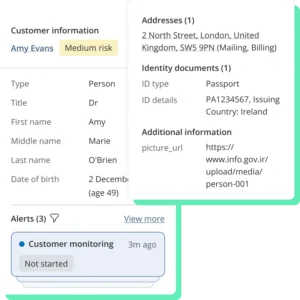
Industry experts emphasize that legal ownership and practical operational control are rarely synonymous. An individual holding a minor equity stake may exercise absolute dominance through specialized voting agreements, executive board appointments, or contractual encumbrances. Conversely, nominal majority shareholders may act merely as proxies for undisclosed principals. Consequently, effective modern KYB demands a methodology grounded in layered evidence. Compliance teams must triangulate corporate registries, certified articles of incorporation, shareholder ledgers, director registries, formal customer declarations, sanctions databases, Politically Exposed Person (PEP) lists, and adverse media archives. When discrepancies inevitably arise across conflicting international databases—a common occurrence in cross-border commerce—human intervention and rigorous multi-source reconciliation become mandatory. A superficially clean ownership chart that lacks traceable documentary lineage is not risk mitigation; it is an unquantified liability.
The Shift from Point-in-Time Compliance to Lifecycle Risk Monitoring
Historically, regulatory frameworks treated business verification as a static, point-in-time milestone achieved primarily during client onboarding and reviewed on a sluggish annual or multi-year cycle. In today’s hyper-dynamic geopolitical and economic environment, this legacy approach is increasingly obsolete. A commercial enterprise that presents an entirely benign risk profile at the initial onboarding stage can undergo a radical transformation within months. Corporate acquisitions, the appointment of directors linked to emerging sanctions lists, unexpected expansion into high-risk jurisdictions, or sudden adverse media exposure can fundamentally alter an entity’s risk matrix long before an institution’s scheduled annual review.

Regulatory authorities across major global jurisdictions are actively codifying this operational reality. In the United States, ongoing customer due diligence requirements mandate the continuous maintenance and updating of legal entity customer data, including accurate beneficial ownership metrics. International standard-setting bodies similarly dictate that beneficial ownership records must reflect real-time accuracy. To comply with these tightening expectations, financial institutions are transitioning from static documentation reviews to continuous, risk-based monitoring frameworks. Rather than generating a deafening volume of administrative alerts, advanced monitoring models utilize intelligent automated triggers. These systems evaluate meaningful operational shifts—such as structural reorganizations, sudden registry updates, or cross-border domicile changes—and route actionable intelligence to human investigators equipped with comprehensive historical audit trails. Verification is no longer viewed as a closed task, but rather as an evolving operational status that naturally expires if left unverified.
Leveraging AI and Entity Resolution in the Fight Against Financial Crime
Sophisticated financial crime networks rarely operate through isolated shell companies or obvious, singular transactions. Illicit actors routinely deploy sprawling, fragmented webs of corporations designed to fragment money flows and obscure ultimate beneficiaries. Within this high-stakes environment, artificial intelligence and entity-resolution technology play a crucial role by synthesizing vast, disparate data lakes into coherent intelligence networks.
Entity-resolution algorithms excel at overcoming variations in corporate naming conventions, linguistic differences across international scripts, and fragmented address databases. By systematically comparing disparate data points—including historical officer names, registered agents, shared physical locations, and corporate identifiers—AI can rapidly map potential relationships that would take human analysts weeks to uncover manually. However, industry leaders universally emphasize a vital operational caveat: technological automation must serve as an investigative accelerator, not an autonomous adjudicator. An algorithmic connection suggesting a shared link between two previously disparate entities represents an investigative lead, not definitive proof of malfeasance. False positives carry severe operational and commercial costs; improperly linking a legitimate enterprise to a criminal syndicate can damage commercial relationships, while missing a genuine illicit connection exposes institutions to regulatory enforcement. Therefore, automated analytical outputs must remain transparent, fully auditable, and subject to expert human confirmation before any decisive compliance action is taken.
Implications for the Global RegTech Ecosystem
The intersection of advanced artificial intelligence, entity resolution, and rigorous regulatory scrutiny marks a fundamental evolution in how institutions manage corporate counterparty risk. As international financial crime grows increasingly sophisticated, relying on manual registry checks and static, point-in-time verification is no longer viable. Financial institutions that successfully integrate continuous lifecycle monitoring with explainable AI tooling will not only meet increasingly stringent global regulatory standards but will also cultivate a deeper, more resilient understanding of their commercial ecosystems. Ultimately, technology alone cannot replace human compliance judgment; rather, when deployed transparently and rigorously, it expands the analytical horizon, enabling organizations to see past complex corporate facades and identify financial crime networks before they penetrate the formal financial architecture.