In the rapidly evolving landscape of global finance, the pressure on payments firms to reconcile high-velocity transaction processing with rigorous regulatory compliance has never been greater. As financial crime grows increasingly sophisticated, firms ranging from nimble startups to established payment processors are finding that legacy manual processes are no longer sufficient to meet the stringent demands of Anti-Money Laundering (AML) and Counter-Terrorist Financing (CTF) regulations. In response, ComplyAdvantage has introduced its Starter Plan, a specialized tier of its risk intelligence platform designed to enable firms monitoring between 100 and 2,000 entities to deploy enterprise-grade screening and automated compliance workflows.
The launch of this plan addresses a critical gap in the market: the "compliance bottleneck." For many mid-sized financial organizations, the choice has historically been between expensive, complex enterprise software that is overkill for their scale, or manual, error-prone spreadsheets that pose significant regulatory and reputational risks.
The Architecture of Modern Financial Defense
At the heart of the ComplyAdvantage Starter Plan is a commitment to "audit-ready" compliance. Regulators globally—including bodies like the Financial Action Task Force (FATF) and the Financial Conduct Authority (FCA)—require firms to prove not just that they performed a check, but that they understood the risk and acted accordingly. Every alert generated by the platform creates an immutable, timestamped audit trail, detailing exactly what data was screened, how the risk was interpreted, and the final resolution of the decision. This transparency is vital for firms that need to demonstrate historical diligence during regulatory audits or forensic investigations.
The platform leverages a proprietary risk intelligence database covering over 25 million entities. This vast dataset allows for sub-second response times, ensuring that customer onboarding—a moment where friction can lead to lost business—remains seamless. By automating the screening of individuals and corporate clients against global sanctions, watchlists, adverse media, and Politically Exposed Person (PEP) databases, the system allows compliance teams to focus their human resources on high-risk cases that require nuanced judgment.
Chronology and Evolution of AI-Driven Compliance
The trajectory of automated compliance has shifted dramatically over the last decade. Early AML systems were characterized by high "false positive" rates—systems would flag innocent transactions as potential threats, forcing human analysts to spend hours clearing "noise."
The recent integration of Agentic AI represents the next phase in this timeline. By moving beyond static rules, these AI agents can synthesize information from multiple sources to make context-aware decisions. For instance, the agents can analyze the relationship between a parent company and its ultimate beneficial owners (UBOs), a task that previously required deep manual research. This evolution has effectively moved compliance from a reactive, manual gatekeeper function to an proactive, automated advisory role.
Technical Capabilities and Agentic Workflows
The Starter Plan is built upon the "Mesh" platform, which integrates AI natively rather than as a third-party plugin. This is a significant distinction for security and performance. Because the AI is integrated into the core architecture, it can process data with greater efficiency and security.
Key technical features include:
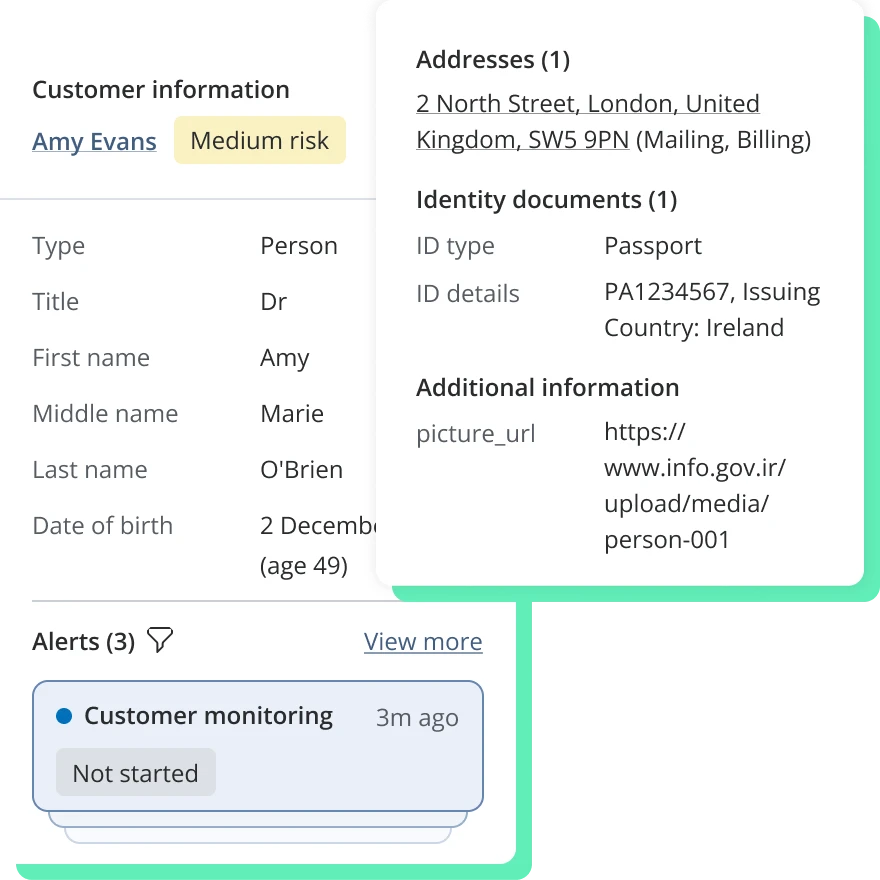
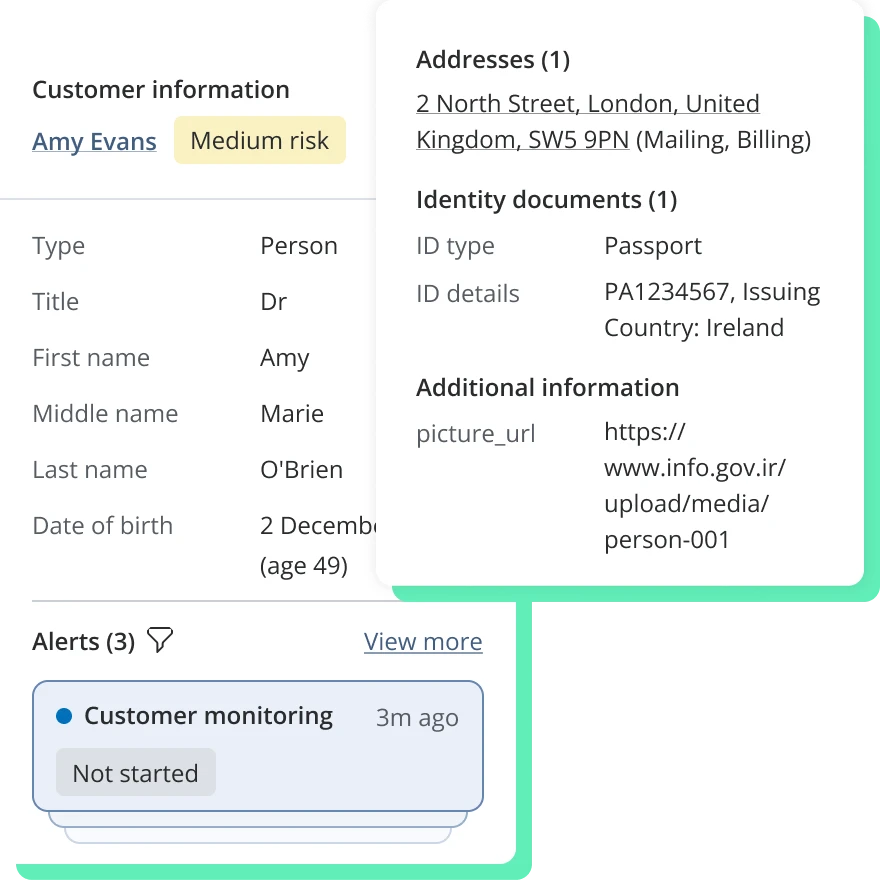
- Customer and Company Screening: Advanced algorithms evaluate risk profiles for both individuals and complex corporate entities, identifying sanctioned persons or those under restrictive measures.
- Ongoing Monitoring: Unlike one-off screenings, the platform continuously tracks changes to risk profiles, alerting firms the moment a client’s status changes.
- Agentic Workflows: Perhaps the most innovative feature, these autonomous agents are capable of resolving up to 85% of routine alerts. They are trained on thousands of historical decisions made by human analysts, allowing them to differentiate between genuine risk and benign anomalies with high accuracy.
Economic Implications for Emerging Firms
The financial barrier to entry for robust AML tools has historically been high. The pricing model for the ComplyAdvantage Starter Plan reflects a shift toward scalable, predictable costs for growing businesses. With monthly billing starting at $119 for 100 monitor searches (or as low as $99 when billed annually), the firm has made it commercially viable for smaller entities to implement top-tier protections.
This pricing structure includes clear tiers, allowing organizations to scale their monitoring capacity as their customer base grows. Furthermore, the "Agentic Starter Plan" provides an optional premium add-on for firms looking to automate their remediation workflows fully. This flat-fee approach for the AI add-on ensures that firms can budget for technological upgrades without the fear of unpredictable usage fees.
The Human-in-the-Loop Imperative
While the rise of agentic AI promises to revolutionize compliance, the industry maintains a strict "human-in-the-loop" requirement. ComplyAdvantage emphasizes that its agents are designed to assist rather than replace human analysts. Every decision made by an AI agent—referred to internally as "Cassie" or "Otto" in some configurations—is fully logged and transparent.
This transparency is critical for regulatory defensibility. If an agent clears a customer, the rationale is visible to the human compliance officer, who retains the ultimate authority to override the decision. This hybrid model balances the speed of machine learning with the accountability of human oversight, a balance that regulators have repeatedly signaled as the gold standard for financial technology.
Industry Impact and Strategic Value
The adoption of such platforms is no longer just about meeting legal minimums; it is increasingly a competitive advantage. Firms that can onboard clients quickly and securely without sacrificing compliance standards gain a significant edge in the market. As noted by a Senior Manager at AUSIEX, a client of the platform, the primary draw is the combination of quality, flexibility, and the ability of the system to grow alongside the business.
For a firm in the payments sector, the cost of a single regulatory fine or a high-profile AML breach can be catastrophic, potentially leading to the revocation of operating licenses. By investing in scalable, automated infrastructure, firms can mitigate these risks while simultaneously reducing the operational overhead associated with manual compliance workflows.
Broader Implications for Financial Security
As global financial crime becomes more complex, the democratization of enterprise-level compliance tools is a necessary step for global security. When smaller, emerging payment providers are equipped with the same caliber of screening tools as global Tier-1 banks, the entire financial ecosystem becomes more resilient.
The integration of agentic AI within the Starter Plan demonstrates a shift toward a more proactive, intelligent defensive posture. By minimizing the time spent on "false positives" and maximizing the time spent on genuine risk identification, firms can ensure that their resources are allocated to the most dangerous threats.
The Starter Plan is not merely a piece of software; it is a manifestation of the modern regulatory reality: that compliance must be continuous, data-driven, and highly adaptive. As the industry looks toward the future, the ability to turn complex regulatory requirements into a streamlined, automated competitive advantage will likely define the next generation of successful financial institutions. Through this tiered approach, ComplyAdvantage is setting a new benchmark for how mid-market firms interact with the global regulatory framework, proving that security and scalability are not mutually exclusive goals, but rather, essential components of a healthy, growing financial enterprise.