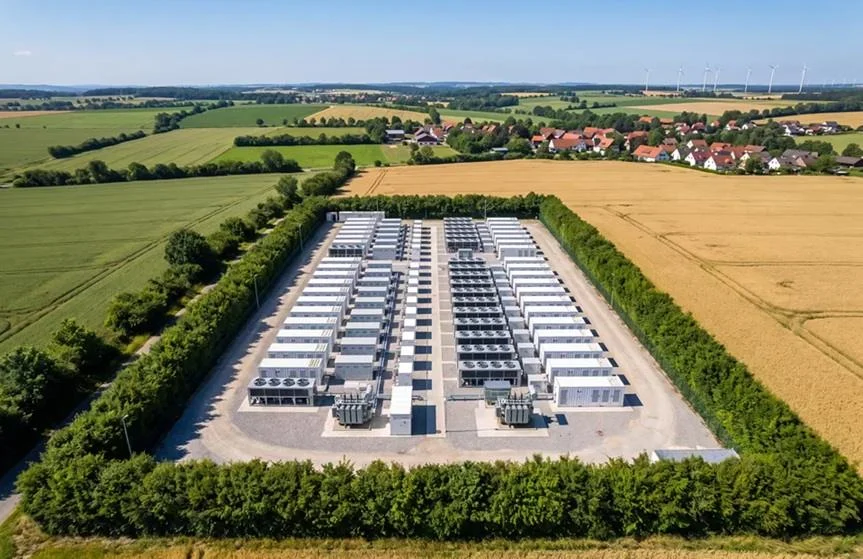
The German energy landscape is undergoing a structural shift, and the recent financial commitment of €835 million (approximately $936 million) to Amsterdam-based energy storage provider Return marks a significant milestone in this transition. This substantial portfolio financing, underwritten by global banking heavyweights Deutsche Bank and Rabobank, is specifically designed to accelerate the deployment of high-capacity Battery Energy Storage Systems (BESS) across Germany. As the country moves toward its ambitious decarbonization targets, the ability to store intermittent renewable energy has transitioned from a secondary requirement to a critical component of national infrastructure.
The Strategic Imperative of Energy Storage in Germany
Germany’s "Energiewende"—its long-term energy transition policy—has been characterized by a massive influx of wind and solar power into the national grid. While this has been highly successful in reducing reliance on fossil fuels, it has simultaneously introduced significant volatility into the power supply. Solar and wind generation are inherently variable, often producing excess electricity when demand is low and failing to meet requirements during peak periods.
This mismatch creates "grid congestion," a phenomenon where the physical infrastructure of the power grid cannot handle the distribution of energy from production sites, often in the north, to industrial consumption hubs, largely in the south. Return, which was established in 2021, has positioned itself at the nexus of this challenge. The company specializes in building, owning, and operating large-scale storage solutions that do not merely hold energy, but actively manage grid stability through real-time data analytics. By integrating high-tech BESS technology, Return provides the flexibility required to stabilize the grid, ensuring that clean energy is available precisely when and where it is needed.
Financial Architecture and Project Scope
The financing package secured by Return is structured as a flexible, scalable framework. This design is particularly noteworthy because it allows for the integration of additional projects over time, rather than restricting the funds to a single, static set of assets.
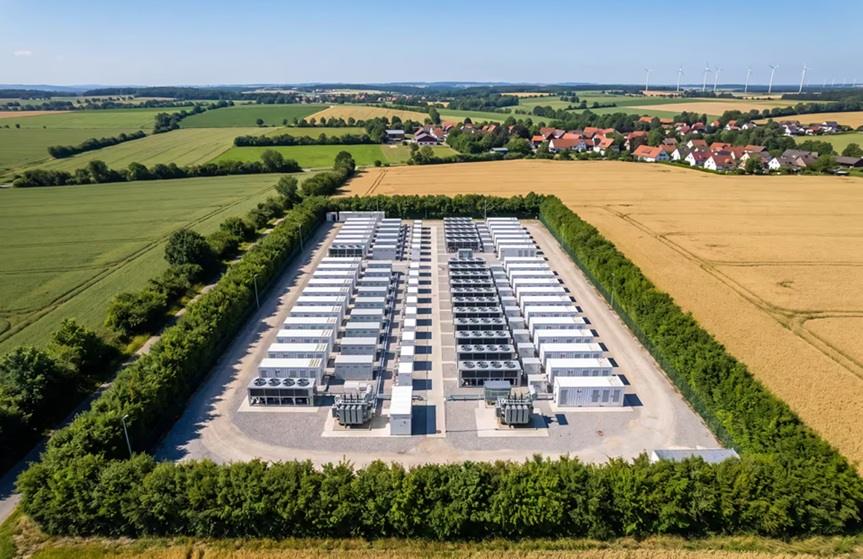
The current funding encompasses three primary battery storage projects currently under construction within Germany. These sites boast a combined capacity of 117 MW. To put this into perspective, if one assumes a four-hour discharge capacity—a standard metric for modern lithium-ion utility-scale batteries—operating at two full cycles per day, these facilities have the technical potential to satisfy the annual electricity consumption requirements of approximately 100,000 German households.
However, the 117 MW figure is only the beginning. The agreement with Deutsche Bank and Rabobank includes provisions to add further projects to the framework through 2027. This modular approach to financing is essential in the fast-moving renewable energy sector, where project pipelines often evolve rapidly based on permitting success and site acquisition.
A Chronology of Growth and Future Ambitions
Return’s rapid ascent in the energy storage market has been marked by a clear, phased strategy:

- 2021: The company is founded in Amsterdam with a mandate to solve renewable energy intermittency through localized storage and smart grid management.
- 2022–2024: The company develops its proprietary virtual flexibility model, focusing on the intersection of physical infrastructure and software-led energy trading.
- Late 2025: Initial planning for large-scale German expansion begins, identifying the need for significant capital expenditure to meet the country’s grid-balancing requirements.
- November 2026: The announcement of the €835 million financing deal with Deutsche Bank and Rabobank, effectively providing the runway for the company’s 2027–2030 project roadmap.
Looking ahead, the company has set a bold target: the installation of at least 1 GW of battery storage capacity annually in Germany, starting in 2027. To achieve this, Return anticipates annual capital investments ranging from €750 million to €1.2 billion. The variance in this range is contingent on market conditions, including hardware costs, energy pricing, and regulatory shifts in the European energy market.
Stakeholder Perspectives on the Transition
The involvement of major financial institutions like Deutsche Bank and Rabobank underscores a broader trend: commercial banks are increasingly viewing BESS projects as bankable, low-risk infrastructure assets rather than speculative technology plays.
Dominik Thumfart, Head of Infrastructure & Energy Origination at Deutsche Bank, highlighted the strategic necessity of the investment in a public statement. He emphasized that battery storage is no longer optional; it is the "glue" that holds the energy transition together. By optimizing the revenue potential of intermittent power plants, these storage facilities protect operators from the price volatility associated with high renewable penetration.
From the corporate side, Daniel Witvoet, CFO at Return, emphasized the evolution of the firm’s financial model. "As demand for energy flexibility grows, we need to scale not just our battery storage capacity, but also the way we finance it," Witvoet noted. The company’s strategy relies on a dual-pronged approach: investing in the physical hardware of the batteries while simultaneously refining the "virtual flexibility" software that dictates when those batteries charge and discharge to maximize grid benefit.
Implications for the European Energy Market
The ripple effects of this deal extend beyond the borders of Germany. As a leader in the European Union’s green energy transition, Germany serves as a testing ground for technologies that will inevitably be required by neighboring nations.
- Grid Stability as a Commodity: As Germany retires its coal-fired power plants, the burden of maintaining "base load" power shifts to storage solutions. The success of projects like Return’s will likely influence regulatory frameworks across the EU, encouraging more favorable "capacity market" payments for energy storage providers.
- Technological Maturity: The transition from experimental storage to large-scale, multi-billion-euro financing indicates that lithium-ion BESS technology has reached a level of maturity that satisfies the stringent risk-mitigation requirements of Tier-1 banking institutions.
- Inflation and Supply Chain Sensitivity: The projected investment of up to €1.2 billion annually reflects the high cost of raw materials for battery production. Future success will depend on the stability of global supply chains for critical minerals, such as lithium, cobalt, and nickel, as well as the continued efficiency of battery manufacturing processes.
- Integration of AI: While the announcement focuses on physical infrastructure, the reliance on "real-time insight" into energy demand suggests a heavy integration of Artificial Intelligence. Future iterations of these projects will likely lean even more heavily on predictive analytics to navigate the complexities of European day-ahead and intra-day electricity markets.
Conclusion
The financing secured by Return represents more than just a capital injection; it serves as a vote of confidence in the viability of the German energy transition. By bridging the gap between the intermittent nature of wind and solar power and the rigid demands of a modern industrial economy, Return is providing the necessary infrastructure to ensure that the transition to green energy is both reliable and economically sustainable.
As the 2027 deadline for the 1 GW annual installation target approaches, all eyes will be on the execution of these projects. The success of this endeavor will likely serve as a blueprint for other renewable energy firms attempting to scale in a high-interest-rate environment, proving that with the right combination of technology, financial structuring, and market necessity, the transition to a sustainable power grid is not only possible but increasingly profitable. The collaboration between Return, Deutsche Bank, and Rabobank sets a high benchmark for the next wave of infrastructure investment in Europe, signaling that the era of large-scale, grid-integrated storage has officially arrived.