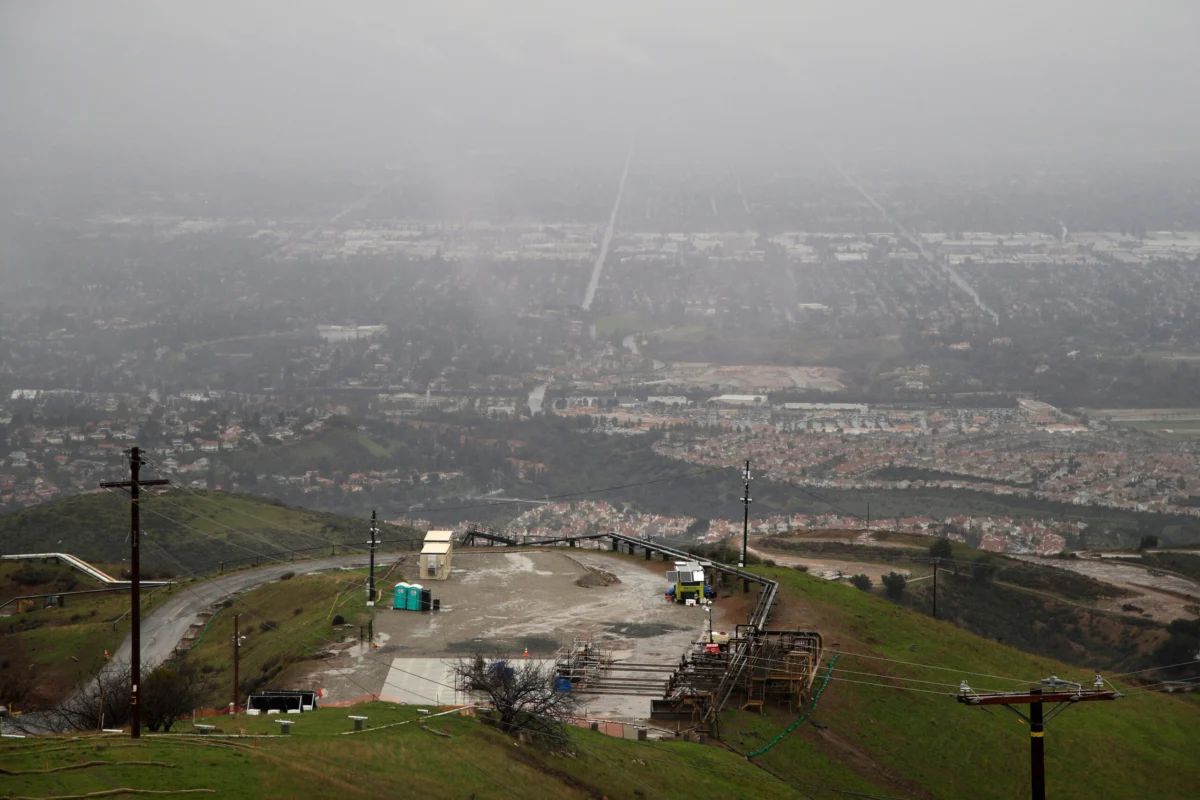
This initiative marks a significant turning point for the communities surrounding the Aliso Canyon Natural Gas Facility, providing a tangible path toward cleaner, safer living environments nearly a decade after a catastrophic infrastructure failure poisoned the local atmosphere. The release of the first $20 million in incentive funding represents the initial phase of a $40 million program designed to modernize residential energy infrastructure by facilitating the transition from fossil-fuel-reliant appliances to high-efficiency electric alternatives.
The Aliso Canyon Catastrophe: A Chronology of Crisis
The Aliso Canyon disaster, which began on October 23, 2015, remains etched in the memory of San Fernando Valley residents as one of the most significant environmental health crises in modern California history. A natural gas storage well, known as SS-25, suffered a catastrophic failure, unleashing a relentless torrent of natural gas into the atmosphere. For 112 days, the facility spewed nearly 100,000 tons of methane—a potent greenhouse gas—alongside volatile organic compounds including benzene, a known carcinogen.
The crisis forced the emergency relocation of approximately 8,000 families. For those who remained in the vicinity, daily life became defined by a pervasive, sulfurous stench and a cascade of physical ailments. Residents reported recurring headaches, nausea, persistent nosebleeds, and respiratory distress. The leak was not fully contained until mid-February 2016, following several failed attempts to plug the well. In the aftermath, the facility was temporarily shuttered, though it later resumed operations at a significantly reduced capacity under rigorous regulatory oversight.
In 2021, the legal fallout culminated in a landmark $1.8 billion settlement between the Southern California Gas Co. (SoCalGas), its parent company Sempra Energy, and roughly 35,000 plaintiffs. The settlement compensated families for property damage, personal injuries, and the profound psychological and health-related toll of the disaster.
Modernizing Homes Through Targeted Incentives
The newly launched electrification program is managed by TECH Clean California, a statewide initiative tasked with decarbonizing the residential sector. Evan Kamei, director of TECH Clean California, emphasized that the funding serves a dual purpose: improving individual health outcomes and advancing the state’s broader climate objectives.
"These incentives are designed to do more than just swap out hardware," Kamei explained. "By replacing aging, inefficient gas appliances with modern electric systems, we are helping families create healthier indoor environments, lower their long-term energy costs, and provide essential cooling capabilities that are becoming increasingly vital in a warming climate. This is also a vehicle for local job creation in the green energy sector."
Eligibility is currently restricted to single-family homeowners within the designated impact zone, with a tiered structure that provides enhanced financial support for income-qualifying households. These residents can access up to $31,800 in incentives, a sum intended to cover not just the cost of new equipment—such as heat pump water heaters, space heating and cooling systems, and induction cooktops—but also the necessary electrical panel upgrades.
Overcoming Cultural and Technical Barriers
One of the primary challenges identified by program organizers is the ingrained "cultural attachment" to gas-powered cooking. Weldon Kennedy, co-founder of the California-based startup Copper, notes that many homeowners are hesitant to move away from gas due to perceived performance differences. To bridge this gap, the program is prioritizing high-performance induction technology.
"The barrier is often twofold: psychological attachment to the flame and the technical hurdle of rewiring a kitchen," Kennedy observed. "Modern induction stoves are not the electric coil burners of the past. They offer precise temperature control and safety benefits that rival or exceed gas. By utilizing plug-and-play induction solutions that don’t require expensive electrical panel overhauls, we can lower the friction of adoption significantly."
From a public health perspective, the transition is overdue. The Environmental Protection Agency (EPA) and various medical journals have increasingly highlighted the risks associated with gas stoves, which emit nitrogen dioxide and methane even when turned off. Long-term exposure to these pollutants has been statistically linked to increased rates of pediatric asthma and respiratory inflammation.
Personal Impacts and Long-Term Health Consequences
For residents like 72-year-old Carol Kamei, the settlement funding is a belated but welcome acknowledgment of the life-altering events of 2015. Having lived near the Aliso Canyon facility for nearly half a century, Kamei’s experience is emblematic of the community’s struggle.
"The smell was inescapable," Kamei recalled. "When the news reports confirmed that we were breathing in benzene, the fear was absolute. My nosebleeds stopped only after I fled to my sister’s home in Hollywood for several months."
Kamei’s recent participation in a University of California, Los Angeles (UCLA) health study revealed a sobering reality: she now lives with diminished lung capacity. Her account aligns with anecdotal reports from neighbors regarding chronic illnesses that have emerged or worsened in the years since the blowout. For Kamei, the transition to an electric kitchen is a matter of reclaiming control over her own environment. "I’d rather not use gas in my home anymore," she said. "It feels like a step toward safety."
Broader Implications for Climate Policy
The Aliso Canyon electrification initiative serves as a microcosm for the larger national effort to decarbonize the building sector. Residential and commercial buildings account for a significant portion of greenhouse gas emissions, primarily due to the burning of fossil fuels for space and water heating.
By leveraging settlement funds to accelerate this transition, regulators are essentially utilizing corporate accountability to drive infrastructure upgrades that might otherwise take decades to materialize. If the Aliso Canyon program proves successful in terms of high adoption rates and measurable health improvements, it could serve as a template for other regions dealing with the legacy of industrial environmental damage.
However, the program also underscores the inequity inherent in the transition. While wealthier homeowners might be able to fund such upgrades independently, low-income families are often trapped in homes with inefficient, hazardous appliances. The focus on income-qualified assistance within the Aliso Canyon program acknowledges that true environmental justice requires financial support to ensure that the transition to "green" technology is not reserved for the affluent.
Moving Forward
As the $40 million program gains momentum, officials are already planning to expand eligibility to multi-property owners, which will be critical in a region where multi-family housing is common. The success of the program will be measured not only by the number of appliances replaced but by the sustained improvement in the air quality and physical health of the residents who bore the brunt of the 2015 disaster.
The legacy of Aliso Canyon is complex. While the financial settlement has provided some measure of restitution, the physical and environmental costs remain significant. Through the integration of electrification incentives, the program offers a forward-looking approach to remediation, turning the site of a historic environmental failure into a testing ground for the future of residential energy efficiency. For the thousands of families still living in the shadow of the facility, these electric upgrades represent a small but necessary move toward a healthier, more sustainable future.
The Associated Press receives support from the Walton Family Foundation for coverage of water and environmental policy. The AP is solely responsible for all content. Copyright 2026 Associated Press. All rights reserved.