Financial resilience is rarely tested during periods of economic stability; instead, it is revealed in the immediate aftermath of unexpected life events. Whether an individual faces sudden termination, a severe automobile accident, or an unanticipated medical crisis, the psychological shock of the incident is frequently compounded by the immediate pressure of financial liabilities. For a significant portion of the population, the realization that daily living expenses cannot be covered without incurring debt adds an extra layer of stress to an already difficult situation.
Recent data compiled by financial services firm Bankrate underscores the fragility of household balance sheets across the United States. According to their findings, only three in ten Americans maintain sufficient personal savings to comfortably cover an unexpected emergency without resorting to borrowing. This statistic highlights a systemic vulnerability that extends across various income brackets, demonstrating that a lack of liquid reserves remains a pervasive issue in modern personal finance. Establishing a dedicated emergency fund serves as a crucial buffer, protecting individuals from the perils of high-interest debt, preventing the disruption of long-term wealth-building strategies, and providing vital peace of mind during turbulent periods.
To address this widespread shortfall, financial planners and automated wealth management platforms have developed streamlined methodologies to help consumers calculate, accumulate, and safely store their emergency reserves. Building a robust safety net requires a systematic approach, typically broken down into three foundational phases: determining baseline expenses, establishing a personalized savings target, and selecting an appropriate vehicle to preserve and grow the capital.
The Foundation of Emergency Preparedness: Tallying Monthly Expenses
The first step in constructing an effective financial safety net is quantifying baseline monthly living expenses. For many individuals, this process can prove surprisingly complex. Household expenditures are rarely monolithic; rather, they are typically scattered across dozens of regular bills, discretionary purchases, and recurring obligations. Broadly speaking, these expenses can be categorized into essential buckets, including housing costs such as rent or mortgage payments, utility bills, transportation expenses, groceries, and minimum debt service payments.
Accurately capturing this number is essential, as it forms the baseline multiplier for the entire emergency fund equation. Recognizing that manual calculations can deter individuals from starting their savings journey, modern financial tools have introduced algorithmic shortcuts. For instance, digital platforms like Betterment utilize built-in profiling systems to automatically estimate a user’s monthly expenditure based on specific financial data points provided during account setup.
While automated estimations provide a convenient starting point, consumers are always encouraged to refine these figures with their own precise data. Financial experts emphasize that minor mathematical discrepancies should never become a barrier to action. The primary objective is to transition from inaction to establishing a consistent tracking habit, ensuring that the foundational calculation reflects the true cost of maintaining a basic standard of living.
Determining the Ideal Duration of Coverage
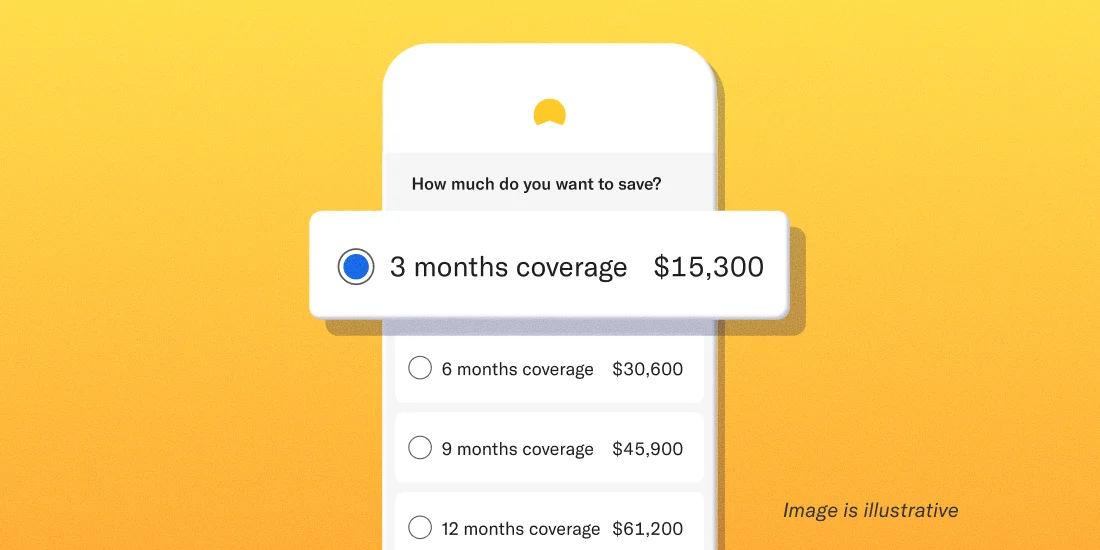
Once monthly expenses have been quantified, the next critical decision involves determining how many months of coverage are necessary. Financial consensus generally dictates that a baseline emergency fund should cover at least three months of living expenses. However, this metric is not a rigid one-size-fits-all mandate. A variety of personal and economic factors may warrant extending that safety net to six, nine, or even twelve months of coverage.
Several lifestyle and employment variables influence the ideal duration of an emergency fund. Individuals working in volatile industries, those with fluctuating freelance or commission-based incomes, sole proprietors, and primary household earners with dependents often require a larger financial cushion. Furthermore, individuals with chronic medical conditions or those supporting aging family members may face higher baseline risks that necessitate an expanded reserve.
Ultimately, the correct target amount is deeply personal, driven largely by individual risk tolerance and psychological comfort. According to Bankrate’s comprehensive survey data, nearly one-third of respondents indicate that a target of six months or more is necessary for them to feel secure. This divergence in target timelines reflects the diverse economic realities and anxieties experienced by modern households.
To bridge the gap between current savings and these long-term targets, automated platforms frequently incorporate recurring deposit recommendations. By analyzing an initial deposit and scheduling regular monthly contributions, financial algorithms can project a realistic balance trajectory over a multi-year horizon. A four-year window is frequently cited by advisors as a pragmatic and achievable timeframe for accumulating three to six months of living expenses through disciplined, automated saving. Reaching this milestone efficiently allows individuals to redirect their capital toward other vital financial priorities, such as retirement investing or homeownership.
Selecting the Optimal Storage Vehicle for Liquid Assets
Deciding how much to save is only half the equation; determining where to store those funds is equally vital. An emergency fund must balance two competing priorities: liquidity, or the ability to access cash immediately without penalty, and preservation, protecting the principal from market volatility. Industry standards generally point toward two primary vehicles for housing emergency reserves: high-yield cash accounts or conservative, bond-heavy investment portfolios.
Traditional savings accounts often offer negligible interest rates, causing cash reserves to lose purchasing power over time due to inflation. In response, modern digital financial institutions offer high-yield cash reserve accounts that provide competitive yields while maintaining high levels of liquidity. These accounts often benefit from Federal Deposit Insurance Corporation (FDIC) insurance coverage through partner banking networks, safeguarding depositors up to statutory limits against institutional failure.
Alternatively, individuals with a higher tolerance for market fluctuations may opt to place a portion of their emergency savings into short-term bond funds or conservative investment portfolios. These vehicles aim to generate higher returns than standard cash equivalents while maintaining a lower risk profile than equity-heavy portfolios.
The choice between a pure cash account and an investment-backed reserve ultimately hinges on individual risk psychology. For investors who experience anxiety at the sight of portfolio fluctuations—even temporary dips in value—a traditional high-yield cash account remains the superior psychological choice. Conversely, individuals comfortable with mild market volatility may choose a hybrid approach, splitting their emergency reserves between liquid cash and conservative fixed-income assets. Financial professionals note that there is no universal correct answer; the optimal strategy is the one that allows the saver to maintain their plan without panic-driven intervention.
The Ebbing and Flowing Nature of Personal Finance
Economic circumstances are rarely static, and an emergency fund should reflect the changing dynamics of an individual’s life stage. Financial health is characterized by constant evolution, meaning that an emergency fund must be viewed as a dynamic pool of capital rather than a static, one-time achievement.
Over the span of several years, baseline living expenses will inevitably fluctuate due to inflation, lifestyle adjustments, or relocation. Furthermore, unexpected life events may necessitate the temporary withdrawal of accumulated funds to manage a crisis. Utilizing an emergency fund for its intended purpose is a sign of financial success, not failure; however, it must be accompanied by a deliberate strategy to replenish the depleted balance once stability is restored.
To ensure long-term efficacy, financial advisors recommend conducting an annual review of personal savings goals. Re-evaluating the emergency fund is particularly crucial following major life milestones, such as receiving a significant salary increase, purchasing a home, welcoming a child, or experiencing a major shift in employment status. By periodically recalibrating savings targets to match current realities, individuals can maintain robust financial protection against unforeseen shocks.
Ultimately, maintaining an adequately funded emergency reserve removes one of the most significant psychological burdens associated with modern life. Armed with a clear understanding of monthly expenses, a personalized savings target, and an appropriate storage vehicle, consumers can navigate economic uncertainty with confidence, knowing they have successfully secured one of the most critical pillars of personal finance.