The modern landscape of personal finance is characterized by unprecedented mobility. Investors today are no longer tethered to traditional brick-and-mortar brokerages for life. Instead, a rapidly evolving ecosystem of digital-first financial platforms, robo-advisors, and automated wealth management tools has empowered individuals to seek out lower fees, superior technological interfaces, and more sophisticated goal-based investment strategies. However, while the decision to switch financial providers is conceptually straightforward, the mechanical reality of executing an asset transfer remains one of the most persistent friction points in consumer finance. Moving funds across institutional boundaries often involves untangling legacy fee structures, evaluating complex tax implications, and coordinating administrative handoffs between legacy institutions and modern platforms. Recognizing this operational bottleneck, wealth management firms are increasingly deploying specialized concierge teams and automated infrastructure—such as the Automated Customer Account Transfer Service (ACATS)—to streamline the migration process, particularly for high-value portfolios exceeding $20,000.
The Macro Trend of Wealth Migration
Over the past decade, the democratization of investing has driven trillions of dollars out of traditional, high-fee advisory models and into automated or hybrid digital platforms. According to industry analyses from firms like Cerulli Associates and Morningstar, self-directed investors and users of digital wealth management platforms now command a significant share of retail assets. This shift is primarily fueled by investor demand for fee transparency, tax-loss harvesting capabilities, and user-friendly mobile applications that provide real-time portfolio visibility.
Despite these clear advantages, consumer surveys consistently indicate that fear of administrative complexity and potential tax liabilities are the leading deterrents for investors who otherwise wish to leave their legacy providers. Account types vary wildly—ranging from standard taxable brokerage accounts and individual retirement accounts (IRAs) to Roth IRAs and specialized trusts—each governed by distinct federal regulations and institutional protocols. When an investor initiates a transfer without professional guidance, they risk triggering inadvertent taxable events, encountering unexpected cash liquidation fees, or experiencing extended periods out of the market while funds are in transit.
Anatomy of an Account Transfer: The Mechanics of Wealth Transition
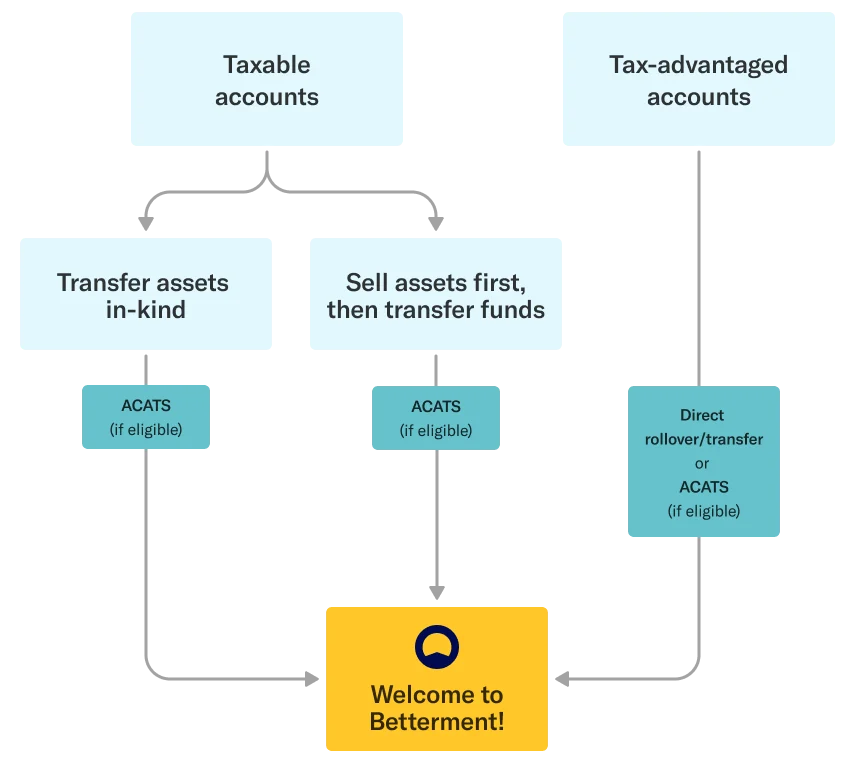
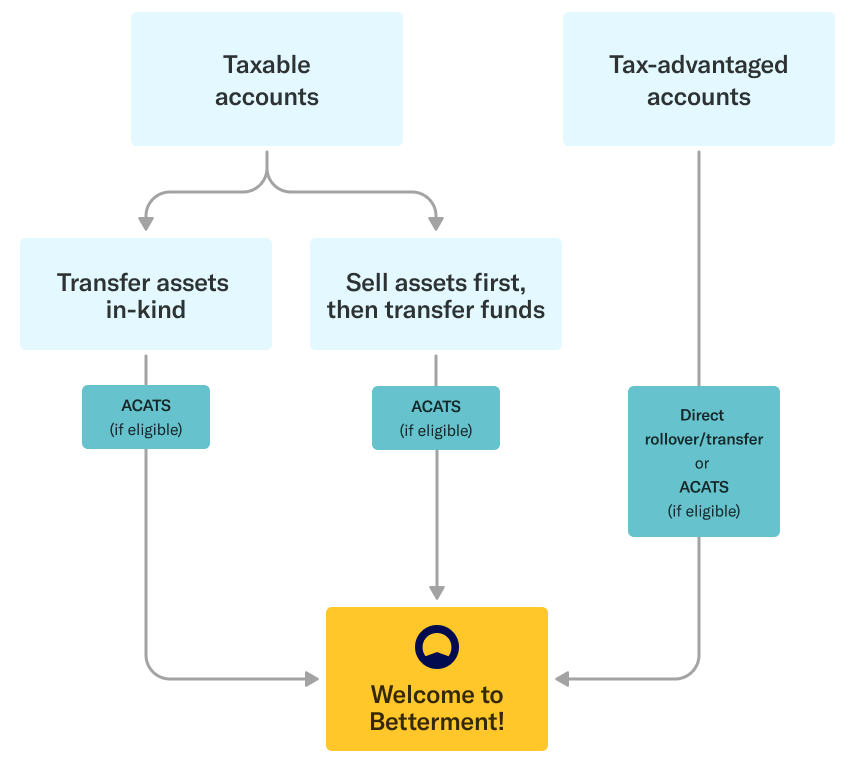
To understand how modern platforms are solving the transfer friction problem, it is necessary to examine the underlying mechanics of asset movement. When an investor decides to transfer funds from Institution A to Institution B, the process typically follows one of two paths: an in-kind transfer or a cash liquidation transfer.
In an in-kind transfer, specific assets—such as individual stocks, exchange-traded funds (ETFs), or mutual funds—are moved directly from the old brokerage to the new one without being sold. This is the preferred method for taxable accounts, as it prevents the realization of capital gains, thereby shielding the investor from an immediate tax burden. Conversely, if the legacy institution holds proprietary products, fractional shares, or assets that the receiving platform cannot natively support, those assets must be liquidated into cash before transfer.

To expedite these movements, the financial industry relies heavily on ACATS, a system standardized by the National Securities Clearing Corporation (NSCC). ACATS allows for the automated transfer of customer accounts between participating broker-dealers and banks, drastically reducing the settlement window from weeks of paper-based mailing to a matter of days. Despite the existence of ACATS, however, non-standard assets, retirement account rollovers involving physical checks, and uncooperative legacy institutions can still introduce delays and complications that require human intervention.
The Evolution of Advisory Concierge Services
To bridge the gap between automated execution and human reassurance, financial technology companies have introduced specialized advisory concierge teams. These services are typically unlocked for clients moving substantial sums—often set at a threshold of $20,000 or more—who require a higher touchpoint level of analysis before committing their assets to a new platform.
The rationale behind these concierge desks is rooted in behavioral economics and risk mitigation. High-net-worth or mass-affluent investors moving significant portions of their net worth frequently suffer from status quo bias, preferring to stay with a suboptimal provider simply because the migration path feels perilous. By deploying licensed financial professionals to audit legacy statements, decode hidden fees, and map out asset allocations, platforms can provide the objective reassurance necessary to finalize the transition.
Step-by-Step Strategic Framework for Account Migration
Financial planning experts and institutional advisors generally recommend a structured, multi-phase approach to migrating investment accounts. This structured framework minimizes market exposure risk, optimizes tax outcomes, and ensures operational continuity.
Phase One: Diagnostic Assessment and Fee Auditing
The initial phase of any account transfer must begin with a comprehensive audit of the existing portfolio. Investors are frequently unaware of the layered fees embedded within traditional mutual funds, including 12b-1 marketing fees, administrative costs, and advisory wrap fees that erode returns over time.

During this diagnostic stage, financial analysts examine historical statements to catalog every holding, evaluate the portfolio’s asset allocation against the client’s stated risk tolerance and long-term goals, and benchmark the existing fee structure against modern, low-cost alternatives. For instance, moving from an actively managed mutual fund portfolio with a 1.25% expense ratio to a globally diversified ETF portfolio with a 0.10% expense ratio can yield substantial compounding savings over a 20-to-30-year retirement horizon.
Phase Two: Tax-Impact Modeling and Break-Even Analysis
While tax-advantaged accounts such as Traditional and Roth IRAs can generally be rolled over without immediate tax consequences—provided they follow IRS direct-rollover guidelines—taxable brokerage accounts present a different challenge. Selling assets to move cash to a new platform can trigger capital gains taxes, which immediately diminishes the principal working capital of the portfolio.
To mitigate this, sophisticated advisory services perform personalized tax-impact and break-even analyses. This quantitative exercise calculates the exact capital gains liability generated by liquidating non-transferable assets and compares it against the long-term savings achieved by lowering portfolio management and expense ratio fees. The resulting break-even timeline tells the investor precisely how many months or years of reduced fees are required to offset the initial tax hit. Industry standard practice dictates that if the break-even horizon is unreasonably long, the investor should prioritize in-kind transfers or retain the legacy assets until market conditions favor liquidation.
Phase Three: Institutional Coordination and Asset Sourcing
Once the strategy is formulated and approved by the investor, the operational phase begins. This involves direct coordination with the legacy provider. Because legacy institutions have a financial incentive to retain assets, transfer requests can sometimes encounter administrative drag.
Dedicated support teams assist clients by generating precise asset lists, preparing Letters of Authorization (LOAs), and selecting the optimal transfer method—ACATS versus manual transfer—based on the specific composition of the portfolio. If assets must be sold prior to transfer, the team coordinates the liquidation schedule to align with market hours and minimize the risk of being out of the market during periods of high volatility.
Phase Four: Post-Transfer Optimization and Goal Alignment
The final phase of the migration process occurs on "moving day" and immediately thereafter. Once funds and assets arrive at the new institution, the work of integration begins. Simply depositing cash into a new account is insufficient; the capital must be immediately deployed according to a customized target asset allocation.
Modern digital platforms utilize advanced automated features that require careful initial configuration during the onboarding phase. These include automated rebalancing algorithms, tax-coordination strategies that optimize asset location across taxable and tax-advantaged accounts, and recurring contribution schedules linked to external banking sources. Ensuring these features are properly activated upon arrival maximizes the utility of the new platform from day one.
Broader Industry Implications and the Future of Wealth Transfer
The increasing accessibility of concierge-backed account transfers reflects a broader maturation of the wealth management industry. As artificial intelligence and algorithmic portfolio management commoditize basic asset allocation, differentiator status among financial platforms is increasingly defined by customer service, operational smoothness, and holistic financial guidance.
For consumers, this trend is an overwhelmingly positive development. The historical friction designed to trap capital in legacy institutions is steadily being dismantled by regulatory pressures, technological standards like ACATS, and consumer-centric business models. By lowering the barrier to exit, platforms are forced to compete continually on the merits of their technology, fee structures, and service quality rather than relying on customer inertia.
Ultimately, migrating wealth from one institution to another should not be viewed merely as an administrative chore, but as a strategic realignment of one’s financial architecture. Whether an investor is consolidating retirement accounts accumulated across multiple past employers or transitioning a lifelong brokerage portfolio to a modern digital wealth manager, the integration of rigorous tax analysis, institutional coordination, and human-led concierge support ensures that the journey from where you are to where you want to be is executed with precision, security, and confidence.