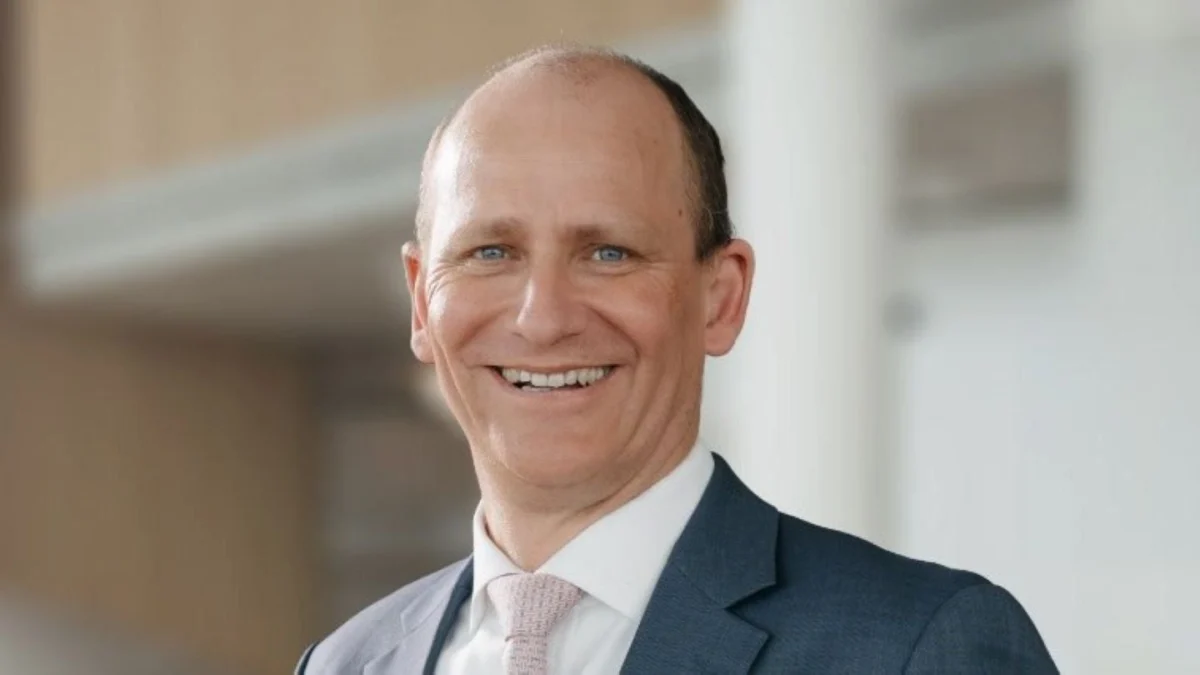
Rothschild & Co has announced a major leadership appointment with the recruitment of Geoffroy de Ridder to the dual roles of Group Chief Technology and Operations Officer (CTOO) and CTOO for Wealth and Asset Management. De Ridder, an industry veteran with more than 25 years of experience leading technology and operations transformations across European and Asian financial hubs, is scheduled to formally assume his new responsibilities in December 2026.
The strategic appointment underscores the increasing importance of robust digital architecture, data governance, and scalable operations within premier financial institutions. In his newly created dual mandate, de Ridder will transition from his current post at Lombard Odier, where he directs worldwide systems and processes as the head of technology and operations. His arrival at Rothschild & Co marks a pivotal moment for the historic firm as it continues to modernize its operational framework to support ambitious growth targets, particularly within its wealth and asset management division.
Main Facts of the Executive Transition
The leadership transition brings a seasoned technologist into the heart of one of the world’s oldest and most prestigious independent financial institutions. As Group CTOO, de Ridder will take on overarching responsibility for the firm’s global operational, digital, data, and technology programs. His remit requires him to bridge the gap between distinct divisions and administrative functions, establishing unified priorities, formalizing rigorous governance frameworks, and building the advanced operational capacities required to execute the broader group strategy seamlessly.
Simultaneously, within the Wealth and Asset Management division, de Ridder’s mandate will be intensely focused on structural execution. He will be tasked with assembling a cutting-edge operating model, resilient infrastructure, and advanced technical resources designed to underpin the unit’s specific operational targets and long-term expansion plans.
Rothschild & Co’s leadership has made no secret of the fact that technological capability is now synonymous with competitive advantage. François Pérol, managing partner at Rothschild & Co, emphasized the strategic weight of the hire. "Technology is a strategic priority for Rothschild & Co and Geoffroy’s appointment reflects its importance," Pérol stated. "Working closely with colleagues across the Group, his extensive experience across wealth management, technology and business transformation will be invaluable as we continue to develop the capabilities needed to support our ambitions, with a particular focus on our Wealth and Asset Management business."
A Distinguished Career Spanning Two Decades and Multiple Continents
Geoffroy de Ridder brings to Rothschild & Co a deep pedigree in financial technology, private banking, and asset management operations, forged over a quarter-century of leadership across major international markets in Europe and Asia. His career trajectory highlights a consistent focus on large-scale business transformation and the integration of digital tools into traditional wealth management models.
Prior to his current tenure directing worldwide systems and processes as the head of technology and operations at Lombard Odier, de Ridder held several senior, high-impact positions at UBS, one of the world’s largest wealth managers. During his time at UBS, his roles included serving as the Chief Operating Officer for Wealth Management in Asia Pacific and as the Head of Fund Management Services. These roles required him to navigate complex regulatory environments across multiple jurisdictions, manage large multi-disciplinary teams, and oversee the rollout of mission-critical technological infrastructure designed to handle high-net-worth client assets.
His extensive tenure in Asia Pacific during periods of significant economic expansion gave him a firsthand understanding of how digital platforms must scale to accommodate shifting client behaviors and increasingly stringent regulatory demands. This cross-border and cross-cultural expertise positions him uniquely to address the operational complexities of a global firm like Rothschild & Co.
Institutional Background and Corporate Footprint
To fully understand the gravity of de Ridder’s appointment, it is necessary to examine the unique structural footprint of Rothschild & Co. Established over 250 years ago, the institution remains an independent, family-controlled financial powerhouse that has successfully preserved its heritage while adapting to the modern global economy.
The firm currently maintains a global workforce of roughly 4,800 dedicated professionals operating in more than 50 countries worldwide. Its business model is structured around three core divisions, each serving distinct segments of the financial landscape:
- Global Advisory: Providing expert financial advice on mergers and acquisitions, strategy and financing, and restructuring to large corporations, private equity funds, governments, and individuals.
- Wealth & Asset Management: Offering bespoke wealth planning, investment management, and banking services to entrepreneurs, families, and charities, alongside institutional asset management strategies.
- Five Arrows: Acting as the firm’s alternative assets arm, focusing on corporate private equity and private debt investments in Europe and North America.
Given the diverse nature of these operations—ranging from high-touch advisory services to asset-heavy wealth management and alternative investing—the need for a unified, secure, and agile technological backbone is paramount. De Ridder’s mandate as Group CTOO is designed precisely to harmonize these disparate operational threads.
Chronology of Leadership and Technological Evolution
The appointment of a high-profile CTOO in late 2026 is the culmination of a multi-year industry-wide trend in which private banks and wealth managers have elevated technology from a back-office support function to a boardroom-level strategic priority.
Over the past decade, financial institutions catering to ultra-high-net-worth individuals have faced mounting pressures. These include compressed margins, rising compliance and regulatory reporting costs, and an influx of tech-savvy clients who demand seamless digital interfaces without sacrificing personalized service. Traditional institutions have had to replace legacy mainframes with modular, cloud-based architectures capable of real-time data processing and advanced analytics.
By securing de Ridder—whose professional journey spans foundational operational roles at UBS through to global systems leadership at Lombard Odier—Rothschild & Co is signaling a deliberate transition into the next phase of its technological maturity. The lead-up to his December 2026 start date provides the firm with a structured runway to prepare internal teams for the structural changes he is expected to implement.
Strategic Implications for Wealth and Asset Management
The explicit focus of de Ridder’s dual mandate on the Wealth and Asset Management division highlights where the immediate operational pressures and growth opportunities lie for Rothschild & Co.
In the contemporary wealth management sector, operational scalability is inextricably linked to client acquisition and retention. Modern clients expect comprehensive portfolio visibility, secure digital document sharing, rapid onboarding processes, and sophisticated investment reporting. For wealth managers, delivering these capabilities requires substantial investment in customer relationship management (CRM) systems, portfolio management software, and rigorous cybersecurity frameworks to protect sensitive financial data.
Furthermore, asset management operations are increasingly driven by data-heavy strategies, including the integration of artificial intelligence and machine learning for market analysis, risk management, and administrative automation. De Ridder’s background in spearheading worldwide systems and processes suggests that his playbook at Rothschild & Co will likely involve rationalizing legacy platforms, automating routine operational workflows, and creating a unified data architecture that empowers advisors to make faster, better-informed decisions.
Industry Context and Broader Market Trends
De Ridder’s move reflects a broader talent war within the European private banking and wealth management sector. As institutions race to digitalize, executives who possess both deep operational know-how and strategic vision are in exceptionally high demand.
Competitors across Switzerland, the UK, and continental Europe are similarly overhauling their technology stacks. The migration toward Software-as-a-Service (SaaS) models, the adoption of Application Programming Interfaces (APIs) for seamless third-party integration, and the necessity of meeting stringent Environmental, Social, and Governance (ESG) reporting standards have made the role of the CTOO one of the most critical positions in modern banking.
Rothschild & Co’s decision to vest both group-level and divisional technology responsibilities in a single individual points to an organizational philosophy centered on alignment and accountability. By eliminating silos between group operations and division-specific tech initiatives, the firm aims to accelerate project delivery times and ensure that every technological investment directly supports the overarching corporate strategy.
Looking Ahead: Implementation and Expectations
As the financial community looks toward December 2026, attention will naturally turn to how de Ridder transitions into his new role and the initial milestones of his tenure. While the long lead time before his arrival gives Lombard Odier ample opportunity to manage its own leadership transition, it also gives Rothschild & Co a strategic window to lay the groundwork for the initiatives de Ridder will inherit and expand.
The challenges awaiting him are substantial but clear. He must balance the preservation of Rothschild & Co’s historic commitment to bespoke, confidential client service with the rigorous demands of digital transformation. He must unify data systems across 50 countries while respecting regional regulatory nuances. And, crucially, he must build an operating model that not only supports current business volumes but provides the elasticity required for future expansion.
With François Pérol and the executive committee fully backing the initiative, Geoffroy de Ridder’s arrival represents a calculated investment in the future resilience and competitiveness of one of global finance’s most enduring names. As the December 2026 start date approaches, the industry will be watching closely to see how this strategic leadership appointment shapes the technological and operational trajectory of Rothschild & Co for decades to come.