The global hospitality industry, long characterized by thin profit margins and high labor volatility, is facing a technological inflection point. As hotels grapple with the dual pressures of rising operational costs and a persistent shortage of skilled labor, San Francisco-based startup Dextr AI has emerged from stealth mode with a $6.7 million seed funding round led by Elevation Capital, with participation from Foundation Capital. The capital infusion marks the company’s first institutional financing and serves as a significant validation of its model: deploying a specialized, multi-agent AI ecosystem designed to automate everything from guest communications to complex back-office coordination.
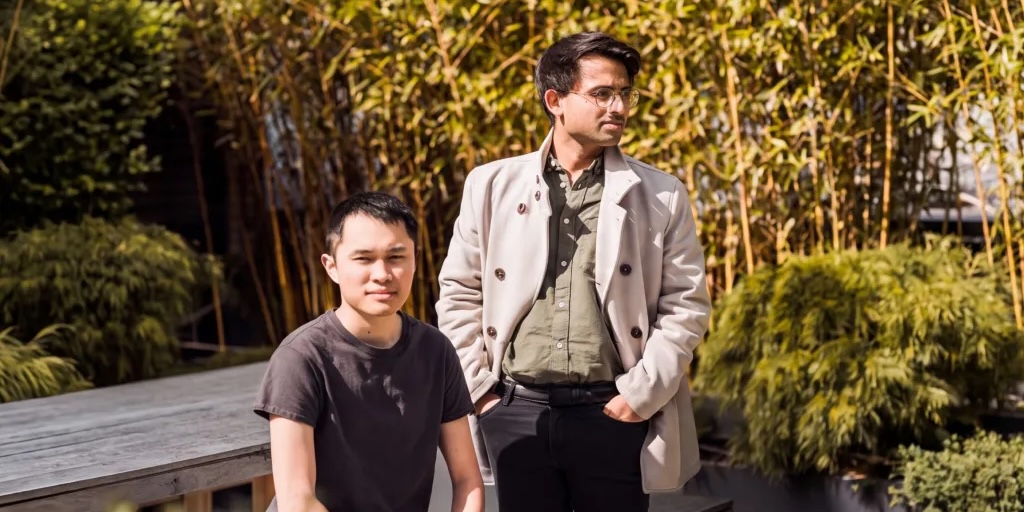
The company was founded in July 2025 by Sajid Shariff, a veteran of the hospitality sector, and Scott Arnold, who serves as the firm’s CTO. The startup’s rapid ascent—scaling to support hundreds of properties without prior external funding—highlights a growing appetite for AI solutions that move beyond simple chatbots to provide genuine, measurable return on investment (ROI).
The Genesis of a Hospitality Solution
The roots of Dextr AI trace back to 2024, when Sajid Shariff returned to the Bay Area after a hiatus from the hospitality industry. His return served as a reality check; speaking with former colleagues, he found that the post-pandemic landscape for hotels had become increasingly precarious. While demand remained high, the industry was suffocated by the "triple threat" of soaring labor costs, chronic staffing gaps, and the relentless demand for revenue growth.
Shariff’s initial experiment was modest: he developed "Alfred," an AI agent designed to handle routine guest inquiries and facilitate check-in and check-out procedures. The results were immediate. Within 90 days, the participating properties reported a measurable improvement in online guest reviews. However, Shariff recognized that messaging was merely the tip of the iceberg. To truly transform the economics of a hotel, the technology needed to move into the revenue-generating engine of the business: reservations.
Chronology and Operational Scaling
The evolution of Dextr AI followed a deliberate, iterative path:
- 2024 (Early Phase): Sajid Shariff begins field-testing AI prototypes in select Bay Area properties, identifying the pain points of manual guest messaging.
- Late 2024: The development of "Daisy," a voice-enabled reservation agent, marks the transition from customer service to revenue operations.
- July 2025: Dextr AI is officially incorporated in San Francisco.
- Spring 2026: Following a year of intensive pilot programs, the company experiences a surge in growth, with ARR increasing by 20% to 30% month-over-month.
- Present Day: The company emerges from stealth with $6.7 million in seed funding, a team of 21 employees, and a portfolio encompassing hundreds of properties, including major brand flags and independent operators.
The Agent Ecosystem: Beyond the Chatbot
Unlike many competitors in the AI space that provide single-purpose tools, Dextr AI differentiates itself through an interconnected agent architecture. The platform currently consists of several specialized agents: Alfred for guest management, Daisy for voice-based reservations, and a suite of operational agents designed to coordinate staff activity.
The true value proposition lies in the interoperability of these agents. For instance, in a scenario where a guest opts out of housekeeping, the system does not simply log the request. Instead, it proactively signals the operations agent, which then adjusts the housekeeping schedule in real-time. This level of automation allows for significant cost savings. Shariff notes that in high-cost labor markets such as California, an overnight front-desk shift can cost a property upwards of $80,000 annually. By utilizing agents like Daisy and Alfred to handle late-night check-ins and verification, hotels can effectively eliminate the necessity for overnight staffing without compromising guest experience.
Implementation and Integration Strategy
Dextr AI’s approach to implementation is markedly hands-on, a strategy that sets it apart from "plug-and-play" SaaS products. Recognizing that no two hotel operations are identical, Dextr employs a team of engineers who work directly with property management to map existing workflows.

The startup maintains deep integrations with industry-standard property management systems (PMS), including Oracle Hospitality, OPERA Cloud, StayNtouch, Cloudbeds, and Hostaway. By embedding itself into these existing infrastructures, Dextr ensures that the AI agents act as an extension of the hotel’s current operating environment rather than an isolated silo.
Furthermore, the introduction of "Doss," a companion tool for hotel staff, addresses the challenge of high turnover. In an industry where training cycles are constant and expensive, Dextr’s voice and text-based interface allows employees to interact with the system using natural language. This removes the friction of navigating complex, proprietary software interfaces, allowing staff to focus on guest service rather than system administration.
Industry Impact and Financial Validation
The financial data provided by Dextr reveals a compelling narrative of efficiency. One large-scale property utilizing the Daisy voice agent currently processes between $100,000 and $300,000 in monthly bookings. With over 1 million interactions handled monthly across hundreds of locations, the company has proven its ability to scale across a diverse range of assets—from boutique 21-room properties to large 550-room hotels under banners like Hilton, IHG, and Wyndham.
Krishna Mehra, an AI partner at Elevation Capital, cited the startup’s "zero-churn" record and clear ROI as the primary drivers for the investment. "In a space where most AI companies are still searching for product-market fit, Dextr had customers, zero churn, and a clear ROI story," Mehra stated. "That combination of founder quality and early traction is exactly what we look for."
Future Outlook and Strategic Challenges
With the new funding, Dextr AI plans to aggressively expand its engineering team and broaden its software integration capabilities. The company is currently moving from individual property contracts to its first direct relationships with hotel brands, signaling a shift toward enterprise-level adoption.
The broader implications for the hospitality industry are profound. If the Dextr model proves successful at scale, it could trigger a fundamental shift in how hotels view their labor requirements. By converting fixed costs—such as overnight staffing and administrative support—into dynamic, usage-based AI costs, owners may find themselves with significantly more flexible balance sheets.
However, the company faces the inherent challenges of the "last mile" in AI deployment. While the technology is robust, the hospitality industry is historically fragmented and slow to adopt new technologies. Dextr’s success will likely depend on its ability to maintain its high-touch service model as it scales, ensuring that the personalized nature of hospitality is not lost to algorithmic efficiency.
As Dextr AI moves into its next growth phase, it stands at the intersection of generative AI and traditional operations. By focusing on the "boring" but critical tasks—reservation calls, staff scheduling, and guest requests—the company has secured a position as a vital piece of infrastructure for a modern, cost-conscious hospitality sector. Whether they can maintain their current growth trajectory while managing the complexities of global brand integrations will be the true test of their long-term viability. For now, they represent a rare example of an AI firm that has successfully moved beyond the hype to provide a clear, demonstrable, and profitable service to the hospitality industry.