
The insurance industry has long faced a persistent paradox: while actuarial teams sit on mountains of critical enterprise data, the path from formulating a vital business question to obtaining a trusted, audit-ready number remains stubbornly slow. Across the global financial sector, an analysis is only ever as valuable as the underlying data and the speed of its delivery. For years, most actuarial teams have maintained access to the right data, but structural inefficiencies have ensured they received it at the wrong time. In 2026, however, the baseline for technological integration has fundamentally shifted. Artificial intelligence within the actuarial function is no longer confined to isolated pilot projects or experimental sandboxes. Insurers are confronting a pressing operational reality: the true metric of success is whether advanced tools are actively reshaping the complex core work that consumes the majority of an actuary’s weekly hours.
Current industry metrics illustrate a stark dichotomy in modern technology adoption. Approximately 80 percent of actuaries now utilize some form of artificial intelligence in their daily operations. Yet, a deeper examination reveals a shallow footprint, with the vast majority reporting usage of less than five hours per week. Parallel findings from European regulatory bodies indicate that while nearly two-thirds of European insurers are actively deploying generative artificial intelligence, most initiatives remain anchored in proof-of-concept stages, with roughly 64 percent of all use cases restricted strictly to back-office productivity enhancements. Meanwhile, human capital in the field remains exceptionally scarce and costly. In the United States alone, the professional community comprises approximately 31,200 actuaries, supported by a median wage of $130,000, with employment demand projected to grow by nine percent between 2025 and 2035. This talent shortage amplifies the cost of traditional workflows, where highly paid professionals spend excessive hours managing routine data preparation rather than high-value strategic forecasting.
The traditional workflow governing actuarial inquiries has historically been characterized by bureaucratic hand-offs and immense latency. When a complex analytical question arises concerning long-term care, pricing adjustments, or reserve adequacy, the typical lifecycle involves a multi-step journey. An actuary must first submit an information technology request, wait through a software development cycle, engage in arduous data preparation, execute calculations, and finally undergo rigorous validation. This cumbersome process routinely spans weeks or even months. Consequently, actuarial teams have often been forced to compromise, fitting their advanced risk analyses into rigid, predefined legacy reports or resorting to manual workarounds within desktop environments when confronted with novel market questions.
To overcome these structural bottlenecks, emerging technology platforms are seeking to bridge the gap through natural language processing and neural analytics. A prominent example of this evolution is ACUVI’s InsightIQ platform, designed to interact directly with complex actuarial datasets through conversational plain-English queries. Demonstrations within long-term care insurance portfolios illustrate how this paradigm functions in practice. When an actuary initiates an exploratory session by asking a broad system query such as "Tell me about my data," a neural analytics engine can rapidly profile an entire repository—spanning tens of thousands of policies, billions in cumulative premiums, and extensive historical claims—surfacing critical indicators such as policy-status mixes, issue ages, and claim exposures while simultaneously recommending logical follow-up inquiries.
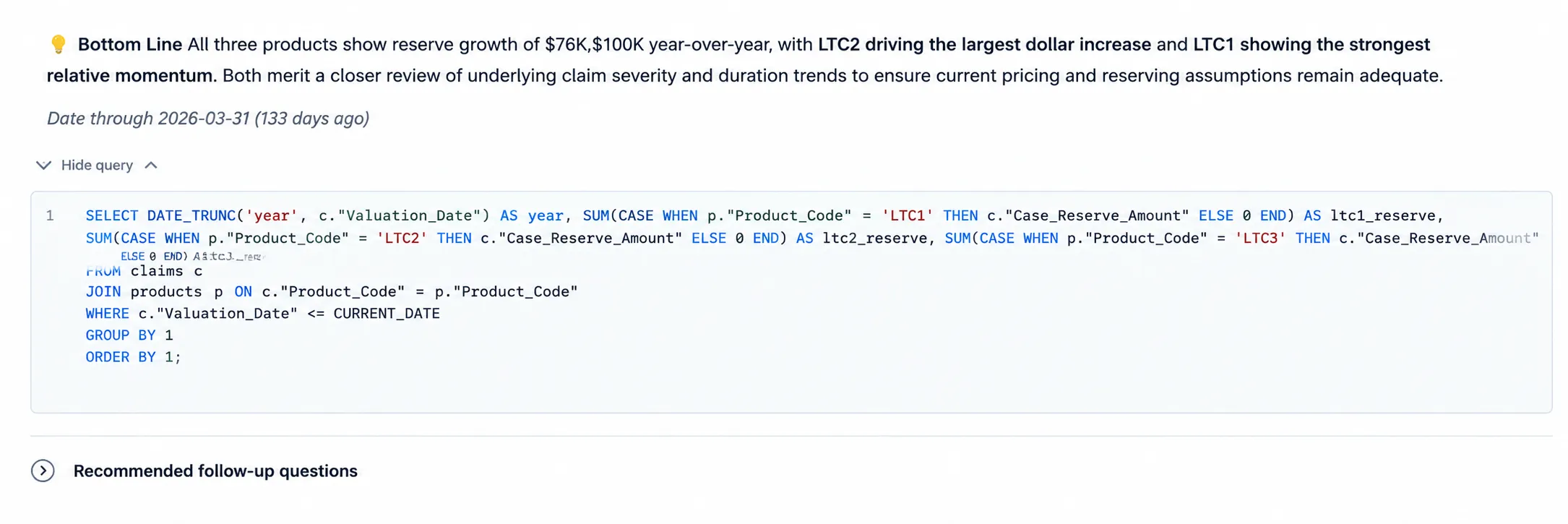
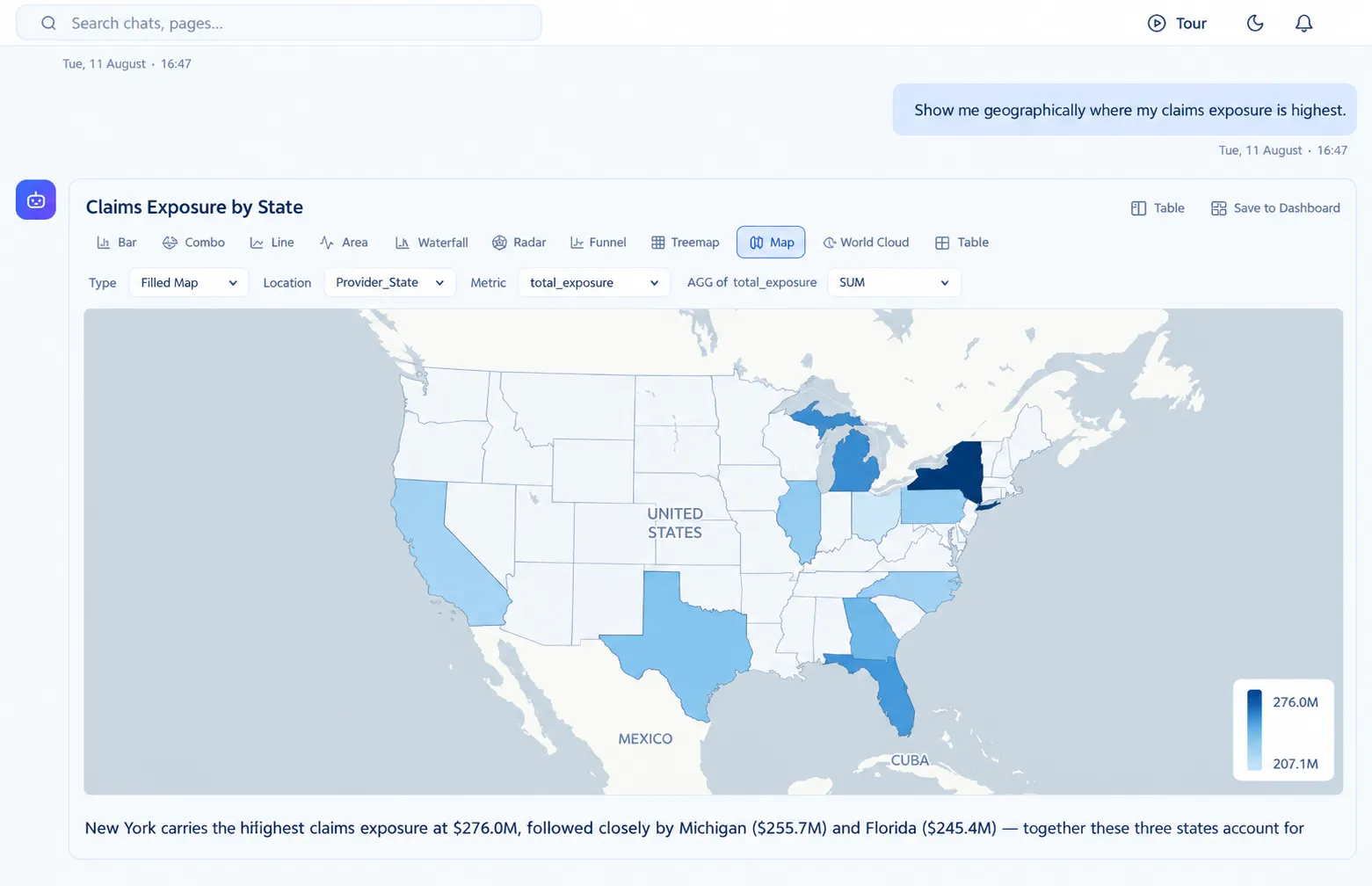
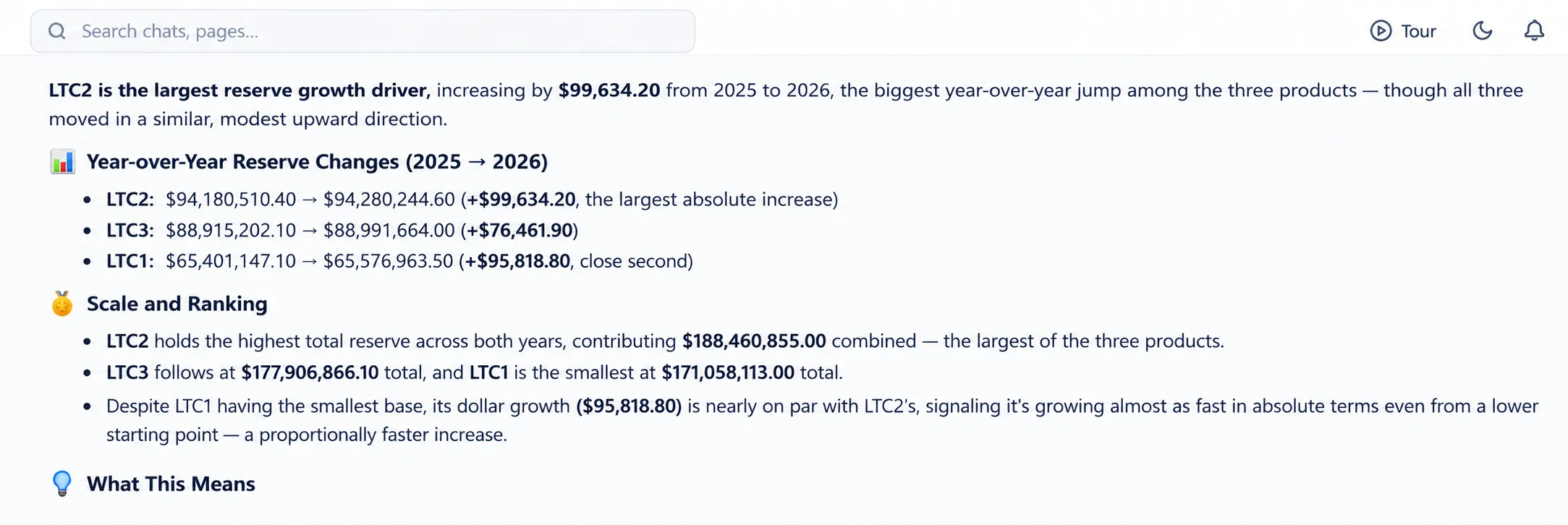
The operational utility of natural language querying extends far beyond initial data profiling into precise geographic and financial diagnostic work. When prompted to identify the geographic concentration of highest claims exposure across a multi-state portfolio, advanced analytics engines can instantaneously isolate regional drivers—such as identifying specific states leading in total financial liability—thereby accounting for a substantial portion of overall risk exposure in a matter of seconds. Furthermore, when investigating anomalous financial movements, such as unexpected reserve increases, modern systems can pinpoint the exact product lines driving annual growth and flag them for immediate reserve-adequacy reviews. Crucially, to satisfy stringent regulatory and audit standards, these platforms incorporate explainable artificial intelligence features, allowing practitioners to view and extract the exact underlying database query with a single click, ensuring every generated figure can be independently verified and incorporated into formal financial statements.
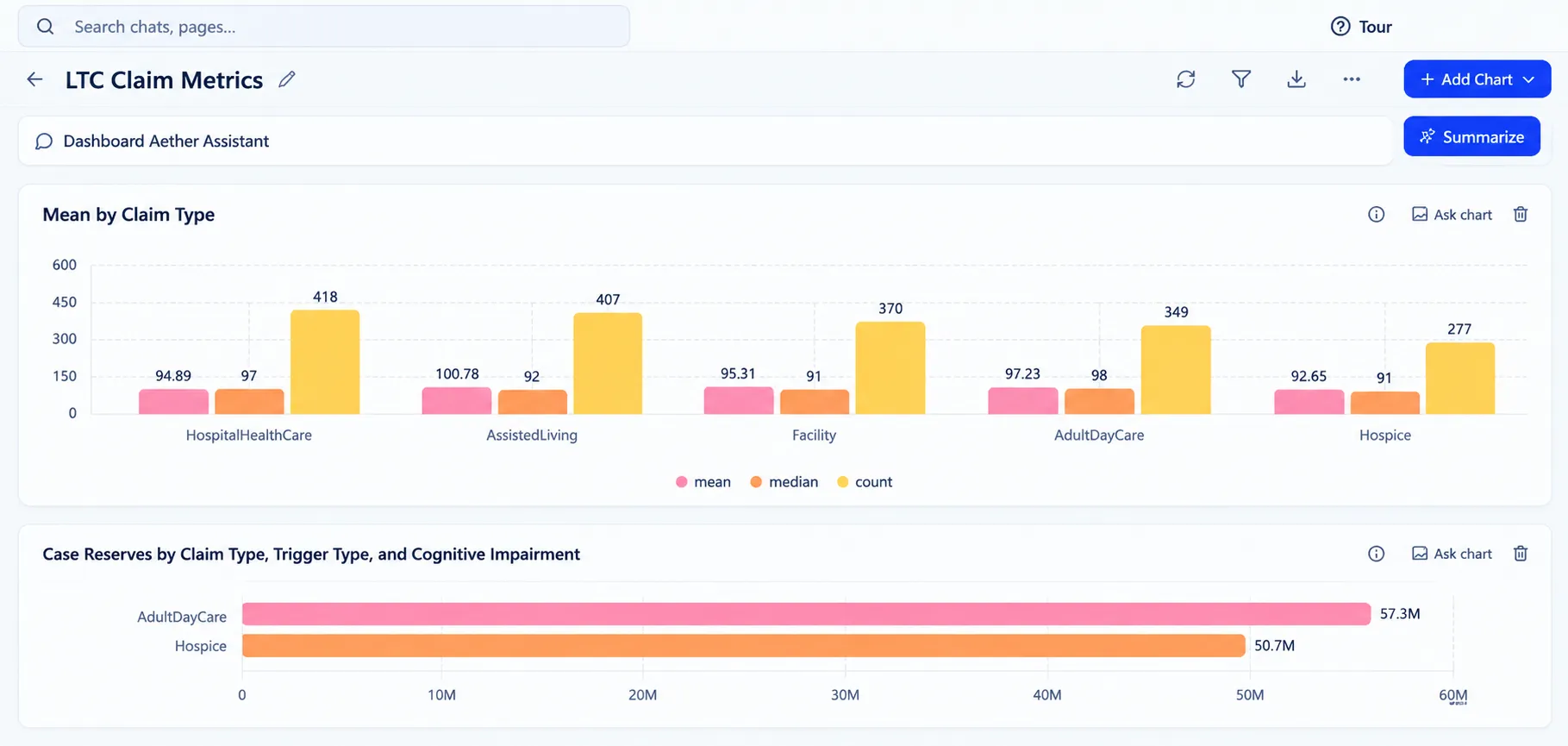
Industry analysts emphasize that the integration of artificial intelligence into actuarial science must adhere to strict governance and explainability standards. According to comprehensive industry surveys conducted by the Society of Actuaries Research Institute, data confidentiality, model accuracy, and explainability remain the primary concerns among practicing professionals. Regulatory frameworks, such as the National Association of Insurance Commissioners Model Bulletin, have established clear expectations regarding how insurers must govern artificial intelligence systems and maintain transparent documentation for regulatory review. Consequently, industry experts advise organizations to avoid opaque "black-box" tools that fail to show the lineage of their computations, generic chat assistants disconnected from proprietary databases, and any software applications that require sensitive policyholder data to leave secure enterprise environments.
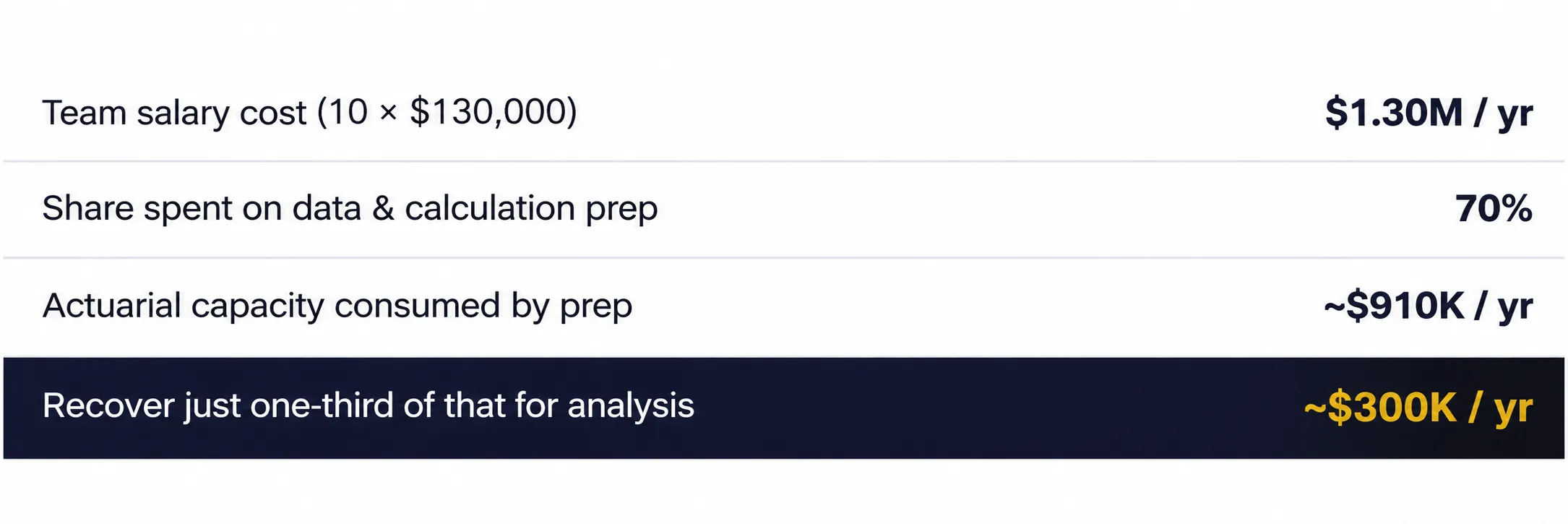
The economic implications of streamlining these analytical workflows are profound. For a standard ten-actuary team operating at median compensation levels, industry analyses indicate that if the majority of professional hours are consumed by data preparation and manual calculation adjustments, the financial capacity lost to administrative friction represents a significant operational drain. By reclaiming these hours through automated, natural-language analytics, an organization can effectively unlock the equivalent of multiple full-time actuaries dedicated purely to strategic, value-added risk assessment. This capacity enhancement arrives without the necessity of expanding headcount in a notoriously competitive labor market.

Looking toward the broader technological landscape, the deployment of specialized artificial intelligence ecosystems continues to mature. Modern implementation strategies typically rely on structured, phased integration models—moving from initial data connectivity and system configuration within established governance frameworks to full operational deployment within weeks rather than years. As insurers navigate the complexities of long-term care provisioning, life valuation, and property and casualty reserving, the ability to rapidly interrogate complex ledgers using natural language is rapidly transitioning from a competitive differentiator into a foundational requirement for modern actuarial excellence.