
American Growth Insurance (AGI), a newly established insurance technology and distribution firm based in Atlanta, Georgia, has officially announced its launch alongside the introduction of a sophisticated, AI-enabled platform designed to modernize the operations of independent insurance brokerages. This strategic entry into the market is bolstered by a significant capital commitment of nearly $70 million, provided by the private equity firm Rockbridge Growth Equity and the prominent venture capital studio Atomic. The company’s primary objective is to equip mid-sized and independent agencies with the technological tools necessary to accelerate organic growth, optimize internal workflows, and compete more effectively against the industry’s largest consolidated entities.
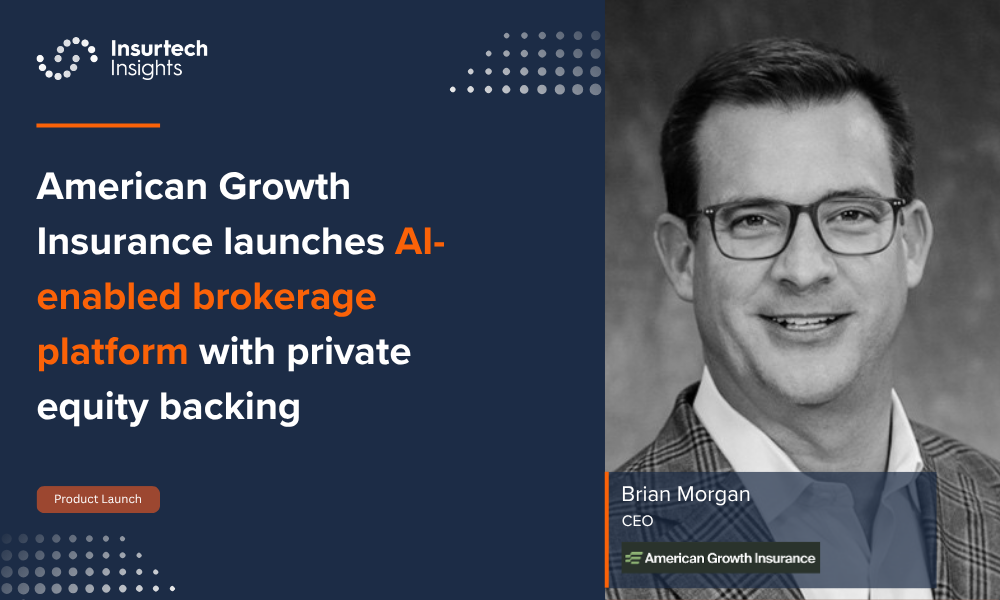
The launch of AGI comes at a pivotal moment for the American insurance distribution sector, which has seen massive consolidation over the last decade. Led by Chief Executive Officer Brian Morgan, a veteran of the insurance industry with over three decades of experience, AGI aims to bridge the widening gap between the "top-tier" mega-brokerages and the rest of the independent agency market. Morgan, who previously served as the Chief Revenue Officer at Keystone Agency Partners, brings a proven track record of scaling insurance businesses through both strategic acquisitions and operational excellence. Under his leadership, AGI spent the previous year in a "stealth" development phase, refining its technology and testing its proprietary operating model in real-world environments.
A Year of Rigorous Development and Pilot Results
The foundation of AGI’s market entry is not merely a theoretical software suite but a tested operating model developed in close collaboration with ten active insurance agencies. Throughout 2023 and early 2024, these partner agencies served as a laboratory for AGI’s AI-enabled tools. The results reported by the company suggest a transformative impact on agency economics. Participating firms saw an average profit improvement exceeding 50%, a figure the company attributes to a dual-pronged effect: a significant lift in top-line revenue through better lead management and a reduction in bottom-line expenses via automated productivity gains.
The platform is designed to address the specific "friction points" that traditionally hinder the growth of independent agencies. These include the manual entry of policy data, the lack of real-time analytics for cross-selling opportunities, and the administrative burden of policy renewals. By integrating artificial intelligence directly into the agency’s daily workflow, AGI enables brokers to spend less time on "back-office" clerical tasks and more time on high-value client advisory roles. This shift is critical in an industry where relationship management remains the primary driver of retention, yet administrative complexity often consumes the majority of an agent’s workday.
Bridging the Growth Gap: Analyzing the MarshBerry Data
The strategic necessity for a platform like AGI is underscored by recent market research from MarshBerry, a leading consulting firm for the insurance and financial services industries. The data highlights a stark disparity in the U.S. insurance brokerage landscape. According to MarshBerry, the 50 largest insurance brokerage firms currently control a staggering 96% of the total revenue in the U.S. brokerage market. This concentration of wealth and resources leaves the thousands of firms ranked between 50 and 100—and those further down the list—vying for the remaining 4% of market share.
Furthermore, the research indicates that the growth rates of these two tiers are diverging. Firms ranked between 50 and 100 recorded an average five-year compound annual growth rate (CAGR) of approximately 7.1%. While respectable in a vacuum, this rate is less than half of the growth achieved by the top 50 firms during the same period. The larger firms benefit from massive economies of scale, proprietary technology stacks, and the ability to outspend smaller rivals on digital marketing and talent acquisition. AGI’s mission is to provide independent agencies with a "technological equalizer," allowing them to access the same level of data sophistication and operational efficiency enjoyed by the industry’s giants without losing their independent identity.
The Investment Strategy: Rockbridge and Atomic’s Vision
The $70 million funding round represents a significant vote of confidence from the investment community. Rockbridge Growth Equity, known for its focus on service-oriented and technology-enabled businesses, and Atomic, a venture studio that specializes in building companies from the ground up, have provided the capital necessary for AGI to execute an aggressive growth strategy.
Michael Stenclik, Vice President at Atomic, provided insight into the rigorous selection process that led to the creation of AGI. According to Stenclik, Atomic’s research team evaluated approximately 1,000 different service-based industries to identify sectors ripe for AI-driven disruption. The insurance distribution sector emerged as a primary candidate due to its high degree of fragmentation, its reliance on data-heavy processes, and a historical lag in the adoption of modern software solutions. Stenclik noted that the traditional insurance agency model is uniquely suited to being reshaped by artificial intelligence, as the technology can ingest vast amounts of structured and unstructured policy data to provide actionable insights that humans might overlook.
The involvement of Rockbridge further emphasizes the "growth equity" nature of the project. Unlike traditional venture capital, which might focus solely on software-as-a-service (SaaS) sales, AGI’s model includes a heavy emphasis on acquisitions. The company has explicitly stated its intention to complete several agency acquisitions before the end of 2026. This "buy-and-build" strategy, powered by AGI’s proprietary tech stack, aims to create a network of high-performing agencies that share a common operational backbone.
Leadership and Operational Philosophy
The appointment of Brian Morgan as CEO is a strategic move designed to instill confidence in potential agency partners and acquisition targets. Having built Keystone Agency Partners into a significant player in the space, Morgan understands the nuances of agency culture. He has emphasized that AGI’s approach is not about replacing human agents with robots, but rather about "supercharging" the agent.
The AGI leadership team believes that the future of insurance distribution lies in "augmented intelligence." In this model, AI handles the heavy lifting of data extraction, market appetite matching, and predictive modeling for renewals, while the human agent focuses on complex risk assessment and building trust with the policyholder. This philosophy is intended to appeal to agency owners who are wary of "insurtech" disruptors that seek to bypass the agent entirely.
Addressing the Private Equity Debate in Insurance
The launch of AGI occurs against a backdrop of increasing scrutiny regarding the role of private equity (PE) in the insurance sector. The industry has seen a massive influx of PE capital over the last decade, leading to concerns about the long-term health of the market. Some critics argue that the PE model, which often prioritizes short-term financial returns and high leverage, can lead to aggressive cost-cutting that undermines service quality and employee welfare.
Academic research from the University of Chicago Law School has recently highlighted these concerns. Researchers noted that private equity funds now control more than $9 trillion in assets globally, and their influence in the insurance sector is particularly pronounced. The research suggests that while PE can provide essential capital for modernization and expansion, it can also introduce financial risks if the emphasis on "financial engineering" outweighs the focus on operational excellence.
AGI has positioned itself as a counter-narrative to these concerns by focusing heavily on operational improvement rather than just financial consolidation. By demonstrating a 50% profit improvement through productivity and revenue growth—rather than merely cutting staff or increasing premiums—AGI seeks to show that private equity-backed technology can create sustainable value for all stakeholders, including employees and clients.
Future Outlook and Industry Implications
As AGI moves toward its 2026 goals, the industry will be watching closely to see if its AI platform can scale across a broader range of agency types and sizes. The success of the initial 10-agency pilot is a strong signal, but the true test will be the integration of acquired firms into the AGI ecosystem.
The broader implications for the insurance industry are significant. If AGI successfully proves that AI can double the profitability of a mid-sized agency, it will likely trigger a "tech arms race" among independent brokerages. Agencies that fail to adopt similar levels of automation may find themselves unable to compete on price or service speed, leading to further consolidation.
Furthermore, AGI’s entry highlights a shift in the InsurTech landscape. The first wave of InsurTech (circa 2015-2020) was largely focused on direct-to-consumer models that aimed to eliminate the agent. The current wave, exemplified by AGI, recognizes the enduring value of the agent and instead focuses on "enablement." By providing the independent agent with the same "superpowers" as a global brokerage, AGI is betting that the human-centric model of insurance sales will not only survive the AI revolution but thrive because of it.
With $70 million in the bank and a clear roadmap for acquisitions, American Growth Insurance is poised to become a significant force in the Atlanta tech scene and the national insurance market. Its focus on combining veteran leadership with cutting-edge data science represents a new chapter in the evolution of insurance distribution, one where the "middle market" finally has the tools to fight back against the dominance of the industry’s largest players.