Between July 1, 2025, and June 30, 2026, motorists across the United States were involved in more than 1.6 million animal-vehicle collisions, resulting in approximately $1.9 billion in insurance claims paid out by State Farm. While the data reflects a modest improvement compared to the previous year—where claims reached 1.7 million—the high volume of incidents underscores the ongoing financial and physical risks posed by wildlife-roadway interactions. Industry analysts suggest that while the slight year-over-year decrease is a positive trend, the persistent nature of these collisions requires a multifaceted approach involving infrastructure investment, technological integration, and enhanced driver education.
Two Decades of Longitudinal Research
State Farm, which has conducted comprehensive research on animal-vehicle collisions for twenty years, tracks these incidents to identify geographical patterns and seasonal fluctuations. The insurer’s longitudinal study provides critical insights into why certain regions experience disproportionately higher rates of these collisions.
Historically, the autumn months present the highest risk. As the seasons shift, deer migration patterns, breeding cycles, and changes in foraging behavior lead to increased movement across roadways. This seasonal peak often correlates with shorter daylight hours, which reduces visibility for drivers during the peak morning and evening commute times. Beyond the seasonal spikes, the insurer’s data suggests that the national likelihood of a driver experiencing an animal-related collision has shifted from 1 in 139 during the 2024-2025 period to 1 in 145 in the most recent study cycle.
Geographic Hotspots and Regional Vulnerability
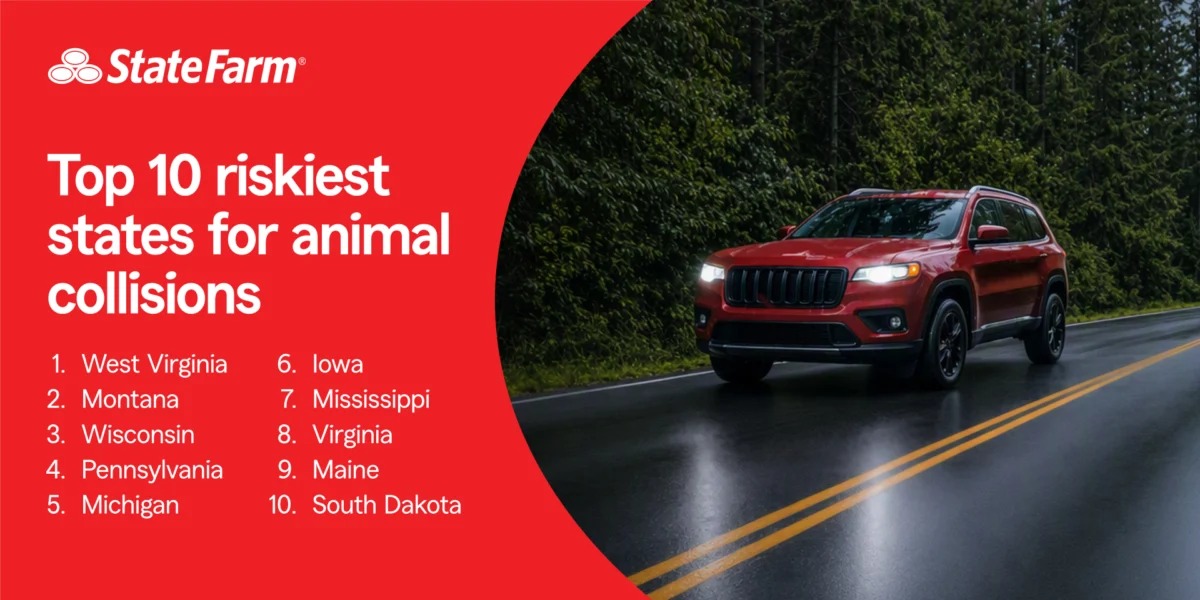
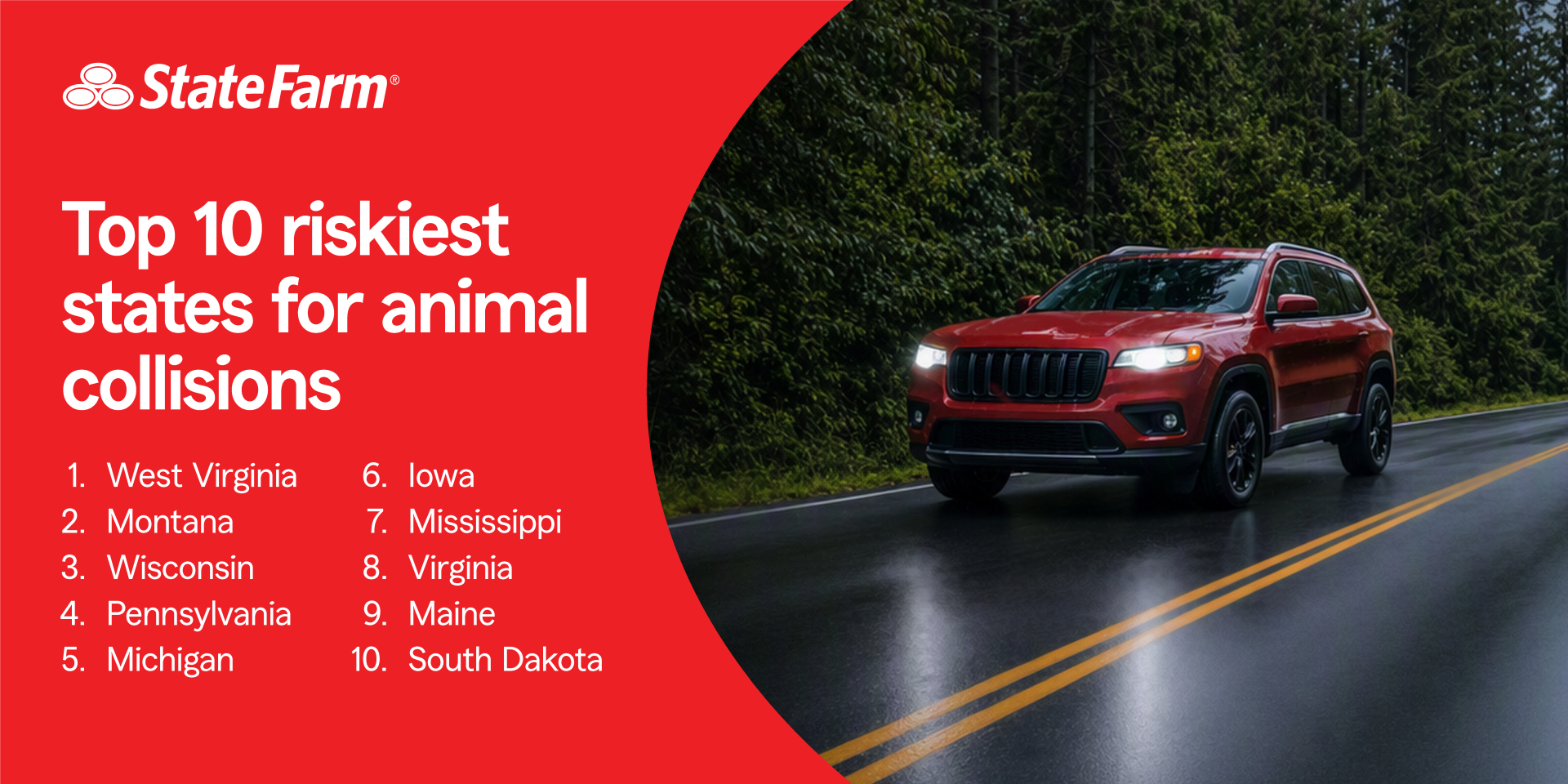
The geographical distribution of these accidents remains consistent with long-term trends, with mountainous and heavily forested regions reporting the highest risks. West Virginia maintains its status as the most hazardous state for motorists in this regard, with a collision likelihood of 1 in 46. The state has held the top position for more than a decade, a reality attributed to its dense deer population and winding, topography-driven road networks that offer limited reaction time for drivers.
Following West Virginia, Montana ranks second with a risk factor of 1 in 54. Wisconsin (1 in 62), Pennsylvania (1 in 64), and Michigan (1 in 68) round out the top five states. While West Virginia claims the highest probability of an individual driver hitting an animal, Pennsylvania leads the nation in total estimated industry claims, with approximately 141,000 incidents reported. This disparity highlights the difference between per-capita risk in sparsely populated, high-wildlife regions versus the total volume of claims in states with higher vehicle density and large rural populations.
Beyond the Deer: The Expanding Scope of Wildlife Claims
While deer have historically been the primary focus of collision studies, the scope of the data has evolved. Modern insurance analytics now capture a broad spectrum of wild and domestic animal interactions. While deer remain the most frequently struck species, current claims data includes significant numbers of collisions involving raccoons, coyotes, turkeys, hogs, and bears.
Furthermore, the category of "animal-related loss" has expanded to include non-collision damage. Rodents, for instance, are a significant factor in insurance claims, not necessarily because they are struck on the road, but because of the mechanical damage they inflict on parked vehicles. Rodents frequently chew through electrical wiring, which can cause total system failures, fuel leaks, and engine fires. This nuance in the data highlights that the risk posed by wildlife to vehicle integrity extends well beyond the moment of impact on the highway.
Infrastructure and Technological Mitigation Strategies
The persistent frequency of these incidents has prompted a call for systemic solutions. Transportation officials and insurance experts point toward a combination of physical infrastructure and vehicular technology as the most effective path forward. Wildlife crossings—such as underpasses, overpasses, and specialized fencing—have proven highly effective in countries like Canada and various European nations in channeling animal movement away from high-traffic corridors.
In the United States, several states have begun integrating "wildlife-friendly" engineering into major infrastructure projects. These include motion-sensor-activated warning signs, which alert drivers when large animals are near the road, and improved vegetation management along highways to increase sightlines.
From a consumer technology perspective, the automotive industry is increasingly incorporating Advanced Driver Assistance Systems (ADAS). Features such as pedestrian and animal detection, night-vision enhancement, and automatic emergency braking are becoming more standard in newer models. Industry reports suggest that as these technologies mature, they may play an increasing role in reducing the severity of impacts, even if they cannot prevent every collision.
Economic and Societal Implications
The $1.9 billion in claims paid by a single insurer illustrates only a fraction of the total economic impact of animal-vehicle collisions. When factoring in the broader insurance industry, the costs of vehicle repair, medical expenses for injured occupants, and the economic value of the wildlife itself, the total national cost is estimated to be significantly higher.
Beyond the financial metrics, there is a clear safety imperative. Animal-vehicle collisions are a leading cause of single-vehicle accidents in rural America. These incidents can lead to vehicle rollovers or secondary collisions with other vehicles or roadside obstacles. Public safety officials consistently emphasize the "data-informed" approach, encouraging local governments to use collision hotspots to prioritize the installation of warning signage and lower speed limits in high-risk zones.
The Role of Driver Awareness
Despite the advancements in technology and infrastructure, human behavior remains the most significant variable in accident prevention. Defensive driving techniques are critical, particularly during dawn and dusk. Experts recommend that drivers scan the roadside constantly rather than focusing solely on the center of the road, and to be particularly cautious when traveling through areas marked with "Deer Crossing" signs.
Furthermore, drivers are encouraged to avoid swerving if an animal appears in the road. Many of the most severe injuries in animal-vehicle collisions occur when a driver attempts to avoid the animal, loses control of the vehicle, and strikes a tree, utility pole, or oncoming traffic. The standard recommendation is to brake firmly and maintain control of the vehicle, as a collision with a smaller animal—while damaging to the vehicle—is often less lethal than a high-speed impact with a fixed object.
Looking Toward the Future
The decline from 1.7 million to 1.6 million collisions is a positive signal, but the industry remains cautious. As urban sprawl continues to push into previously undeveloped wildlife habitats, the frequency of human-animal interaction is unlikely to disappear. Future research will likely focus on the impact of climate change on migration patterns, as shifting weather cycles alter where and when wildlife move.
As data analytics become more sophisticated, the insurance industry expects to provide more granular, real-time alerts to policyholders, perhaps eventually integrating GPS-based warnings that alert drivers when they are entering a high-risk zone based on historical accident data. For now, the combination of state-level infrastructure investment and heightened driver awareness remains the most effective defense against what continues to be one of the most common and costly types of automotive accidents in the United States. Through continuous monitoring and a commitment to integrating new safety technologies, the goal remains to lower the collision probability further, making the nation’s roadways safer for both human travelers and the wildlife with which they share the landscape.