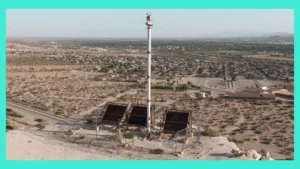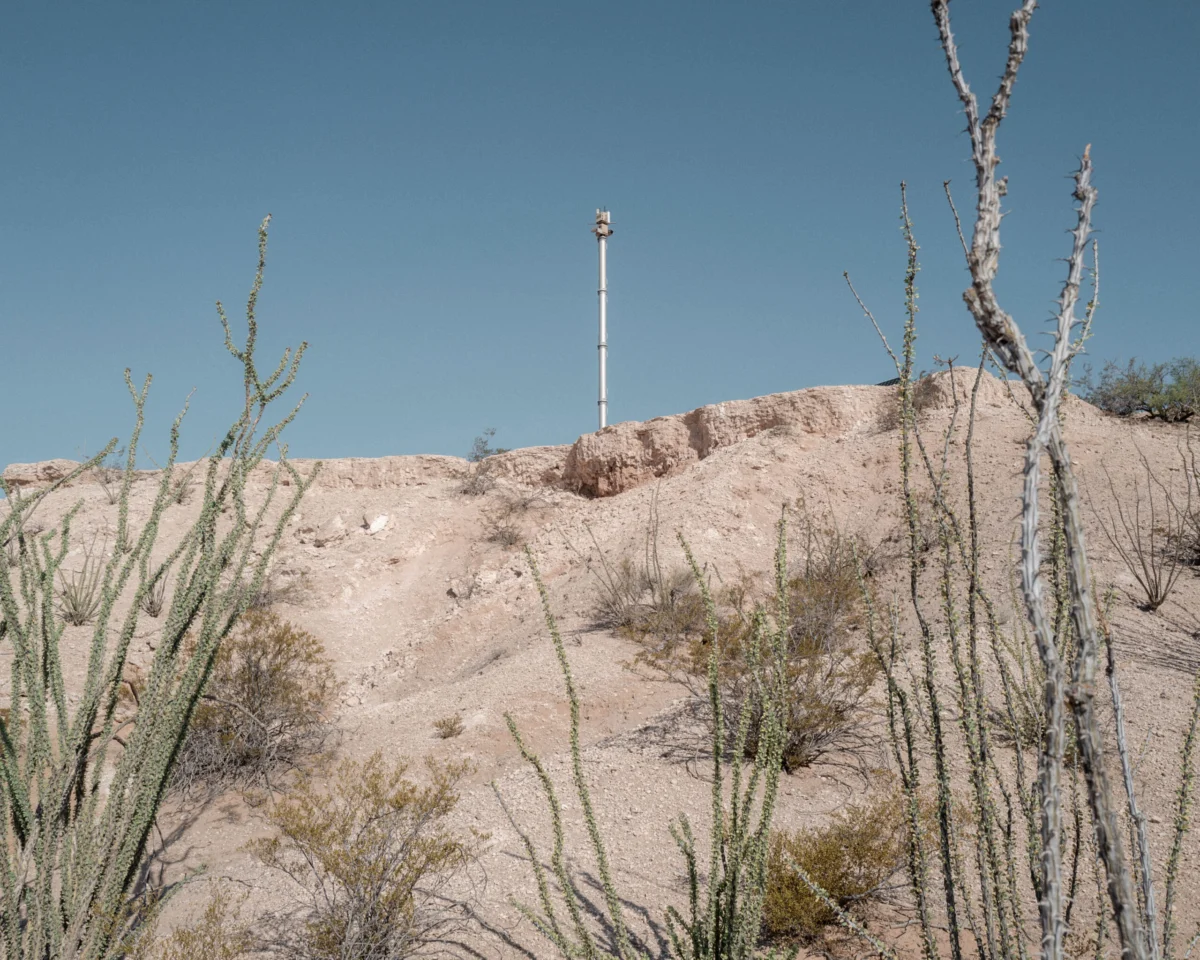
For decades, the United States government has confronted a daunting geographic reality: securing nearly 2,000 miles of remote, rugged terrain along the southern border. As traditional urban enforcement pushed migrant crossings into harsh, unpopulated desert landscapes, the federal government increasingly turned to technology to bridge the gap. Today, this effort manifests as a sprawling "virtual wall" composed of hundreds of high-tech surveillance towers equipped with radar, long-range thermal imaging, and artificial intelligence.

Yet, an extensive investigative analysis reveals a sobering contradiction: hundreds of individuals have died within the active line of sight of these multi-million-dollar surveillance systems. Despite boasting billions of dollars in federal funding and continuous technological upgrades, Customs and Border Protection (CBP) has done little to evaluate whether its towers actually prevent these fatalities or how frequently the technology misses those in distress.
The Evolution of the Virtual Wall: From Panning Cameras to Autonomous AI
The deployment of border surveillance technology dates back to the mid-1990s, when surging enforcement in urban sectors like El Paso diverted crossers into rural areas defined by extreme temperatures, scarce water, and unforgiving terrain. In response, CBP began installing the Remote Video Surveillance System (RVSS) in 1998, mounting 60-to-80-foot metal towers with remotely operated pan-and-zoom cameras. While these early systems allowed personnel to monitor large swathes of land without relying solely on agents in the field, they quickly triggered a severe case of information overload. Operators sitting in dark rooms were tasked with monitoring dozens of video feeds simultaneously, making it statistically nearly impossible to catch every movement.

To solve this information bottleneck, the federal government solicited advanced industrial solutions. In 2011, CBP partnered with Israeli defense contractor Elbit Systems to deploy Integrated Fixed Towers (IFTs) in Arizona, which used radar to automatically detect motion and cue cameras. By 2018, under the umbrella of CBP’s newly formed Innovation Team, the agency embraced Silicon Valley defense tech startups, most notably Anduril Industries. Founded by Palmer Luckey, Anduril pioneered Autonomous Surveillance Towers (ASTs)—solar-powered, modular structures utilizing computer vision and artificial intelligence to automatically classify, track, and generate alerts for people, vehicles, and animals.
As of 2026, the federal footprint stands at over 800 towers, with historical funding surges paving the way for CBP to spend $1 billion on an additional 1,497 towers by 2034. Proponents, including border security hardliners and fiscal conservatives, champion the program as a cheaper, less intrusive alternative to physical walls.

Technological Limitations and Information Overload
Despite sweeping financial backing and advanced algorithmic claims, frontline agents and technical experts report persistent operational failures. From the earliest RVSS units to the newest generation of AI-driven Anduril towers, the technology has routinely struggled with blind spots, environmental obstructions, and algorithmic misclassifications.
Topographical analyses demonstrate that physical obstacles—such as mountains, dense brush, and buildings—frequently block camera views, severely diminishing advertised ranges. Furthermore, algorithms designed to reduce false positives often trigger false negatives. Former Border Patrol agents have recounted incidents where smugglers successfully bypassed AI detection by covering groups with tarps, blankets, or netting, leaving the radar to register them merely as "unidentified objects" or dismissing them entirely.

Moreover, hardware malfunctions have historically plagued the infrastructure. Congressional memos and internal agency reports revealed that over 66% of first-generation towers were unusable at various points due to maintenance failures, leaving critical surveillance gaps along active trafficking corridors. Even when functioning optimally, agents describe being chronically overextended. During historical migration surges, personnel were frequently tied up processing detained individuals, leaving them unable to respond to automated alerts in real time.
A Trail of Unnoticed Tragedies
The most profound failure of the virtual wall lies in the human cost hidden beneath its gaze. Investigative findings indicate that between 500 and 700 people died within range of RVSS and IFT towers between 2015 and late 2025. Hundreds more have perished near Anduril’s autonomous towers since their deployment.

In many documented cases, individuals succumbed to the elements, dehydration, or drowning within clear line of sight of multi-million-dollar sensors. For example, in 2022, a Brazilian family attempted to cross the Rio Grande near Del Rio, Texas. The father drowned while carrying his two-year-old daughter, Eloah. The mother managed to pull the unresponsive toddler onto a rock, mere feet away from multiple camera systems explicitly deployed to monitor that popular crossing point. Despite topographical analyses confirming a clear line of sight, tower operators failed to dispatch immediate assistance, and the toddler did not survive.
Similarly, in New Mexico and Southern California, individuals have been found dead of exposure days after passing within short distances of active autonomous towers. Because CBP and private contractors typically overwrite surveillance data every 30 days and do not formally investigate whether technology should have detected a decedent, families and humanitarian groups are frequently left without definitive answers regarding their loved ones’ final moments.

Official Responses and Institutional Oversight
When presented with these findings, federal agencies and defense contractors consistently deflected responsibility. An Anduril spokesperson emphasized that once delivered, towers are operated exclusively by CBP, and noted that surveillance ranges vary based on terrain, physical obstructions, and virtual privacy boundaries set by the agency. General Dynamics similarly referred inquiries back to CBP.
CBP leadership defended the efficacy of the infrastructure, asserting that autonomous surveillance towers successfully improve detection, situational awareness, and agent safety between ports of entry. Hilton Beckham, CBP’s assistant commissioner for public affairs, stated that agents evaluate the technology based on mission outcomes, noting that "autonomous surveillance towers use artificial intelligence to detect and classify people… and alert Border Patrol agents."

However, independent experts and lawmakers remain sharply critical of the program’s lack of transparency. Geoff Boyce, a geography professor at University College Dublin who studies border surveillance, noted that while the technology occasionally provides useful intelligence, it consistently fails to deliver the high level of operational efficacy claimed by corporate manufacturers and the Department of Homeland Security. Meanwhile, congressional critics, such as Representative Delia Ramirez, have argued that millions of taxpayer dollars continue to fund ineffective technologies with zero commitment to meaningful oversight.
Broader Implications and Future Outlook
The expansion of the virtual wall unfolds against a backdrop of shifting immigration metrics. Following historic highs in border encounters through late 2022 and 2023, enforcement numbers dropped significantly by mid-2026. Yet, even as crossing rates subsided and agency headcounts reached historic highs of over 21,500 agents, migrant fatalities within range of surveillance towers persisted.

The fundamental disconnect between technical capabilities and humanitarian outcomes highlights a systemic institutional reluctance to measure failure. Government watchdogs, including the Government Accountability Office (GAO) and the DHS Office of the Inspector General, have repeatedly found that data regarding the utility of border technology is unreliable or inconsistently logged by frontline agents who view administrative tracking as secondary to field operations. Furthermore, with the dismantling of key DHS oversight offices and billions more allocated for future deployments, the expansion of AI-driven border surveillance continues with even fewer checks and balances.
Ultimately, critics argue that treating complex migration challenges primarily as an engineering problem yields a dangerous paradox: a border that is intensely and pervasively monitored by machines, yet frequently indifferent to human suffering unfolding directly in front of the lens.