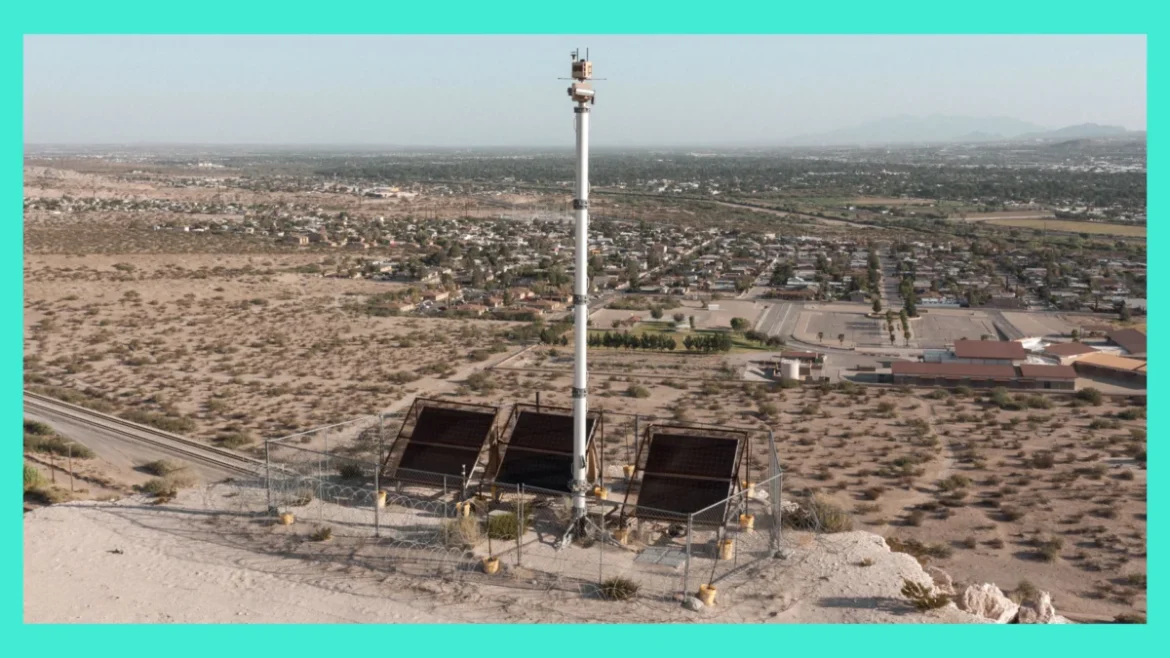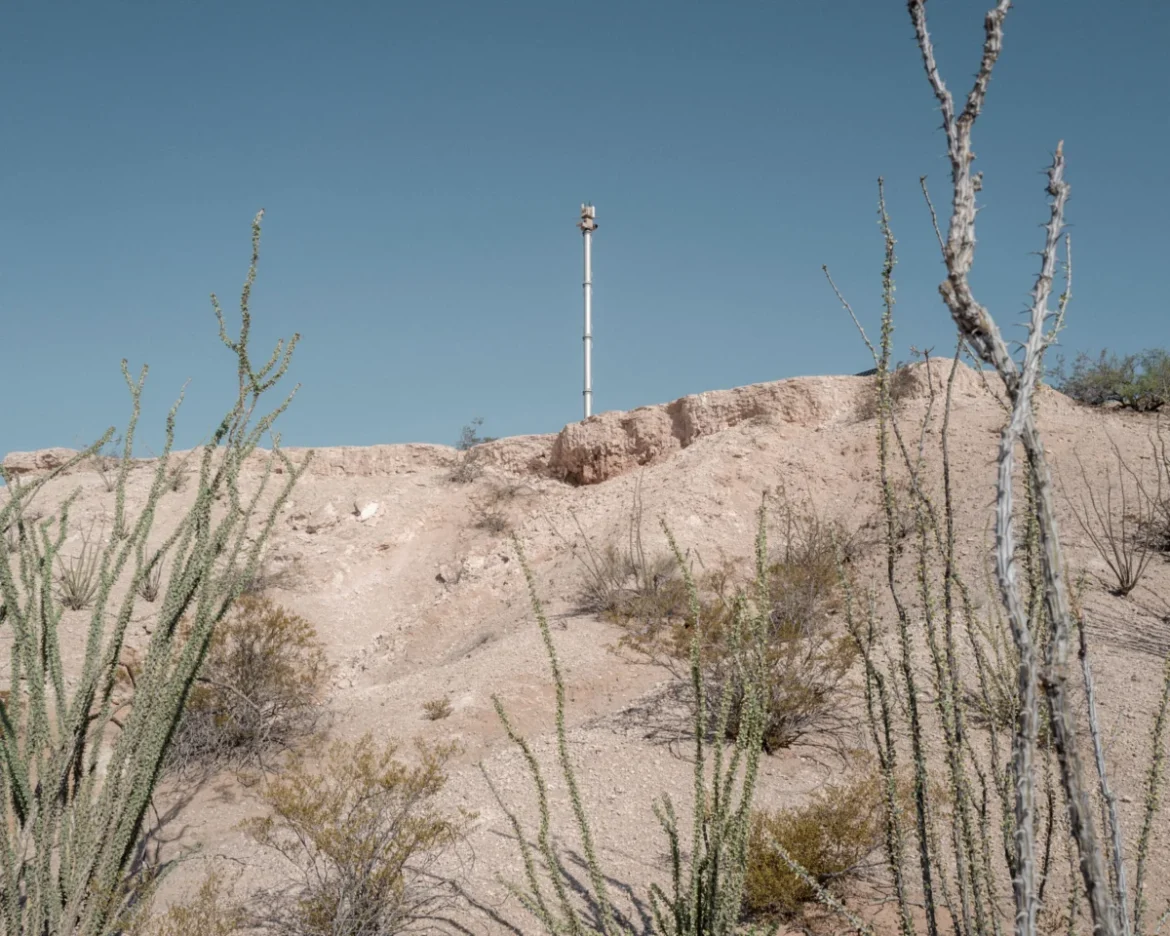
For a quarter of a century, successive United States administrations have invested billions of dollars into a technological safeguard known as the "virtual wall." Stretching across thousands of miles of the arid, unforgiving terrain of the American southwest, this sprawling network of high-tech surveillance towers, thermal-imaging cameras, radar systems, and, more recently, artificial intelligence was pitched as a modern solution to an age-old challenge. Proponents promised that these digital sentinels would revolutionize border security, enhance the detection and apprehension of unauthorized border crossers, and ultimately save human lives by allowing authorities to locate individuals in distress swiftly.
However, a groundbreaking, multi-month investigation by MIT Technology Review has shattered these official assurances. The reporting reveals a devastating reality: more than one thousand people have traversed areas directly monitored by these surveillance towers, only to perish in the borderlands without ever being intercepted, rescued, or reached by authorities. In some tragic instances, victims passed directly under the electronic gaze of newly installed, AI-powered automated detection towers designed explicitly to spot human movement, yet no help arrived.
This comprehensive examination exposes a profound humanitarian crisis hiding in plain sight—one illuminated, yet ignored, by the very technology built to monitor it. It also underscores a systemic failure of the virtual wall to fulfill its fundamental promises of security and humanitarian intervention. Recently, the journalists behind this investigative effort—Editor in Chief Mat Honan, Senior AI Reporter James O’Donnell, and Senior Features and Investigations Reporter Eileen Guo—hosted a public discussion to dissect the systemic flaws of border surveillance technology and share the harrowing human stories behind the statistics.
The Evolution and Construction of the Virtual Wall
The concept of a virtual wall did not materialize overnight; it is the culmination of a 25-year technological arms race along the US-Mexico border. Following the geopolitical shifts of the early 2000s, federal authorities increasingly turned to private defense contractors and Silicon Valley innovations to supplement traditional physical barriers like fencing and walls.
The strategy was rooted in the belief that geography could be conquered through optics and data. Instead of building impenetrable physical structures across jagged mountains and vast deserts, the federal government opted to monitor vast expanses remotely. Early iterations included the Secure Border Initiative network (SBInet), commonly known as the Boeing project, which aimed to establish an interconnected web of stationary and mobile surveillance towers. Despite billions spent and persistent technical delays, the original iterations suffered from integration issues, sensor blind spots, and environmental vulnerabilities against desert heat and dust.
Over the subsequent decades, billions more were funneled into upgrades. Today’s infrastructure features advanced aerostats (blimp-like surveillance platforms), mobile surveillance systems mounted on trucks, long-range thermal cameras capable of detecting body heat miles away, and autonomous ground sensors. In recent years, Customs and Border Protection (CBP) has aggressively integrated artificial intelligence and machine learning algorithms into the network. These AI-powered towers are programmed to automatically distinguish human forms from wildlife and blowing brush, alerting human operators in distant control rooms to potential crossers in real time.
Yet, as the MIT Technology Review investigation demonstrates, the widening chasm between technological capability and humanitarian rescue has transformed the virtual wall into an automated witness to tragedy rather than a mechanism for salvation.
Chronology of a Mounting Crisis
To understand how the virtual wall became disconnected from humanitarian rescue, it is necessary to examine the timeline of technological expansion alongside the rising death toll in the borderlands.
- The Early 2000s: The Department of Homeland Security and CBP launch early initiatives to digitize border oversight, laying the groundwork for the virtual wall through pilot programs using radar and stationary cameras.
- 2006–2010: Congress passes the Secure Fence Act, heavily funding both physical barriers and technological surveillance. Early high-tech projects, such as SBInet, face intense criticism from government watchdogs for cost overruns, software glitches, and low reliability.
- 2011–2018: CBP pivots toward localized surveillance systems, deploying mobile towers and integrated fixed towers (IFTs) manufactured by defense contractors like Elbit Systems of America. The footprint of remote surveillance expands significantly across Arizona, Texas, and New Mexico.
- 2019–2022: The federal government accelerates the adoption of automated analytics and artificial intelligence to process the massive feeds generated by thousands of cameras and sensors. Officials market these AI upgrades as force multipliers that will improve response times and interdiction rates.
- 2023–2026: Investigative journalists undertake a rigorous data-driven mapping project, cross-referencing geographical tracking of recovered human remains with the exact coordinates and operational footprints of border surveillance towers. The resulting findings reveal that over a thousand individuals died within the direct field of view of these supposedly life-saving technologies.
Supporting Data and Investigative Findings
The core revelation of the MIT Technology Review investigation rests on meticulous spatial analysis and on-the-ground reporting. By mapping the GPS coordinates of migrant deaths documented by humanitarian organizations, medical examiners, and county sheriffs against the physical locations and operational arcs of CBP surveillance towers, the investigative team uncovered a grim statistical overlap.
More than 1,000 people lost their lives in sectors where camera lenses and thermal sensors were actively recording. The investigation challenges the narrative that these deaths occur purely in remote "black holes" where technology cannot reach. On the contrary, many victims expired in plain sight of the multi-million-dollar apparatus.
Furthermore, the reporting highlights the paradox of the newly deployed artificial intelligence systems. These systems were theoretically engineered to reduce human error—such as operators missing a tiny blip on a crowded monitor during a long shift. However, the presence of AI did not automatically translate to a rescue operation. In several documented cases, the towers successfully registered human presence, but institutional bottlenecks, delays in dispatching agents, jurisdictional confusion, or a rigid law enforcement priority focused exclusively on apprehension rather than rescue meant that aid never materialized in time.
Institutional Priorities: Apprehension Versus Humanitarian Aid
The disconnect between surveillance data and human survival highlights a fundamental tension within modern border management: the tension between law enforcement objectives and humanitarian obligations.
Critics, human rights advocates, and humanitarian groups operating in the borderlands argue that CBP’s technological infrastructure is explicitly optimized for deterrence and apprehension, not search and rescue. When a tower detects movement, the primary operational directive is typically to deploy agents to intercept and detain individuals.
However, in extreme desert environments where dehydration, heatstroke, or hypothermia can prove fatal within hours, a delay of even a short window can be the difference between life and death. If surveillance feeds are monitored from distant command centers—sometimes hundreds of miles away—the translation of electronic data into an active rescue mission is fraught with communication friction.
Moreover, civil liberties organizations point out that the expansion of surveillance technology has historically pushed desperate travelers into increasingly dangerous, remote geographic corridors to avoid detection. By fortifying traditional urban crossing points with walls and cameras, authorities inadvertently funnel people into unforgiving terrain. When these individuals inevitably succumb to the elements, the virtual wall fails to act as a safety net, functioning instead as a passive observer of preventable fatalities.
Official Responses and Perspectives
While CBP and the Department of Homeland Security frequently tout technological modernization as a cornerstone of secure and humane border management, the agencies face mounting scrutiny following these investigative findings.
Federal officials have historically defended border surveillance as an essential tool for officer safety and national security, arguing that technology allows agents to deploy efficiently in vast, under-resourced areas. CBP representatives have maintained that agents regularly conduct search and rescue operations, saving thousands of lives annually through dedicated programs like the Missing Migrant Program.
Nevertheless, the revelation that over a thousand individuals perished within sight of these technological assets poses severe ethical and operational questions for agency leadership. Lawmakers, public health experts, and oversight bodies are increasingly demanding accountability regarding how surveillance data is prioritized when human life is at stake. Questions persist over whether control room operators are given explicit protocols to initiate emergency medical responses when automated systems detect individuals in acute distress, or if enforcement mandates consistently override humanitarian triage.
Broader Impact and Future Implications
The implications of this investigation extend far beyond the borders of the American Southwest, touching upon global debates regarding the ethics of artificial intelligence, state surveillance, and human rights.
As governments worldwide increasingly turn to automated surveillance, biometric tracking, and algorithmic decision-making to manage migration and border security, the findings offer a cautionary tale. The assumption that advanced technology inherently creates a safer, more efficient, or more humane system is heavily challenged by the empirical reality documented in the borderlands.
Without robust accountability frameworks, transparent operational protocols, and a primary commitment to human life over strict enforcement metrics, technological upgrades run the risk of scaling administrative indifference. The virtual wall was built to make the invisible visible, yet the tragedy uncovered by this investigation is that seeing people in distress is entirely different from choosing to save them. As public pressure mounts, the debate over the future of border technology will likely center on whether these billions of dollars can be redirected toward saving lives—or if the virtual wall will remain an automated monument to systemic failure.