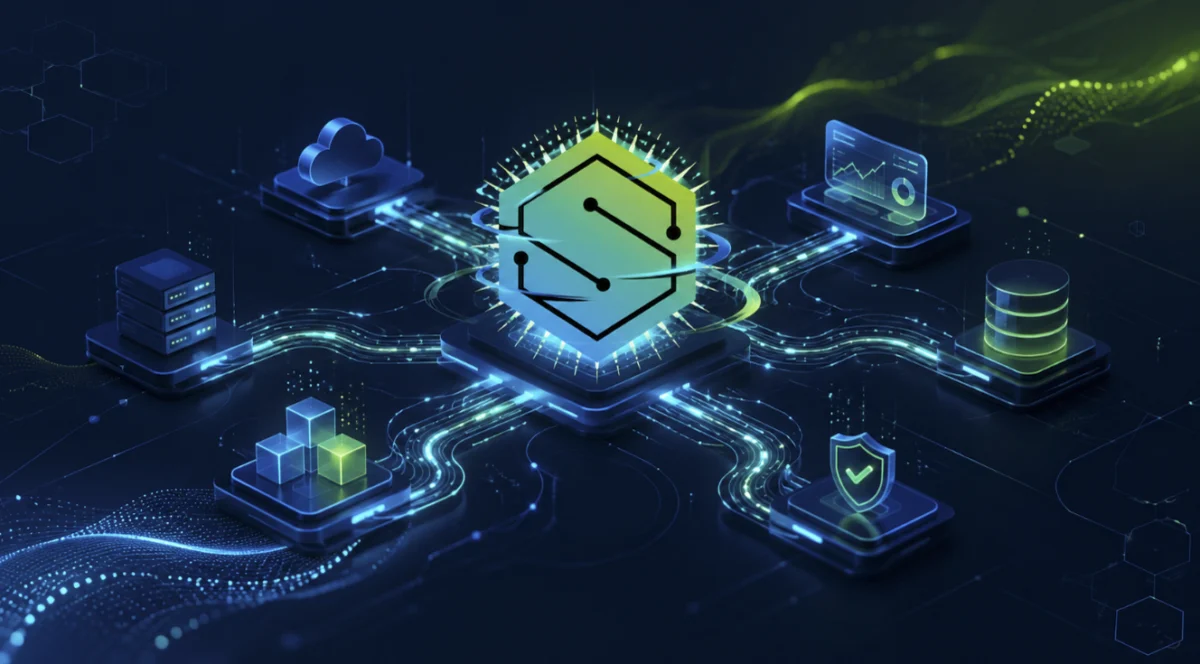
The modern enterprise landscape is currently defined by a widening gap between the theoretical potential of artificial intelligence and the practical realities of legacy infrastructure. As organizations globally strive for digital transformation, many find themselves trapped in a cycle of fragmented innovation, where promising AI initiatives remain confined to isolated pilot programs. On July 23, 2026, technology solution provider Solvrays introduced a comprehensive strategic framework and orchestration platform designed to bridge this divide, offering a pathway for organizations to move from experimental AI use cases to full-scale enterprise execution without the need for the high-risk "rip-and-replace" strategies that have historically characterized IT modernization.
By positioning itself as an intelligent orchestration control layer, Solvrays aims to address the fundamental friction point in corporate technology: the disconnect between agile new technologies and the rigid, siloed legacy systems that still house the majority of enterprise data and core business logic. This approach focuses on creating a "central nervous system" for the technology stack, allowing for the seamless flow of data and decision-making across disparate platforms.
The Challenge of Legacy Inertia in the AI Era
For the better part of a decade, the insurance and financial services sectors have grappled with the burden of aging infrastructure. These legacy systems, while reliable for record-keeping, were never designed for the real-time data processing requirements of modern AI. According to industry data, maintenance of legacy systems can consume up to 70% of an organization’s IT budget, leaving little room for genuine innovation. Furthermore, the complexity of these systems often leads to "data silos," where information is trapped within specific departments, preventing a holistic view of the customer or the business.
The emergence of Generative AI and advanced machine learning has only intensified these challenges. While many firms have successfully launched small-scale AI pilots to handle specific tasks—such as basic document classification or initial customer inquiries—scaling these solutions to handle enterprise-wide workflows often leads to failure. The primary obstacle is not the AI itself, but the lack of an orchestration layer that can connect the AI’s output to the operational systems where business is actually conducted, such as Policy Administration Systems (PAS), Customer Relationship Management (CRM) tools, and document management platforms.
Solvrays and the Architecture of Intelligent Orchestration
The Solvrays platform is engineered to serve as this missing link. Rather than attempting to replace the core systems that have been the backbone of enterprises for decades, Solvrays introduces a unifying control layer. This layer sits above the existing infrastructure, connecting people, existing systems, and new AI capabilities into a singular, fluid operational environment.
The orchestration model focuses on three primary pillars of transformation:
1. Accelerating the Human Experience
In the insurance sector, the speed of agent onboarding and the responsiveness of customer service are critical competitive differentiators. Solvrays utilizes AI-driven orchestration to automate the complex data entry and verification steps required for onboarding, reducing the time from weeks to days or even hours. By streamlining the "journey" for both the agent and the customer, the platform ensures that interactions are not just faster, but more precise and personalized.
2. Operational Efficiency Through Intelligent Routing
Beyond simple automation, Solvrays introduces the concept of "intelligent routing." In traditional environments, work is often assigned based on manual queues or rigid, rule-based logic. Solvrays leverages AI to analyze the complexity and requirements of a task, routing it to the appropriate system or human operator based on real-time capacity and expertise. This reduces the margin for error and significantly boosts overall organizational productivity.
3. Unified Integration Across the Tech Stack
The technical value proposition of Solvrays lies in its ability to act as a "translator" between different eras of technology. It allows a modern, AI-powered communication tool to "talk" to a 20-year-old policy administration system through a standardized control layer. This connectivity ensures that data flows bi-directionally, allowing AI to make decisions based on the most current enterprise data and then push those actions back into the core systems of record.
A Chronology of AI Evolution: From 2023 to 2026
The release of the Solvrays orchestration layer marks a significant milestone in the timeline of enterprise AI adoption. To understand its impact, one must look at the progression of the technology over the last few years:
- 2023-2024: The Era of Discovery. Organizations began massive investments in Generative AI, primarily focusing on Large Language Models (LLMs) for content generation and internal research. Most initiatives were experimental and lacked integration with core business workflows.
- 2025: The Year of the Pilot. Enterprises shifted focus toward specific use cases, such as automated claims processing or underwriting assistants. However, many of these projects hit a "plateau of productivity" because they could not easily access the data locked in legacy silos.
- 2026: The Shift to Orchestration. The current year represents a turning point where the focus has moved from "What can AI do?" to "How do we run the business with AI?" Solvrays’ announcement reflects this market-wide demand for execution-ready infrastructure.
Data-Driven Insights: The Cost of Inaction
Market analysis suggests that the stakes for enterprise execution have never been higher. Recent surveys of Chief Information Officers (CIOs) in the insurance and finance sectors indicate that 85% of leaders view AI orchestration as a top-three priority for the 2026-2027 fiscal cycle. Organizations that fail to move beyond the pilot phase face significant risks, including:
- Increased Operational Costs: Companies relying on manual "swivel-chair" integration—where employees manually move data between AI tools and legacy systems—report 40% higher operational costs than those with automated orchestration.
- Talent Attrition: Younger professionals entering the workforce increasingly demand modern, AI-augmented tools. Legacy-heavy environments are seeing a 25% higher turnover rate among tech-savvy talent.
- Customer Churn: In a world of instant gratification, the "friction" caused by disconnected systems leads to longer resolution times, directly correlating with lower Net Promoter Scores (NPS).
Official Responses and Industry Implications
Industry analysts have noted that the "orchestration-first" approach championed by Solvrays represents a pragmatic middle ground for conservative industries like insurance. "The ‘rip-and-replace’ era is largely over for major carriers," says a lead analyst at a global technology research firm. "The risk to business continuity is simply too high. Solutions that allow for modernization through orchestration are the only viable path forward for firms with decades of accumulated data and logic."
Within the insurtech community, the reaction has been focused on the democratization of AI. By providing a control layer that handles the "heavy lifting" of integration, Solvrays enables smaller and mid-sized organizations to compete with larger incumbents who have the resources for massive custom-built internal platforms.
Strategic Preview: ITC Vegas 2026
The broader industry will have the opportunity to evaluate these capabilities firsthand at ITC Vegas 2026, the world’s largest insurtech event. Scheduled to take place from September 29 to October 1 at the Mandalay Bay Resort & Casino in Las Vegas, the conference is expected to draw over 10,000 attendees, including industry executives, investors, and technology pioneers.
Solvrays will be exhibiting at Booth 3232, where they plan to demonstrate the orchestration layer in real-world scenarios. The company’s presence at the event is centered on the theme of moving from "vision to execution," a message that resonates with an industry that is increasingly weary of AI hype and hungry for tangible results. The demonstration is expected to showcase live integrations between legacy policy systems and modern AI agents, highlighting the speed and fluidity of orchestrated workflows.
Broader Impact: The Future of the Autonomous Enterprise
The move from AI pilots to enterprise execution is more than just a technical upgrade; it is a fundamental shift in how businesses are structured. As orchestration layers like Solvrays become standard, we are seeing the early stages of the "autonomous enterprise"—an organization where routine administrative tasks are handled by a coordinated web of AI and legacy systems, allowing human workers to focus entirely on high-value strategy, complex problem-solving, and relationship management.
In this future, the competitive advantage will not come from having the "best" AI model—as many models are becoming commoditized—but from having the best orchestration. The ability to connect that AI to the core of the business, to move data without friction, and to execute workflows with precision will be the defining characteristics of the market leaders in the late 2020s.
Solvrays’ approach acknowledges that the path to the future is built upon the foundations of the past. By respecting the importance of core systems while enabling the power of modern AI, the company provides a blueprint for a more agile, intelligent, and efficient enterprise. As the industry gathers in Las Vegas this autumn, the conversation will undoubtedly focus on how to turn the promise of the AI insider into the reality of the AI-driven organization.