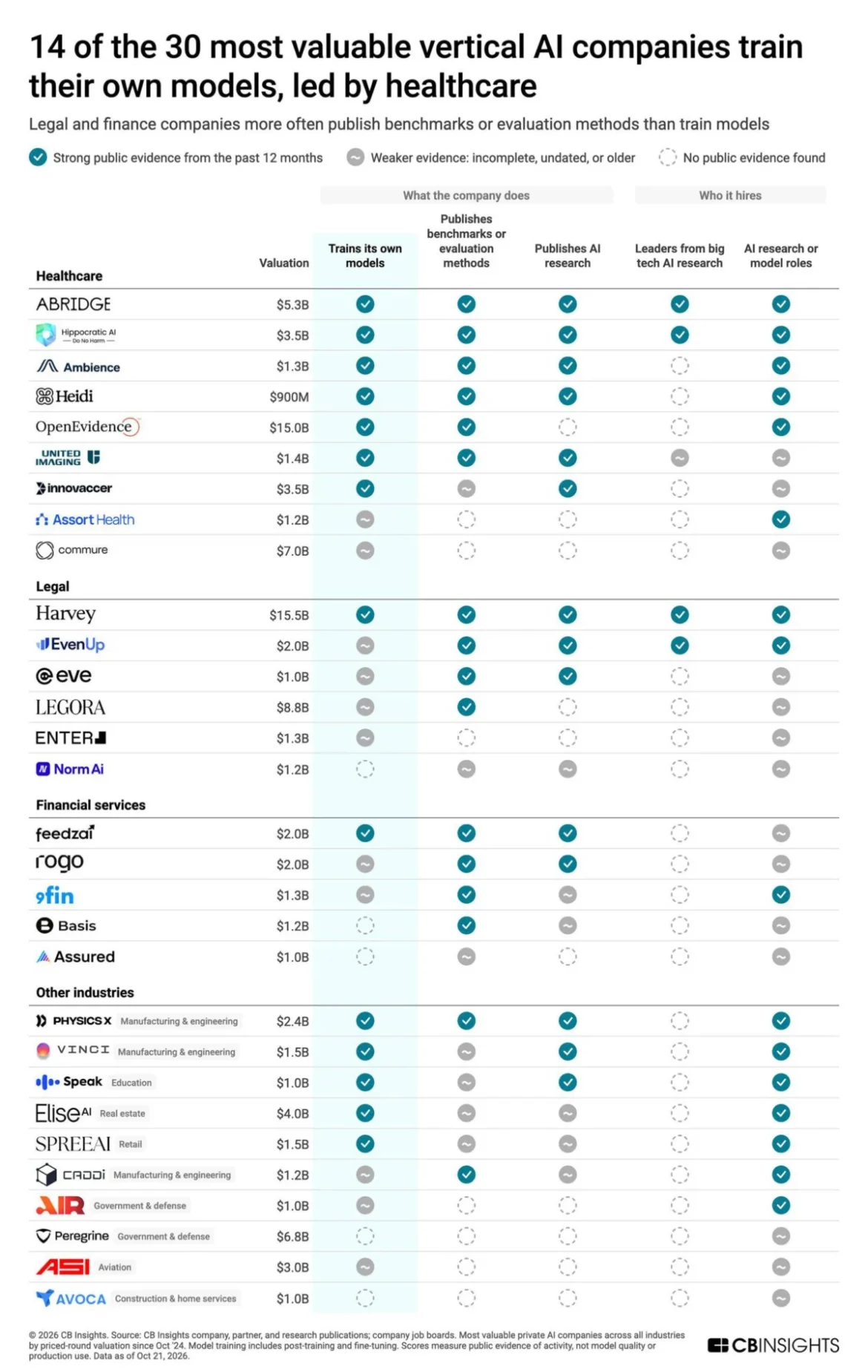
The core motivation behind this shift is twofold: the reduction of operational costs and the improvement of accuracy in specialized domains. By narrowing the scope of a model’s training to specific job functions—such as identifying pharmaceutical nomenclature in clinical dictation, navigating complex legal discovery, or automating multistep technical workflows—these companies are effectively lowering the error rates that plague general models while simultaneously insulating themselves from the volatility of third-party API pricing....
The Evolution of Life Insurance Mortality Modeling: Navigating the Future of Data-Driven Underwriting
by Nana
written by Nana
As the global insurance landscape undergoes a profound digital transformation, life insurance underwriting is increasingly shifting away from traditional, manual risk assessment methods toward sophisticated, data-driven frameworks. Modern insurers face mounting pressure to balance speed, precision, and customer experience, prompting a critical reevaluation of how medical and non-medical information is utilized to accurately gauge mortality risk....
The Future of Urban Mobility: Why Major U.S. Cities Are Racing Toward Driverless Transit Systems
by Laily UPN
written by Laily UPN
While the American public has grown accustomed to the sight of autonomous robotaxis navigating the complex, unpredictable environments of cities like San Francisco and Phoenix, the nation’s mass transit infrastructure remains remarkably tethered to human operators. Despite the rapid advancement of sensor technology and artificial intelligence in the private sector, the vast majority of U.S....
The landscape of financial regulation across the Asia-Pacific (APAC) region is undergoing a profound paradigm shift. Financial institutions are no longer judged solely by their ability to submit standardized, static regulatory templates by strict deadlines....
Start screening from day one. Defend every decision for years.
by Iffa Jayyana
written by Iffa Jayyana
In an era of increasingly stringent global financial regulations and the rising sophistication of international money laundering networks, law firms are facing unprecedented pressure to modernize their anti-money laundering (AML) and know-your-customer (KYC) workflows. ComplyAdvantage, a prominent provider of AI-driven financial crime risk data, has officially expanded its market reach with the launch of the Starter Plan....
SEC Enforcement Results Fiscal Year 2026: Holding Wrongdoers Accountable and Modernizing Market Oversight
by Iffa Jayyana
written by Iffa Jayyana
The Securities and Exchange Commission (SEC) has officially released its comprehensive enforcement statistics and operational review for the fiscal year ending September 30, 2026. Highlighting a year defined by structural modernization, rigorous investigative prioritization, and targeted accountability, the agency's Division of Enforcement reaffirmed its core mandate: protecting everyday investors, maintaining the absolute integrity of United States capital markets, and holding malicious actors accountable....
Yaspa Partners with The Big Leagues to Transform UK Sports Prize Draw Payments Through Open Banking Innovation
written by Evan Lee Salim
Award-winning financial technology provider Yaspa has officially announced a strategic partnership and full technical integration with The Big Leagues, a prominent UK-based sports prize draw and fan engagement platform. The collaboration sees the integration of Yaspa’s advanced Intelligent Payments solution across The Big Leagues’ digital infrastructure, enabling sports fans across the United Kingdom to utilize seamless, rapid, and secure Pay by Bank functionality for both deposits and withdrawals....
The SEC Rule 14a-8 Proposal Threatens to Dismantle Decades of Shareholder Democracy and Corporate Accountability
by Lina Hope
written by Lina Hope
For more than 80 years, the Securities and Exchange Commission’s Rule 14a-8 has served as the cornerstone of American corporate governance, providing a structured mechanism for shareholders to influence corporate policy and hold management accountable. However, a proposed regulatory shift by the SEC to potentially rescind or radically alter this rule has ignited a firestorm of debate among institutional investors, corporate boards, and legal scholars....
Private Capital and Public Crises Collide as Water Insecurity Deepens Across South Africa and the Broader Continent
by Lina Hope
written by Lina Hope
Water taps ran dry across Johannesburg, Pretoria, and surrounding municipalities within South Africa’s economic powerhouse, Gauteng province, leaving millions of residents without a reliable municipal supply just as voters headed to the polls for crucial local elections. This immediate crisis of basic service delivery has intensified a broader political reckoning....
The Rise of Agentic Commerce: How Fintechs and Banks Are Building Payment Infrastructure for AI Agents
by Siti Muinah
written by Siti Muinah
As the financial technology sector closes out 2026, the conversation surrounding artificial intelligence has shifted decisively from theoretical capabilities to autonomous execution. Agentic commerce—the practice of deploying AI agents to conduct complex research, compare prices, book travel, and negotiate savings on behalf of humans—has rapidly evolved from a novelty into a mainstream consumer and enterprise behavior....