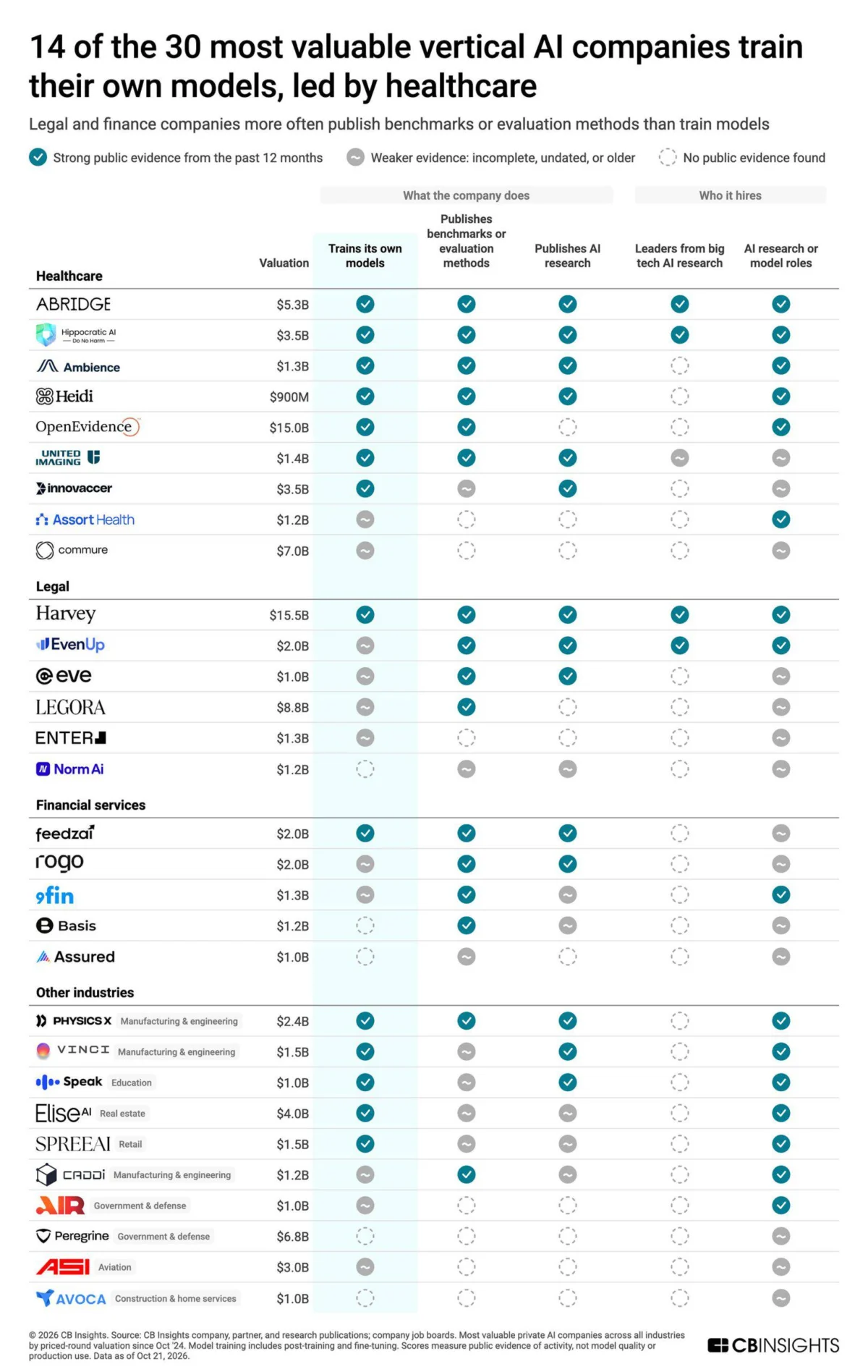
The core motivation behind this shift is twofold: the reduction of operational costs and the improvement of accuracy in specialized domains. By narrowing the scope of a model’s training to specific job functions—such as identifying pharmaceutical nomenclature in clinical dictation, navigating complex legal discovery, or automating multistep technical workflows—these companies are effectively lowering the error rates that plague general models while simultaneously insulating themselves from the volatility of third-party API pricing.
The Economics of Vertical Specialization
The financial imperative for this transition is clear when examining high-volume industries like legal tech. As usage of AI platforms scales, the cost-per-token model charged by foundational AI providers can become a prohibitive burden on margins. Harvey, a prominent player in the legal AI space, provides a case study in how vertical integration transforms these costs.
In August, Harvey introduced "Tenet," a research-preview model derived from further training the K3 model developed by China-based Moonshot AI. According to internal data provided by Harvey, Tenet ranks second in performance on their proprietary "Legal Agent Bench," a series of multistep legal evaluation tasks. Most significantly, Harvey reports that Tenet operates at less than one-quarter of the cost of leading general-purpose models.
This cost-efficiency is essential for long-term sustainability. Data from the investment firm Lightspeed indicates that monthly usage on the Harvey platform surged from 1 trillion tokens in January 2026 to 14.6 trillion tokens by June 2026. At such immense scale, the ability to run a proprietary, optimized model—rather than a generic one—results in millions of dollars in savings, effectively turning a platform’s high usage from a cost center into a competitive barrier to entry.
Evaluating Research Capability
To understand the broader landscape of this shift, researchers analyzed the top 30 most valuable vertical AI companies based on their most recent valuation rounds since October 2024. The analysis focused on five key indicators of an "AI research lab" posture:
- Active model training and fine-tuning.
- The publication of industry-specific benchmarks or evaluation frameworks.
- The publication of formal AI research papers.
- The successful recruitment of talent from big-tech AI research labs.
- Consistent hiring cycles specifically for AI research and post-training engineering roles.
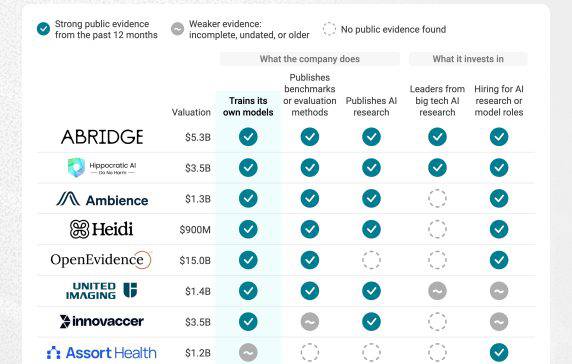
The data suggests that the healthcare sector is currently leading in model ownership. Given the high stakes of clinical accuracy and the rigid regulatory requirements surrounding patient data, healthcare AI firms have found that relying on "off-the-shelf" models is insufficient for compliance and safety. By training models specifically on medical literature and diagnostic workflows, these firms are establishing a level of reliability that generalist models cannot match.
Chronology of a Strategic Pivot: The Harvey Model
Harvey’s trajectory illustrates the typical lifecycle of a vertical AI company transitioning into a research-led entity. The company’s approach is characterized by a "test-first" methodology, ensuring that the infrastructure for measurement precedes the creation of the product.
- January 2026: Harvey experiences massive growth in platform usage, reaching a milestone of 1 trillion tokens per month, signaling the need for a more cost-effective infrastructure.
- May 2026: The company formalizes its evaluation criteria by publishing "Legal Agent Bench," a rigorous set of multistep legal tasks. By establishing these benchmarks, Harvey created a sandbox for testing, allowing legal experts to write tasks and grading rubrics that reflect actual firm requirements.
- August 2026: Leveraging its benchmark, Harvey releases Tenet. The training data utilized a hybrid approach, combining public legal materials, AI-generated synthetic examples, and expert contributions, effectively creating a model that is "distilled" for legal precision.
- September 2026: Recognizing that model performance is only one half of the equation, Harvey acquires Guardrails AI. This acquisition signifies a shift toward improving the safety and reliability of AI agents, rather than just raw performance.
- October 2026: The company continues to solidify its research credentials by actively hiring post-training research engineers, cementing its internal capacity to iterate on its models without needing to return to third-party developers for every update.
Broader Implications for the AI Market
The shift toward proprietary model ownership among vertical leaders has profound implications for the AI ecosystem. First, it suggests that the "moat" for vertical AI companies is no longer just the data they collect, but the research capabilities they build to process that data. Companies that cannot demonstrate an ability to improve their underlying models are increasingly likely to become commodity interfaces, susceptible to being replaced by the next iteration of a foundational model.
Second, the "test-first" approach is becoming the industry standard. As vertical AI companies create their own benchmarks—like Harvey’s Legal Agent Bench—the reliance on general-purpose benchmarks, such as those used by OpenAI or Google, may decline for specialized industries. This creates a more fragmented but highly specialized market where "performance" is defined by the specific needs of the end-user rather than general intelligence metrics.
Third, the race for talent is intensifying. As vertical companies transform into research labs, they are increasingly competing with big-tech giants for the same pool of research engineers and AI scientists. This talent war is driving up compensation packages and forcing vertical firms to offer more than just equity; they must offer the opportunity to conduct original, industry-changing research.
Future Outlook: The Consolidation of Research
Looking ahead, the market should expect to see increased M&A activity as vertical leaders seek to acquire the tools and teams necessary to bolster their research capabilities. The acquisition of Guardrails AI by Harvey is likely the first of many such moves, as companies look to integrate testing, safety, and specialized training into their core business model.
Furthermore, the gap between companies that "own" their models and those that merely "wrap" existing ones is widening. Investors are increasingly penalizing firms that lack a clear roadmap for model ownership, viewing them as vulnerable to platform risk. Over the next 18 to 24 months, the firms that succeed will be those that have successfully balanced the high capital expenditure of research labs with the product-led growth of traditional SaaS companies.
Ultimately, the transformation of vertical AI firms into research labs represents a maturing of the sector. By focusing on proprietary training, rigorous benchmarking, and specialized talent acquisition, these companies are moving toward a future where AI is not just a tool for productivity, but a precision instrument tailored to the most complex professional challenges in law, medicine, engineering, and beyond. As these models become more efficient and specialized, the cost of high-level AI deployment will likely drop, enabling even broader adoption across professional services, provided that the companies can maintain the trust and reliability required by their respective industries.