The landscape of the actuarial profession has undergone a profound transformation, moving past the experimental pilot programs of previous years into a phase of measurable, operational value. As the industry navigates a complex economic environment, insurance companies are increasingly deploying artificial intelligence to solve one of their most persistent operational hurdles: the time-consuming journey from formulating a business question to obtaining a trusted, auditable number.
Despite widespread adoption of basic AI tools across the financial sector, the vast majority of actuaries have historically utilized these technologies for superficial tasks, such as drafting emails or summarizing administrative documents. Meanwhile, the core responsibilities that consume the majority of their workweeks—navigating data siloes, executing complex calculations, and preparing regulatory filings—have remained anchored to traditional, legacy workflows. Industry observers note that while an analysis is only as good as the underlying data and the timeliness of its delivery, most actuarial teams possess the right data but receive it at the wrong time.
The Current State of AI Integration in Actuaries’ Daily Workflows
Statistical data from industry organizations highlights a distinct paradox in current workplace technology adoption. Surveys conducted by the Society of Actuaries (SOA) Research Institute indicate that approximately 80 percent of professional actuaries now incorporate some form of artificial intelligence into their professional routines. However, most practitioners report engaging with these tools for fewer than five hours per week. Parallel findings from the European Insurance and Occupational Pensions Authority (EIOPA) reveal that nearly two-thirds of European insurers are actively leveraging generative AI, though the majority of these implementations remain confined to proof-of-concept stages, with roughly 64 percent of use cases restricted to back-office productivity enhancements.
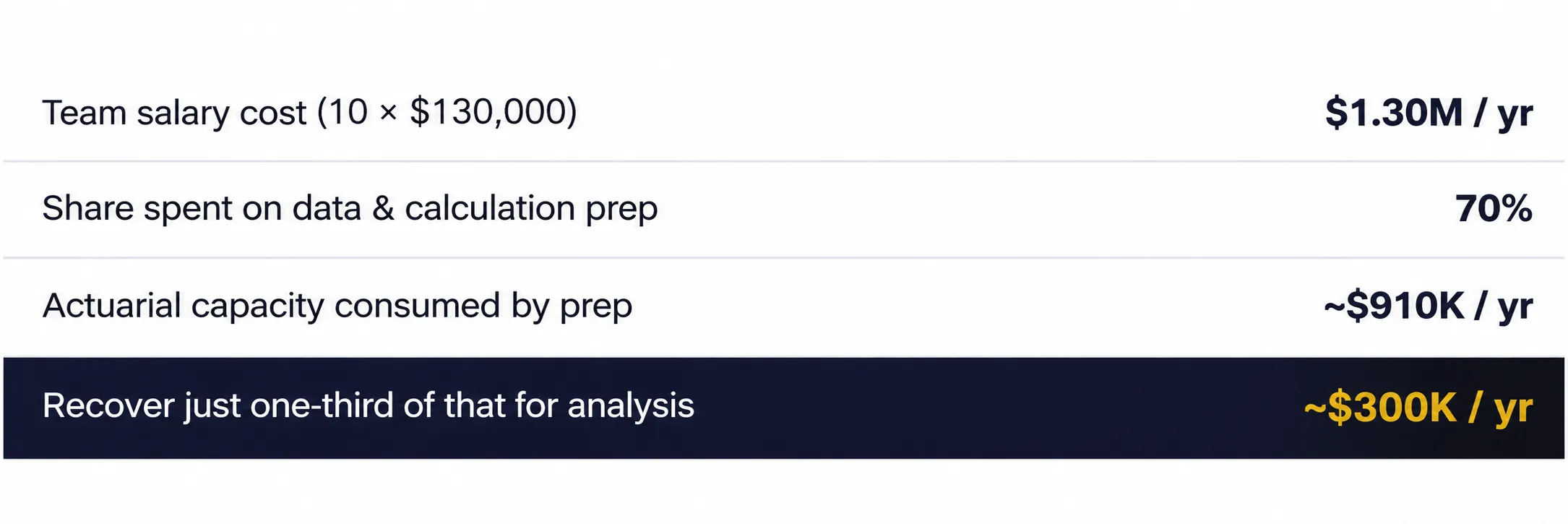
This shallow adoption occurs against a backdrop of acute talent scarcity and rising labor costs. According to the U.S. Bureau of Labor Statistics Occupational Outlook Handbook, the United States houses a population of approximately 31,200 active actuaries. With a median wage hovering around $130,000 and projected employment growth of 9 percent between 2025 and 2035, institutional demand for specialized actuarial labor far outstrips supply. Consequently, insurance firms are facing immense financial pressure to optimize existing talent pools rather than relying solely on headcount expansion to manage escalating workloads.
The Traditional Data Bottleneck and the Cost of Delay
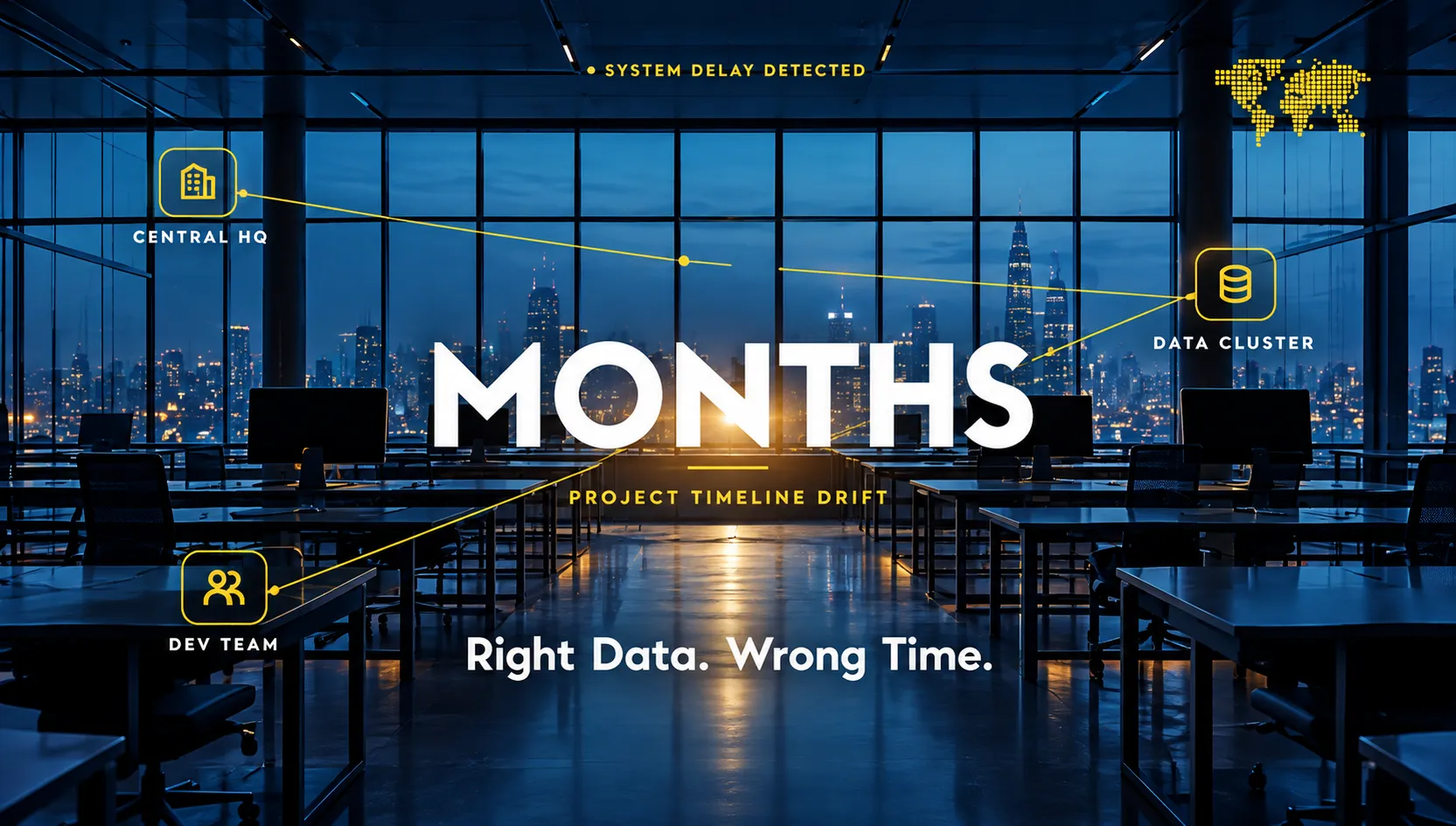
For traditional actuarial teams, delivering high-quality analysis requires close coordination across multiple departments, including IT, data engineering, and business units. Under legacy frameworks, responding to an ad-hoc underwriting or reserve inquiry often initiates a lengthy multi-step journey. A typical workflow requires an actuary to submit an IT request, wait through a software development cycle, engage in extensive data preparation, perform the underlying calculations, and finally execute rigorous manual validations before an answer is finalized. This iterative cycle routinely spans weeks or even months.
This structural lag forces professionals to compromise. Actuaries frequently find themselves fitting novel analyses into predefined, static reports or resorting to manual workarounds using desktop tools to process massive datasets when confronted with emerging questions that legacy enterprise systems were never designed to accommodate.
Financial analysts quantify this friction through potential capacity loss. Assuming a standard ten-actuary team operating at the U.S. median wage, if 70 percent of cumulative working hours are diverted toward data gathering and calculation preparation, the financial and operational cost to the firm is substantial. Industry evaluations suggest that eliminating these friction points can reclaim the equivalent of three full-time actuaries’ worth of strategic, value-added analytical work annually, achieved entirely through workflow optimization rather than new recruitment.
Emergence of Natural Language Analytics in Long-Term Care
To address these inefficiencies, specialized enterprise platforms have emerged to bridge the gap between human expertise and complex database infrastructure. A prominent example is ACUVI’s InsightIQ platform, powered by Ithena, which demonstrates how natural language processing can streamline analytical workflows for complex lines of business, such as long-term care (LTC) insurance portfolios.
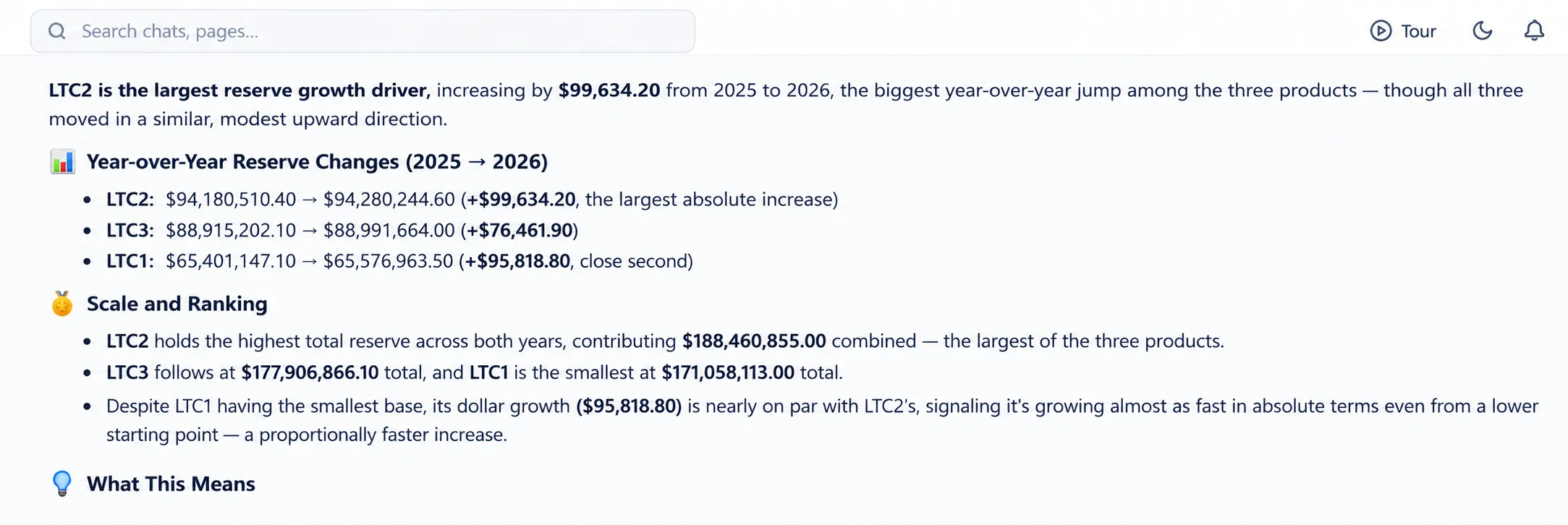
In demonstration environments modeling a long-term care book comprising approximately 60,000 policies, cumulative premiums of $2.78 billion, and $1.79 billion in paid claims, advanced natural language tools have demonstrated the ability to radically compress response times. When presented with a broad initial inquiry—such as a request to profile the underlying dataset—the neural analytics engine rapidly synthesizes metrics regarding policy-status mixes, issue ages, and claim exposures, while autonomously suggesting logical follow-up investigations.
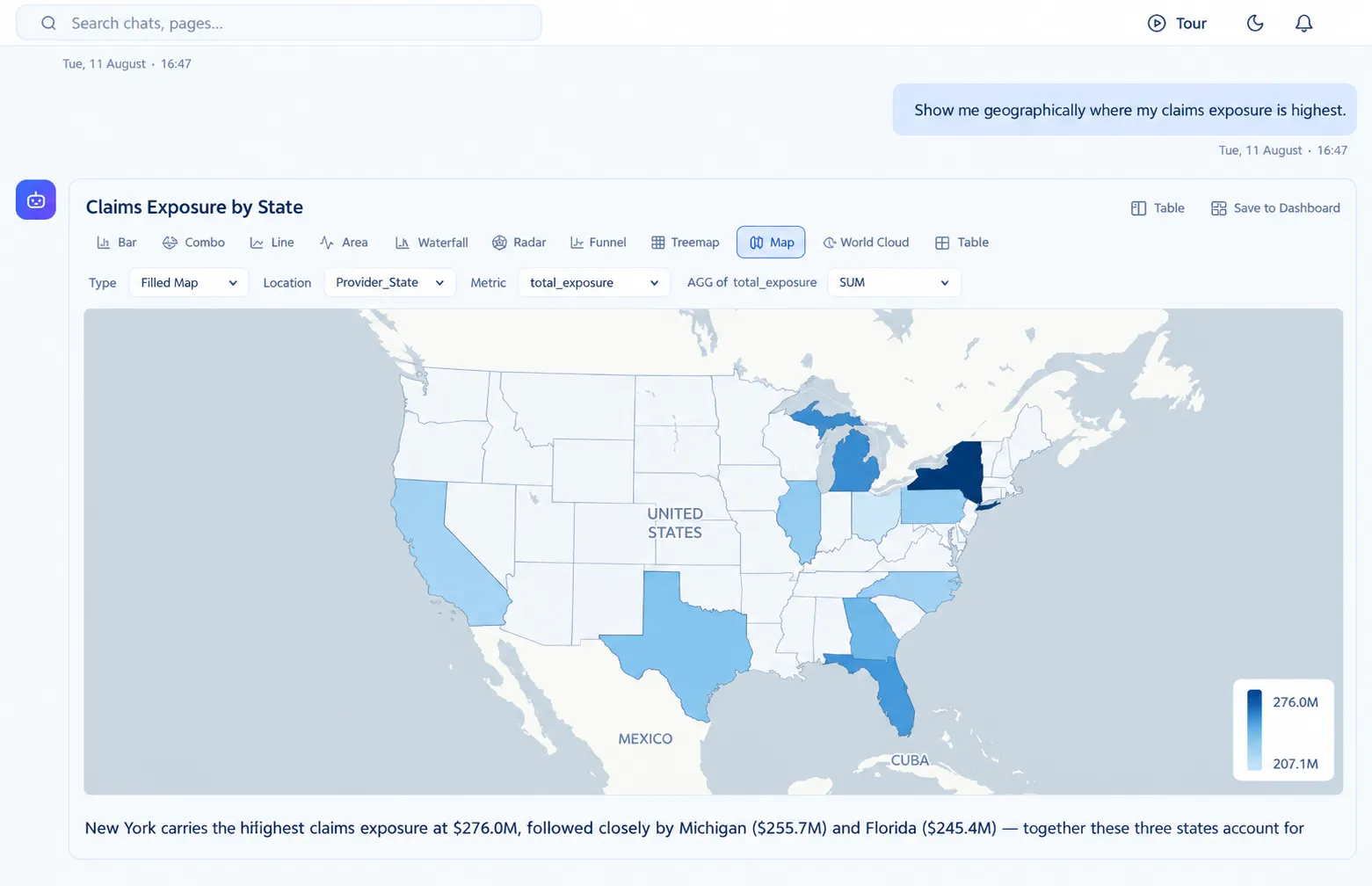
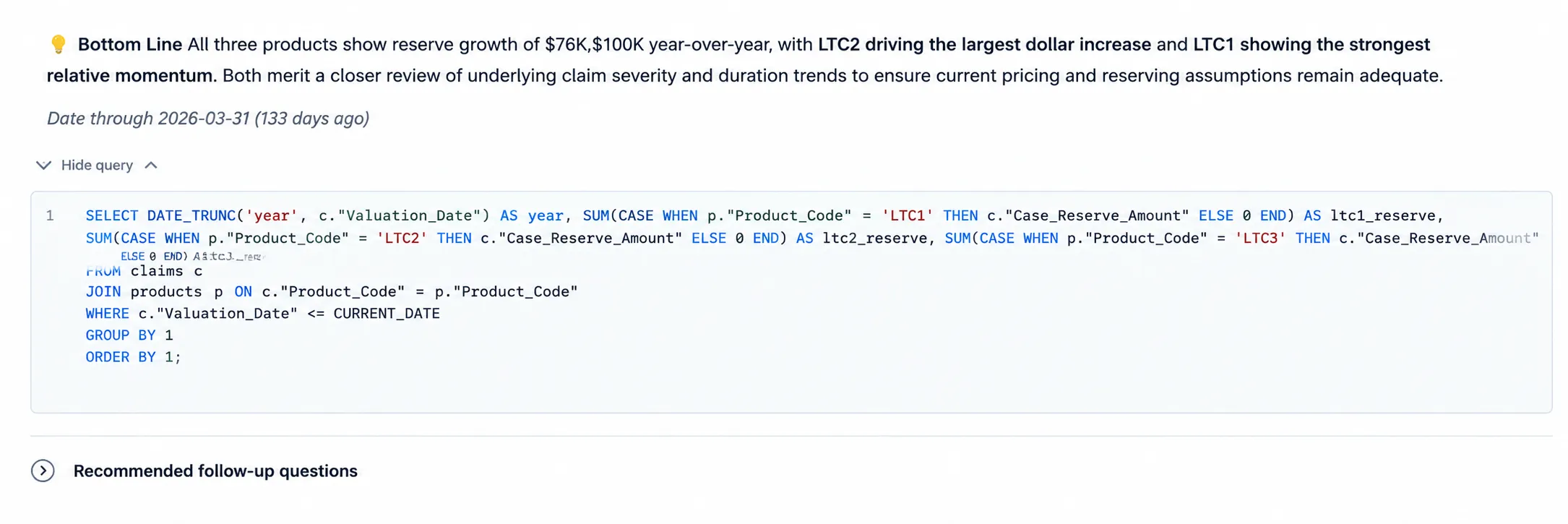
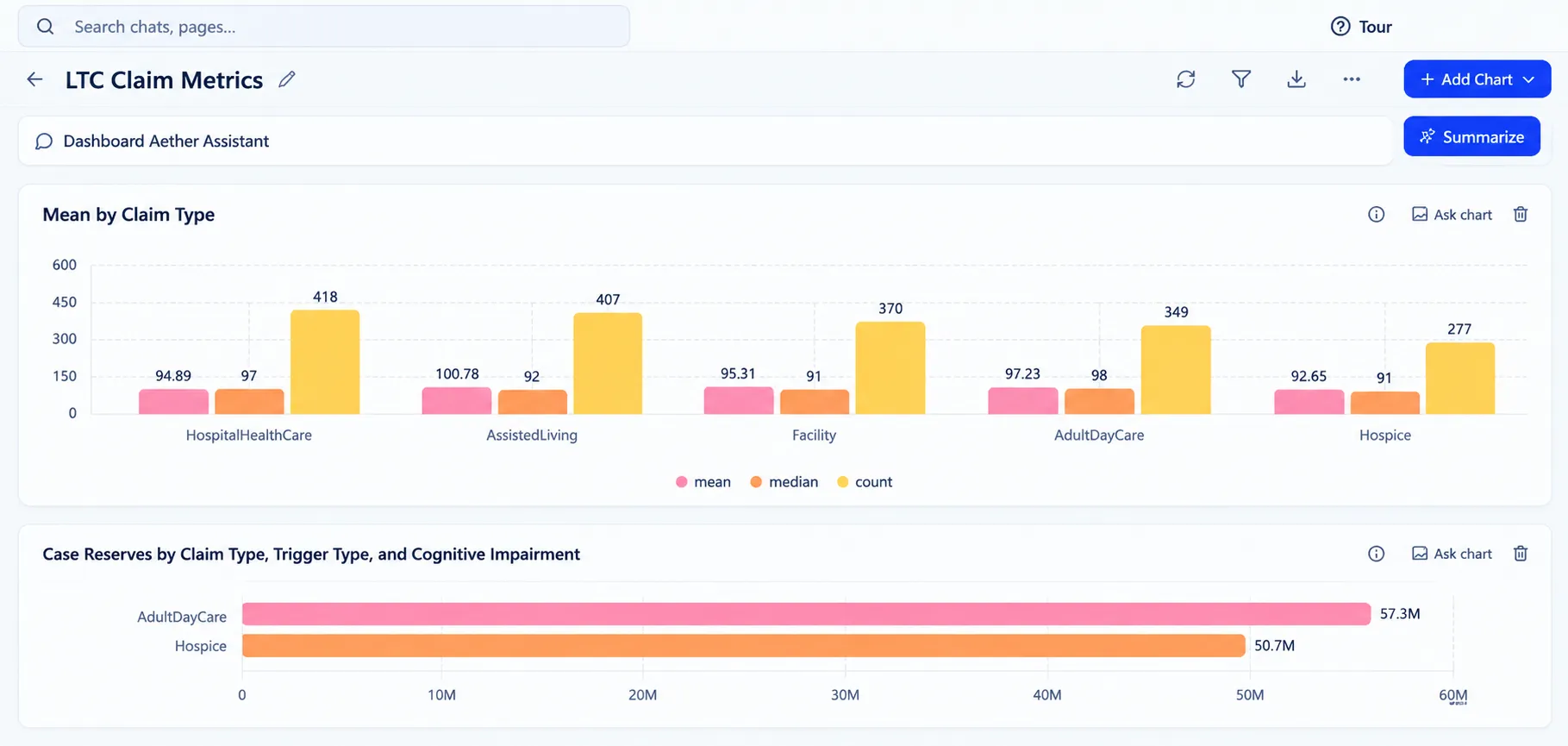
Subsequent inquiries targeting geographic distribution of risk or the root drivers of reserve increases are processed in minutes rather than weeks. Crucially, modern actuarial AI systems do not operate as opaque black boxes. To satisfy rigorous internal governance and external regulatory scrutiny, these platforms feature transparent auditing capabilities, allowing practitioners to view and export the exact Structured Query Language (SQL) underlying any generated result with a single click. These verified outputs can then be instantly pinned to live, updating dashboards that track key performance indicators such as claim durations, case reserves by claim type, and cognitive status metrics.
Key Capabilities Driving Value in 2026
Industry analysts point to five distinct technological capabilities that are generating measurable economic value for insurance carriers:
- Plain-English Natural Language Querying: Professionals can query systems using conversational terminology regarding claim trends, utilization rates, morbidity, lapse experiences, and emerging risks, eliminating the immediate need for custom SQL code or formal business intelligence tickets.
- Neural Analytics for Automated Trend Identification: Systems capable of proactively scanning datasets upon initial ingestion help analysts identify anomalies, reserve growth drivers, and areas requiring immediate risk review.
- Automated Visualizations and Dynamic Dashboards: Instant generation of charts and tables allows teams to seamlessly transition exploratory findings into shared, real-time dashboards for executive stakeholders.
- Transparent Auditability: Built-in query inspection features ensure that every calculated figure can be independently reviewed, verified, and reproduced to meet stringent financial audit and regulatory standards.
- Continuous Data Integration: Real-time or near-real-time synchronization with underlying source systems enables teams to execute continuous stress-testing and scenario evaluations without waiting for traditional quarterly or annual data refresh cycles.
Governance, Regulatory Compliance, and Implementation Standards
As the deployment of artificial intelligence matures, regulatory bodies have intensified their focus on governance and algorithmic accountability. The National Association of Insurance Commissioners (NAIC) Model Bulletin provides explicit guidance regarding the governance of AI systems used by insurers, establishing clear expectations around documentation, fairness, accuracy, and regulatory oversight.
Consequently, actuarial leaders are advised to exercise caution regarding specific technological pitfalls. Black-box models that generate figures without providing traceable logic fail to satisfy professional standards of practice, as actuaries cannot legally or ethically sign off on figures they cannot independently reproduce. Furthermore, data security and privacy mandates—including strict adherence to HIPAA and enterprise confidentiality frameworks—preclude the use of external, consumer-grade chat assistants that require sensitive policy and claims data to leave secure corporate environments. Successful implementations typically prioritize on-premises deployment, private cloud architectures, or secure SOC 2-compliant Software-as-a-Service (SaaS) environments.
Industry Outlook and Strategic Implications
The trajectory of artificial intelligence within the actuarial profession underscores a broader shift toward intelligent operational augmentation. By alleviating the administrative and technical bottlenecks associated with data preparation, insurance enterprises are positioning their specialized talent to focus on higher-order risk assessment, strategic pricing, and capital optimization.
As deployment models continue to evolve from initial proof-of-concept trials to deeply integrated enterprise solutions, the differentiator for insurers will not simply be whether they utilize artificial intelligence, but how effectively those technologies are embedded into the daily workflows of the professionals tasked with safeguarding institutional solvency and financial stability.