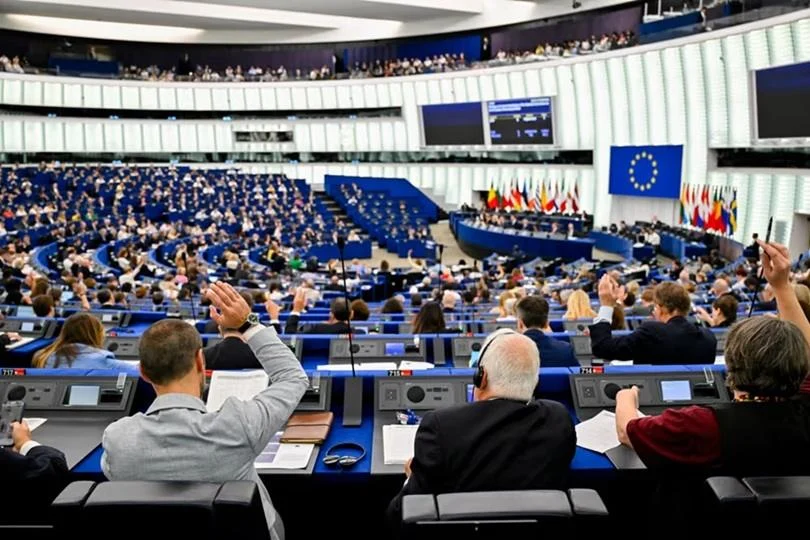
The European Parliament has taken a decisive step in the evolution of its climate policy, voting 464 to 50 to adopt an ambitious negotiating position that significantly broadens the scope and enforcement rigor of the Carbon Border Adjustment Mechanism (CBAM). This legislative milestone signals a major escalation in the European Union’s efforts to harmonize the environmental costs of domestic production with those of imported goods, effectively tightening the net around carbon-intensive supply chains. By proposing the inclusion of over 450 additional downstream products and implementing stringent anti-circumvention protocols, the Parliament is moving to ensure that the transition to a greener economy does not inadvertently drive manufacturing out of Europe—a phenomenon formally known as carbon leakage.
The Genesis and Evolution of CBAM
The Carbon Border Adjustment Mechanism was first adopted in 2023 as a landmark pillar of the European Green Deal. Its primary objective is to eliminate the competitive disadvantage faced by EU producers who operate under the strictures of the EU Emissions Trading System (ETS). Under the ETS, European firms must pay for their carbon emissions, which historically incentivized them to move production to jurisdictions with more lenient environmental regulations. CBAM serves as an equalization tax, requiring importers of high-carbon goods to purchase certificates that reflect the carbon price of the country of origin, thereby leveling the playing field.
The mechanism officially entered its operational phase at the beginning of 2026. However, the transition period revealed critical gaps in the policy framework. In December 2025, the European Commission formally proposed expanding the scope of the mechanism to include downstream products, acknowledging that basic materials like aluminum and steel were already being processed into finished goods abroad to bypass existing regulations. The current parliamentary vote represents a significant intensification of the Commission’s original plan, reflecting a political consensus that the policy must be broader and more resistant to evasion to be truly effective.
A Chronology of Policy Development
The regulatory trajectory of CBAM has been characterized by rapid expansion and refinement:
- 2023: Legislation is officially adopted, establishing the framework for the carbon tax on imports.
- January 2026: CBAM enters into force, initially covering basic materials including electricity, cement, aluminum, and steel.
- December 2025: The European Commission identifies significant loopholes and proposes expanding the scope to include 180 specific downstream products, such as vehicle components and construction equipment.
- June 2026: The EU Council adopts its position, supporting the expansion of the product list to prevent industrial shifts.
- September 2026: The European Parliament votes overwhelmingly (464-50) to adopt an even more aggressive expansion, adding over 450 products, including heat pumps and solar panels.
Deepening the Scope: What Changes Mean for Industry
The Parliament’s latest proposal goes well beyond the initial scope focused on basic industrial raw materials. By including 450 additional products—ranging from complex domestic appliances to renewable energy hardware—lawmakers are targeting the entire value chain of energy-intensive manufacturing. This move is designed to address "embedded carbon," where the environmental cost is hidden within complex finished goods.
The legislative text also introduces a robust anti-circumvention framework. One of the most significant changes is the adjustment of the "slightly modified" threshold. Previously, manufacturers could potentially alter a product just enough to change its classification and avoid CBAM, effectively "gaming" the system. The new proposal tightens this definition, ensuring that only legitimate business shifts are exempted, while modifications clearly intended to dodge carbon levies will face stricter scrutiny.
Furthermore, the Parliament has proposed a pragmatic exemption for electricity flows from non-EU countries. Recognizing that grid stability is a regional necessity, lawmakers opted to exclude electricity used by grid operators to maintain system frequency and reliability. This is a crucial distinction, as it prevents the policy from inadvertently threatening the energy security of EU member states that rely on interconnected grids with neighboring countries.
Financial Safeguards and the Decarbonisation Fund
Recognizing that increased regulatory pressure can impose significant costs on European industry, the Parliament has also outlined its position on the Temporary Decarbonisation Fund (TDF). The TDF, which was initially proposed by the Commission to support firms vulnerable to carbon leakage, is now set to be more comprehensive and expedited.
The updated proposal expands the TDF’s reach to include fertilizer producers—specifically those dealing in urea, ammonium nitrate, and ammonium sulphate—and downstream users who are absorbing higher input costs. Perhaps most importantly, the Parliament has moved the TDF timeline forward, proposing that the fund operate from 2027 to 2029, rather than the Commission’s suggested 2028-2030 window. This acceleration is intended to provide immediate financial relief to firms currently navigating the turbulent transition toward deep decarbonization.
Official Perspectives and Political Balancing
Mohammed Chahim, the CBAM rapporteur, framed the vote as a triumph of strategic foresight. "This compromise makes the CBAM stronger, fairer, and more resilient," Chahim stated following the vote. He emphasized that the package represents a "balanced" approach—a delicate tightrope walk between maintaining the environmental integrity of the EU’s climate goals and protecting the competitive viability of European industry.
While industry groups have expressed concerns regarding the administrative burden of reporting for such a vast array of new products, proponents argue that the transparency created by the system will ultimately benefit the market. For companies, the implication is clear: carbon accounting is no longer an optional sustainability exercise but a core component of global trade compliance.

Broader Economic Implications and Global Trade
The expansion of CBAM has profound implications for global trade relations. As the EU casts a wider net, trading partners will likely face renewed pressure to implement their own carbon pricing mechanisms. The logic is simple: if foreign manufacturers are forced to pay for their emissions anyway—either at home or at the EU border—they are more likely to push for domestic decarbonization, thereby reducing the global carbon footprint of their exports.
However, the policy is not without risk. Economists have noted that the complexity of tracking the carbon content of 450+ new products could create a "bureaucratic wall," potentially slowing the import of green technologies like solar panels and heat pumps if the administrative requirements become too cumbersome. To mitigate this, the Parliament has proposed simplified reporting mechanisms for least-developed countries, acknowledging that the burden of compliance should not prevent developing economies from participating in the green trade transition.
The shift also moves the EU away from the "price shock" mechanism originally conceived. Instead of removing goods from the CBAM list during periods of extreme price volatility, the new proposal suggests a revenue-redirection strategy. Revenues generated by the mechanism on specific goods would be temporarily funneled back into the affected sectors, providing a targeted cushion rather than a broad, blanket exemption that might compromise the overall effectiveness of the climate tax.
Future Outlook
As the Parliament moves toward the next phase of negotiations with the EU Council, the focus will shift to reconciling the differences between the two bodies. The Council has already expressed support for an expanded list, but the Parliament’s insistence on 450+ items and a more aggressive TDF timeline sets the stage for high-stakes bargaining.
What is certain is that the era of carbon-free imports is coming to an end. The EU’s move to incorporate downstream products and tighten enforcement mechanisms signals that the bloc is fully committed to using its market power to influence global industrial standards. For global manufacturers, the message from Brussels is increasingly clear: the cost of carbon is no longer a localized concern, but a global factor in the price of doing business in Europe. As the transition unfolds, the success of the CBAM expansion will be measured not just by the revenue it collects, but by its ability to drive tangible industrial decarbonization across international borders.