Token.io, a prominent Pay by Bank infrastructure provider operating across the United Kingdom and Europe, has officially signed a landmark Memorandum of Understanding (MoU) spearheaded by Bitkom. The agreement, established in collaboration with the German Federal Ministry for Digital and State Modernisation (BMDS), brings together an elite coalition of over 120 commercial enterprises and public-sector bodies. This collective effort is strategically designed to accelerate and ensure the successful, seamless introduction of the European Digital Identity Wallet (EUDI Wallet) throughout Germany.
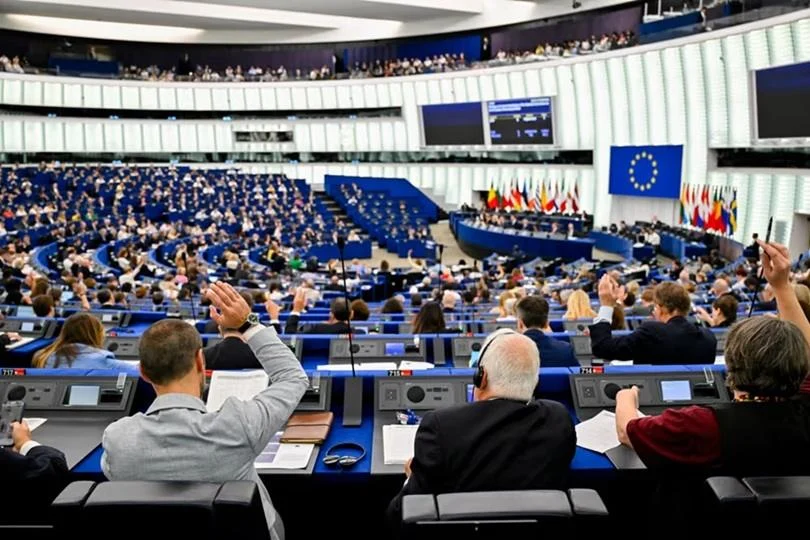
The integration of the EUDI Wallet represents a monumental leap forward for the European Union as it strives toward establishing a unified, trusted, and highly interoperable digital identity framework. Under the rigorous mandates of the updated eIDAS 2.0 regulation, all EU member states are legally obligated to provide citizens and residents with access to at least one fully compliant digital wallet by the end of 2026. By participating in the Bitkom MoU, Token.io joins a critical alliance of businesses and government entities dedicated to maximizing the practical utility, security, and mass adoption of this transformative digital tool.
The Intersection of Digital Identity and Pay by Bank
At the core of Token.io’s strategic involvement is the immense potential identified at the convergence of verified digital identity credentials and account-to-account (A2A) payment methodologies. Modern digital ecosystems often struggle with friction during customer onboarding, authentication, and transactional checkout phases. Token.io posits that the integration of the EUDI Wallet can fundamentally alter this landscape.
When verified credentials derived from the EUDI Wallet are seamlessly paired with modern Pay by Bank infrastructure, the resulting user experience is both frictionless and exceptionally secure. For consumers, this means fewer passwords to remember, instant identity verification without the need for manual document uploads, and significantly reduced fraud risks. For businesses, the combination translates into streamlined onboarding processes, lower compliance costs, reduced transaction drop-off rates, and accelerated checkout flows. As regulatory pressures mount and consumer expectations shift toward instant, frictionless digital interactions, the synergy between open banking payments and decentralized digital identity is rapidly emerging as the gold standard for European commerce.
A Series of Strategic Milestones in European Payments
Token.io’s commitment to the Bitkom MoU is far from an isolated initiative; rather, it forms a core component of a broader, highly calculated corporate strategy aimed at actively shaping the standards, regulatory frameworks, and technological rails that will dictate the future of European payments. The company has consistently positioned itself at the vanguard of the open banking and A2A payments movement through a series of landmark achievements spanning multiple jurisdictions.
In 2025, Token.io achieved a major milestone by becoming the first third-party provider (TPP) to be officially admitted to the giroAPI scheme. This framework serves as Germany’s premier blueprint for next-generation account-to-account payment services, allowing fintech innovators and traditional institutions to collaborate on robust payment solutions. By securing early admission, Token.io cemented its status as a trusted partner within the complex German financial services ecosystem.
Building upon this momentum, Token.io also co-led the launch of the newly established German chapter of the European Third Party Providers Association (ETPPA) earlier this year. This chapter was created to give TPPs operating within Germany a unified, authoritative voice in regulatory dialogues, ensuring that the interests of open banking innovators are adequately represented in legislative and standard-setting forums.
Furthermore, leadership at Token.io has secured influential roles in broader continental governance. Gideon Fourie, managing director of Token Europe, was recently appointed to the prestigious Berlin Group openFinance Advisory Board. In this capacity, Fourie helps guide the strategic direction, technical specifications, and architectural standards of Open Finance initiatives spanning the entire European continent. Beyond continental Europe, Token.io’s influence extends to the UK market, where the firm proudly serves as a co-founder of the UK Payments Initiative—marking the introduction of the first entirely new UK retail payment scheme in two decades.
Official Reactions and Leadership Perspectives

The announcement of Token.io signing the Bitkom MoU has drawn positive responses from industry stakeholders and company executives alike, highlighting the growing recognition that payment infrastructure and digital identity can no longer be viewed as isolated silos.
Gideon Fourie, managing director of Token Europe, emphasized the critical importance of collaboration between the private sector and public authorities in achieving the ambitious goals set forth by the European Union.
"We warmly welcome the opportunity to actively engage with fellow businesses and public sector bodies on making the EUDI Wallet practical, genuinely useful, and widely interoperable across borders," Fourie stated. "As an active and dedicated contributor to evolving European payments standards, we believe we are uniquely positioned to bring a perspective deeply informed by extensive experience in building and scaling robust payments infrastructure."
Industry analysts have similarly underscored the strategic genius of aligning Pay by Bank frameworks with state-backed digital identities. As fraud vectors become increasingly sophisticated, relying on traditional username-and-password verification methods is no longer tenable. By incorporating cryptographically secure, sovereign digital identities directly into the payment authorization chain, infrastructure providers like Token.io are laying the groundwork for a safer, more resilient digital economy.
Broader Implications for the European Digital Single Market
The rollout of the EUDI Wallet under the eIDAS 2.0 regulation is a cornerstone of the European Union’s broader ambition to establish a fully functional Digital Single Market. For decades, fragmented national identity systems and inconsistent cross-border regulatory standards have created friction for citizens attempting to access digital services, open bank accounts, or conduct commerce across member state boundaries.
By mandating that all EU governments provide a secure, interoperable digital wallet by late 2026, the European Commission is creating a standardized trust layer. When combined with advanced payment rails such as Pay by Bank and open banking APIs, the EUDI Wallet has the potential to eliminate friction points that have traditionally stifled cross-border trade. Consumers will theoretically be able to move seamlessly across the European Union, authenticating their identities with governmental validation and executing instant account-to-account payments with a few simple taps on their mobile devices.
For payment service providers, software developers, and merchants, this regulatory shift necessitates proactive adaptation. Companies that fail to integrate identity wallets into their checkout and onboarding workflows risk falling behind more agile competitors. Token.io’s early and aggressive alignment with initiatives like the Bitkom MoU, the giroAPI scheme, and the Berlin Group ensures that its client base will remain at the cutting edge of these technological advancements.
Looking Ahead: The Road to 2026 and Beyond
As the December 2026 deadline for eIDAS 2.0 compliance draws closer, the focus for participants in the Bitkom MoU will shift rapidly from conceptual planning to technical execution and real-world pilot testing. Stakeholders must address complex challenges relating to user privacy, data minimization, cybersecurity resilience, and cross-border acceptance.
Token.io’s multifaceted involvement across German and European regulatory bodies places the firm in an optimal position to navigate these hurdles. By bridging the gap between open banking payment flows and state-sanctioned digital identity credentials, the company is helping to construct an ecosystem where transactions are not only instantaneous and cost-effective, but also anchored in absolute trust.
Industry professionals eager to learn more about the convergence of open banking, Pay by Bank, and digital identity will have ample opportunity to engage with company leadership in the coming months. Token.io has been announced as the Headline Partner of the upcoming Open Banking Expo UK & Europe 2026, scheduled to take place on October 13–14 at the Business Design Centre in London. Representatives from Token.io are slated to take the stage across the two-day event to discuss the practical implications of eIDAS 2.0, the scaling of A2A payments, and the future trajectory of financial technology across Europe.