The integrity and speed of United States government benefit disbursements are set to undergo a major transformation following a high-profile strategic partnership between fintech infrastructure leader Plaid and digital identity network ID.me. Announced jointly by the two companies, the collaboration is designed to bridge a critical security gap that has historically plagued public-sector financial distributions: the disconnect between verifying the identity of an applicant and confirming the legitimacy of the financial account designated to receive public funds.
By fusing ID.me’s robust digital identity wallet with Plaid’s advanced financial account verification architecture, federal, state, and local government agencies will now possess a unified mechanism to authenticate both the individual requesting assistance and the destination of the distributed capital. This initiative arrives at a pivotal juncture for public administration, addressing vulnerabilities that have cost taxpayers billions of dollars while simultaneously accelerating the delivery of vital financial support to eligible citizens.
The Mechanics of the Plaid and ID.me Integration
Historically, government agencies have operated in silos when attempting to secure financial transactions against illicit interference. While many departments have successfully integrated digital identity solutions to confirm that an applicant is a real person and not a synthetic identity or bot, verifying where the subsequent funds land has remained an arduous, manual endeavor.
Through the new partnership, the verification pipeline is streamlined into a cohesive, automated workflow. When an individual applies for a government benefit—ranging from unemployment insurance and disaster relief to federal assistance programs—they will utilize ID.me to securely establish and verify their identity. Once the user’s identity is authenticated, the system seamlessly triggers Plaid’s account-verification technology.
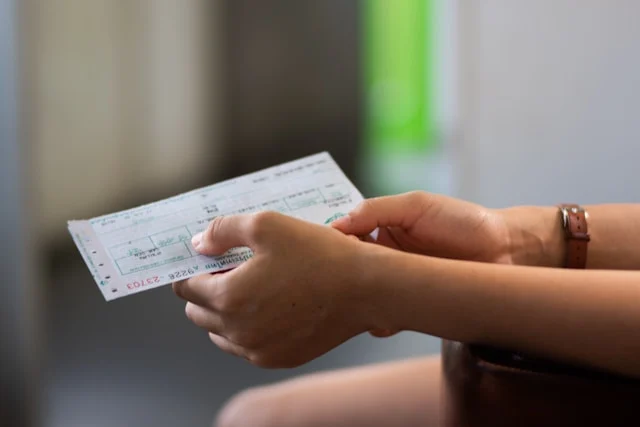
Rather than forcing beneficiaries to upload sensitive physical documents, such as voided checks or monthly bank statements, or wait days for micro-deposit validations, users can instantly and securely link their financial accounts. Plaid sources account ownership data directly from the user’s financial institution, performing a real-time cross-check against the verified identity provided by ID.me.
Only when a definitive match is established—confirming that the destination bank account legally belongs to the authenticated claimant—will funds be authorized for release. Furthermore, the resulting architecture generates a secure, time-stamped audit trail linking the verified recipient to the receiving institution, all while strictly limiting the financial data shared with government entities to preserve user privacy.
Addressing the Multi-Billion-Dollar Blind Spot in Public Spending
The launch of this integrated verification tool targets one of the most persistent vulnerabilities in modern public finance. According to historical estimates from government accountability watchdogs and economic researchers, improper payments and fraudulent schemes siphon tens of billions of dollars annually from public assistance programs.
During periods of economic crisis, such as the COVID-19 pandemic, the pressure to distribute emergency relief rapidly led agencies to relax traditional oversight mechanisms. Fraudulent actors capitalized on these systemic blind spots, utilizing stolen personal identifiable information (PII) to route state and federal funds into illicit accounts, mule networks, and prepaid debit cards.
"Identity verification tells an agency who is asking to be paid, but it does not tell them where the money is going," explained Blake Hall, CEO and Founder of ID.me. "That gap is where benefits go missing, and it’s costing our government and everyday Americans billions of dollars. Through our partnership with Plaid, agencies would be able to confirm the account belongs to the verified person before a dollar moves, and eligible people get paid faster."
Echoing this sentiment, Plaid Chief Operating Officer Eric Sager emphasized that the administrative friction historically required to prevent fraud often harmed the very populations the systems were designed to protect.
"For too long, getting benefits to the people who qualify for them has meant a slow, manual process that fraudsters have learned to exploit," Sager stated. "Agencies have gotten very good at confirming who someone is. What’s been missing is the same confidence about where the money actually lands. By partnering with ID.me, we’re closing that gap so eligible people get paid in minutes, and every dollar reaches the person it was meant for."
Industry Implications and the Modernization of Public Infrastructure
The partnership between Plaid and ID.me reflects a broader, accelerating trend toward public-private cooperation in the financial technology sector. As government agencies face mounting pressure to modernize legacy IT systems, partnering with specialized fintech enterprises allows the public sector to deploy cutting-edge security features without the exorbitant costs and lengthy development cycles associated with building proprietary infrastructure from scratch.
By consolidating legacy verification capabilities into a single, interoperable framework, the collaboration yields several distinct operational benefits for government administrators:
- Elimination of Duplicate Payments: By cross-referencing account ownership data prior to disbursement, agencies can drastically reduce instances of accidental overpayments, administrative errors, and duplicate allocations.
- Mitigation of Synthetic and Stolen Identity Fraud: The dual-layer verification approach ensures that even if a bad actor successfully acquires an individual’s personal identity data, they cannot redirect the funds unless they also control and can authenticate ownership of the target bank account through Plaid’s direct-institution connections.
- Enhanced Operational Efficiency: Automating the verification lifecycle minimizes the need for manual document review by agency personnel, allowing government caseworkers to reallocate time and resources toward complex case management and direct citizen support.
- Improved Beneficiary Experience: Legitimate claimants can bypass bureaucratic hurdles, eliminating frustrating wait times and reducing the drop-off rates often experienced by vulnerable populations attempting to navigate cumbersome public assistance portals.
The Broader Context of Digital Identity and Open Banking
The convergence of digital identity networks and open banking rails represents a significant maturation of the digital economy. For years, identity verification (IdV) and account authentication operated as distinct pillars of compliance and security, managed by separate vendors and governed by disparate regulatory frameworks.
As digital financial services become increasingly interconnected, fraudsters have adapted by exploiting the seams between these isolated verification layers. Account takeover (ATO) attacks, unauthorized money mule accounts, and synthetic identity fraud thrive precisely where an identity provider cannot see the destination bank account, and where a payment processor cannot independently confirm the human behind the transaction.
By tying ID.me’s credential service provider (CSP) capabilities—which often meet stringent federal security standards such as NIST SP 800-63-3 guidelines—directly to Plaid’s extensive network of over 11,000 financial institutions, the partnership establishes a new benchmark for secure public disbursements. This model not only sets a precedent for federal, state, and local benefit payments but also signals a potential blueprint for commercial sectors grappling with high-stakes financial transactions, such as digital lending, corporate payroll disbursement, and insurance payouts.
Outlook and Future Implementation
As public-sector agencies prepare for upcoming fiscal cycles, the demand for resilient, fraud-resistant payment infrastructure has never been higher. Legislative bodies at both the state and federal levels continue to scrutinize administrative waste, increasing the regulatory imperative for agencies to adopt advanced technological safeguards.
The integration between Plaid and ID.me is immediately available to government entities seeking to upgrade their disbursement frameworks. Moving forward, industry analysts will closely monitor adoption rates across major state unemployment offices and federal disbursement divisions to measure the quantifiable impact of closed-loop identity and account verification on reduction metrics for improper payments.
Ultimately, this alliance demonstrates how modern financial technology can harmonize security and accessibility. By ensuring that funds flow exclusively to verified individuals through authenticated financial channels, Plaid and ID.me are actively reshaping the landscape of public finance, safeguarding taxpayer capital, and restoring trust in the delivery of essential government services.