The United States Department of Justice announced a major settlement involving California-based pharmaceutical firm Dompé US Inc., a subsidiary of the Italian parent company Dompé farmaceutici S.p.A. The company has agreed to pay $32 million to resolve allegations that it violated the False Claims Act and the Anti-Kickback Statute. According to federal authorities, Dompé systematically funneled money through third-party patient assistance foundations between 2018 and 2021 to cover Medicare beneficiary co-pays for its high-priced ophthalmic drug, Oxervate. This intricate financial maneuver was allegedly designed to induce the purchase of the drug, bypass statutory market checks, and inflate corporate revenues at the expense of federal healthcare programs.
The resolution highlights an ongoing, aggressive federal enforcement campaign targeting pharmaceutical manufacturers that disguise corporate marketing expenditures and product subsidization as charitable donations. Federal prosecutors and investigators emphasized that such schemes not only drain taxpayer-funded healthcare systems but also corrupt medical decision-making by artificially shielding patients and physicians from the true economic costs of specialized therapeutics.
Background and Mechanics of the Alleged Scheme
To understand the gravity of the allegations against Dompé, one must examine the fundamental design of federal healthcare programs like Medicare. When a Medicare beneficiary is prescribed a covered medication, the program often requires the patient to pay a fraction of the cost, known variously as a co-payment, co-insurance, or deductible. These cost-sharing obligations were intentionally written into federal legislation by Congress to serve as a vital market check. By requiring patients to feel the pinch of prescription costs, the system creates a natural economic deterrent against runaway drug pricing, forcing pharmaceutical manufacturers to compete on price and demonstrate genuine value.
The Anti-Kickback Statute (AKS) was enacted to protect these very safeguards. The statute makes it strictly illegal for pharmaceutical companies to offer, pay, solicit, or receive any form of remuneration—whether direct or indirect, in cash or in kind—to induce the purchase or recommendation of items reimbursed by federal healthcare programs. This prohibition explicitly forbids drugmakers from covertly paying patients’ co-pay obligations, as doing so neutralizes the cost-containment measures engineered by Congress.
In recent years, federal law enforcement agencies have trained their sights on a sophisticated work-around utilized by some pharmaceutical entities: channeling money through ostensibly independent patient assistance foundations (PAFs). While legitimate patient assistance charities provide vital, independent aid to needy populations without corporate influence, federal investigators have uncovered numerous instances where drug companies use these foundations as conduits. By donating large sums earmarked or correlated with the specific drugs they manufacture, companies effectively buy down co-pays for their own products, insulating themselves from market realities while boosting sales volume.
Chronology of Events: The Launch of Oxervate and Internal Reservations
The timeline of the Dompé case dates back to the pivotal period surrounding the commercial introduction of Oxervate in the United States. Oxervate (cenegermin) is a specialized prescription eye drop indicated for the treatment of neurotrophic keratitis, a rare degenerative corneal disease. Because of its specialized nature and orphan-drug status, Oxervate entered the market with a steep price tag, making patient co-pay obligations substantial.
According to admissions made by Dompé as part of the settlement agreement, the company’s U.S. operations were intensely focused on ensuring high adoption rates immediately following the 2018 product launch. Internal corporate records and communications revealed that Dompé U.S. employees expressed explicit reservations about launching the drug commercially before securing financial arrangements with patient assistance foundations that would cover patient co-pays for Oxervate.
Following internal discussions and coordination with Dompé personnel, two separate patient assistance foundations opened dedicated funds designed, among other things, to cover co-pay obligations specifically for Oxervate patients. Dompé subsequently funneled substantial corporate contributions into these newly established funds.
Furthermore, the investigation revealed that Dompé did not stop at financial contributions. The company solicited and received granular patient assistance foundation data directly from the foundations, as well as from the specialty pharmacy contracted to provide hub services to Dompé U.S. patients. This sensitive data was subsequently passed, either directly or indirectly, to individuals within Dompé who were actively involved in the patient assistance foundation budgeting process. By tracking this data, federal authorities argued, Dompé could closely monitor the return on its financial contributions, ensuring that its charitable donations reliably translated into increased prescriptions for Oxervate.
Self-Disclosure, Cooperation, and Remediation
Despite the seriousness of the allegations, the resolution features a notable mitigating factor: self-disclosure. Dompé farmaceutici S.p.A., the Italian parent company, ultimately uncovered the problematic conduct and proactively self-disclosed the violations to the United States government.
Following this initial disclosure, both the parent company and its U.S. subsidiary cooperated extensively with federal investigators. They provided comprehensive data, facilitated internal reviews, and instituted corporate remediation programs to overhaul their compliance structures. Because of this proactive transparency, Dompé received substantial cooperation credit under the Department of Justice’s established guidelines for self-disclosure, cooperation, and remediation in False Claims Act cases. Legal experts note that while self-disclosure does not eliminate liability or financial penalties entirely, it frequently results in significantly reduced multiplier damages and avoids the imposition of harsher corporate integrity agreements that might otherwise cripple ongoing operations.
Official Statements and Enforcement Perspectives
The resolution was the product of a highly coordinated multi-agency effort involving the Justice Department’s Civil Division (Commercial Litigation Branch, Fraud Section), the U.S. Attorney’s Office for the District of Massachusetts, and the Department of Health and Human Services Office of Inspector General (HHS-OIG). Government leaders seized upon the settlement to issue stern warnings to the broader pharmaceutical industry.
"This settlement demonstrates the United States’ commitment to enforcing the Anti-Kickback Statute and ensuring that pharmaceutical manufacturers do not use unlawful inducements," stated Assistant Attorney General Brett A. Shumate of the Justice Department’s Civil Division. Shumate added that the Department actively encourages companies that uncover improper kickbacks within their ranks to step forward and self-disclose such conduct.
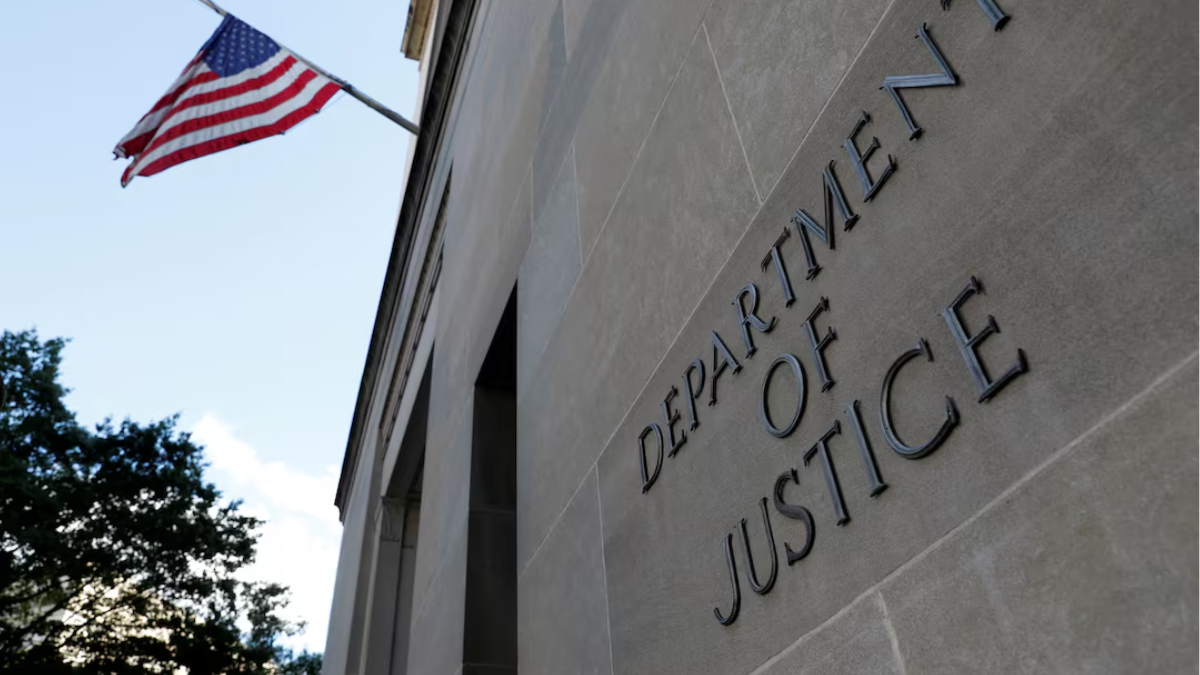
Federal prosecutors in Massachusetts, a jurisdiction that has historically spearheaded many of the nation’s most prominent healthcare fraud and pharmaceutical kickback cases, emphasized the sheer scale of illicit activities targeting charitable structures. Representatives for the U.S. Attorney’s Office noted that the office alone has recovered over $1.4 billion for taxpayers through settlements and enforcement actions concerning drug company kickbacks disguised as charitable contributions. "We will continue to pursue these matters to ensure that all drug companies play by the rules and to protect federal taxpayer-funded healthcare programs," the office reiterated.
Echoing these sentiments, Acting Deputy Inspector General for Investigations Miranda L. Bennett of HHS-OIG delivered a sharp critique of corporate misconduct masked as philanthropy. "Pharmaceutical manufacturers that attempt to disguise kickbacks as charitable patient assistance are engaging in blatant misconduct which corrupts medical decision-making and drains federal health care programs," Bennett said. "Dompé’s actions undermined critical safeguards Congress put in place to protect Medicare, driving up costs for taxpayers while exploiting patients. HHS-OIG does not tolerate such conduct and will continue to work tirelessly for justice and accountability."
Broader Impact and Implications for the Pharmaceutical Industry
The $32 million settlement with Dompé is far more than an isolated financial penalty; it serves as a bellwether for the current regulatory climate surrounding pharmaceutical marketing and patient assistance programs. Federal authorities have made it abundantly clear that the line between legitimate corporate philanthropy and illegal kickback schemes is razor-thin, and regulatory bodies are utilizing advanced data analytics to scrutinize how drug companies interact with third-party foundations.
The False Claims Act remains the government’s most potent weapon in combating healthcare fraud, empowering whistleblowers, investigators, and prosecutors to claw back ill-gotten gains and exact punitive measures against corporate wrongdoers. This enforcement posture is further amplified by broader administrative initiatives, including the recently launched Task Force to Eliminate Fraud and the National Fraud Enforcement Division, which aim to coordinate federal resources across multiple agencies to root out waste, abuse, and exploitation in public programs.
For pharmaceutical executives and compliance officers, the Dompé case reinforces several critical compliance lessons:
- Firewalls in Philanthropy: Any corporate donations made to patient assistance foundations must be entirely decoupled from product sales data, patient counts, and internal budgeting processes that track return on investment.
- The Value of Proactive Disclosure: While self-reporting is a painful and costly endeavor, the cooperative credit earned by Dompé farmaceutici demonstrates that early self-disclosure can mitigate the catastrophic fallout of a full-scale adversarial prosecution.
- Heightened Scrutiny on Specialty Drugs: Orphan drugs and specialty therapeutics with high per-patient costs remain primary targets for federal oversight, particularly when market access strategies rely heavily on third-party financial support systems.
As federal agencies continue to refine their enforcement strategies and deploy sophisticated data-mining tools to detect irregularities in patient assistance funding, drug manufacturers are on notice. The era of utilizing charitable foundations as unmonitored commercial expansion vehicles has effectively drawn to a close, and companies failing to adapt their compliance models face severe financial and legal jeopardy.