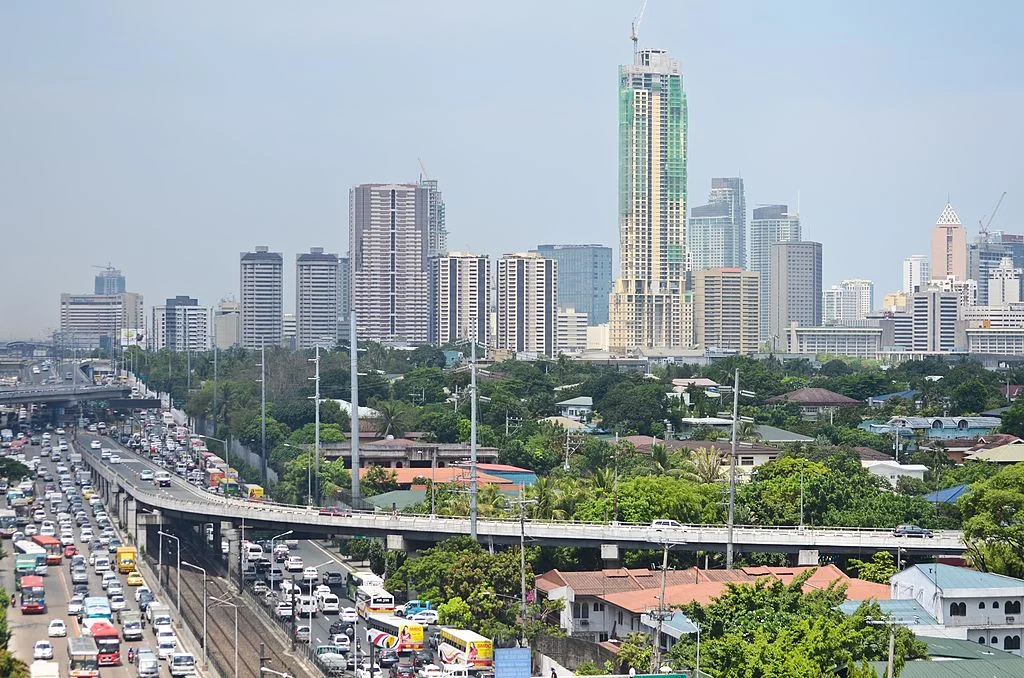
The Philippines has emerged as one of the most compelling financial markets in Asia, characterized by a rapid, technology-driven shift in how its population manages money. However, this transition from a cash-heavy economy to a digital-first powerhouse has created a complex regulatory environment. As the nation grapples with the dual pressures of fostering financial inclusion and curbing sophisticated digital fraud, the passage of the Anti-Financial Account Scamming Act (AFASA) marks a pivotal moment for the country’s banking sector and its oversight bodies.
The transformation of the Philippine payment ecosystem has been nothing short of meteoric. According to data from the Bangko Sentral ng Pilipinas (BSP), retail payment transactions made via digital means surged from a mere 1% in 2013 to 57.4% by 2024. This evolution is underpinned by the nation’s robust remittance corridor, with Overseas Filipino Worker (OFW) cash remittances hitting a record US$35.63 billion in 2025—representing approximately 7.3% of the country’s GDP. The shift toward digital remittance channels has injected massive liquidity into the banking system, providing a fertile foundation for fintech innovation. Yet, as experts note, the very soil that nourishes innovation also provides a habitat for the "weeds" of financial crime.
A Chronology of Regulatory Evolution
The regulatory trajectory of the Philippines reflects a proactive effort to align with global standards while addressing localized threats.
- 2013–2020: The inception of digital payment expansion, characterized by rapid onboarding and a focus on financial inclusion.
- February 2023: The Anti-Money Laundering Council (AMLC) issues a critical warning regarding the rise of "money mules," highlighting the exploitation of electronic cash cards and ATM networks.
- July 20, 2024: President Ferdinand Marcos Jr. signs the Anti-Financial Account Scamming Act (AFASA) into law, creating a new legal framework to criminalize the misuse of financial accounts.
- February 2025: The Financial Action Task Force (FATF) officially removes the Philippines from its "grey list," a significant milestone validating the country’s improved anti-money laundering and counter-terrorism financing (AML/CTF) measures.
- June 2026: Full implementation of AFASA and its associated BSP circulars, forcing a shift in institutional liability regarding suspicious transactions.
- September 2026: The BSP releases Circular 1240, tightening the requirements for rural and thrift banks that operate as de facto digital platforms, demanding a PHP 1 billion capital threshold.
The Dark Side of Digital Convenience
The rapid adoption of digital finance has created a "frictionless" environment that, while excellent for consumer experience, has occasionally come at the expense of rigorous Customer Due Diligence (CDD). The BSP’s data illustrates the scale of this challenge: the registered e-money base plummeted from approximately 324 million in 2023 to 197 million in 2024. This 39% reduction was not an indicator of waning consumer interest, but rather a deliberate regulatory "housekeeping" exercise—a mass deactivation of unverified or suspicious accounts.
This massive culling of the account base exposed a structural vulnerability: the "resold account" market. In this scenario, legitimate users pass initial KYC (Know Your Customer) verification only to sell or rent their credentials to criminal syndicates. These accounts are then used as "mules" to launder the proceeds of social engineering, phishing, and online scams. Because current instant payment rails were designed for speed rather than real-time threat detection, the financial sector has struggled to police these illicit activities effectively.
Analyzing the Impact of AFASA and Circular 1240
The implementation of AFASA represents a paradigm shift in how the Philippines handles financial crime. Under the new law, the act of lending, buying, selling, or renting a financial account—or recruiting others to do so—is a criminal offense punishable by 6 to 8 years of imprisonment and significant fines.
More importantly, AFASA shifts the burden of proof. Institutions are now required to maintain real-time fraud monitoring systems capable of placing temporary holds on disputed funds. The law defines a "disputed transaction" broadly: any movement of funds that lacks a clear economic purpose, originates from an unknown source, or exhibits behavior inconsistent with the account holder’s established profile.
The BSP has reinforced this with Circular 1240, which targets the "regulatory arbitrage" seen in the fintech sector. For years, regional fintech groups—particularly from Singapore and Indonesia—have entered the market by acquiring small rural banks to bypass the stringent capital requirements of a full digital bank license. By mandating that any institution operating with a digital model must hold at least PHP 1 billion in capital, the BSP is effectively forcing these players to either scale their compliance infrastructure or consolidate.
Industry Implications and Future Defense
For financial institutions operating in the Philippines, the compliance landscape has moved from a "report after the fact" model to an "act inside the transaction" requirement. This transition poses significant operational challenges, particularly for institutions that inherited legacy customer bases through acquisitions.
Industry experts suggest that the most effective defense involves a three-tiered approach:
- Risk Indicia Screening: Continually scrubbing the existing customer base against updated risk profiles rather than relying on point-of-entry verification.
- Dynamic Risk Scoring: Moving beyond static profiles to score customers based on observed behavior over time.
- Real-Time Monitoring: Implementing integrated frameworks that synthesize fraud detection, AML screening, and transaction monitoring into a unified view.
The necessity of this integration is highlighted by the growing sophistication of "muling" networks. Because these networks rely on the rapid movement of funds across multiple platforms, a siloed compliance approach—where transaction monitoring and fraud detection are handled by separate systems—is no longer sufficient to identify the patterns of social engineering.
Official Stance and Market Reaction
The BSP’s recent actions have been met with cautious optimism by industry analysts. By placing liability on institutions that fail to exercise "adequate controls," the central bank is effectively forcing the private sector to become the first line of defense. While some smaller institutions have expressed concerns regarding the cost of compliance and the technical debt associated with upgrading legacy systems, the consensus remains that these measures are necessary to maintain the integrity of the Philippine financial system following its exit from the FATF grey list.
The long-term impact of these regulations is expected to be a consolidation of the Philippine banking sector. Smaller institutions that cannot afford the capital and compliance investments mandated by Circular 1240 will likely be absorbed by larger, more technologically robust players. While this may reduce the number of individual bank charters, it is anticipated to create a more stable, resilient, and fraud-resistant financial ecosystem.
Conclusion: The Road Ahead
The Philippines is currently serving as a global case study for the "innovation-vs-integrity" trade-off. The country’s digital journey has proven that it is possible to achieve high levels of financial inclusion in a short timeframe, but the cost of that growth—if unchecked—is a rise in sophisticated financial crime.
As institutions prepare for the upcoming industry dialogues, such as the webinar scheduled for October 22, 2026, the focus will undoubtedly remain on operational agility. The challenge for the next fiscal year will be to ensure that the "friction" introduced by these new anti-fraud measures does not alienate the very customers the financial system was designed to serve. By integrating compliance deeply into the transaction lifecycle, the Philippines is moving toward a more mature, secure, and sustainable digital economy.