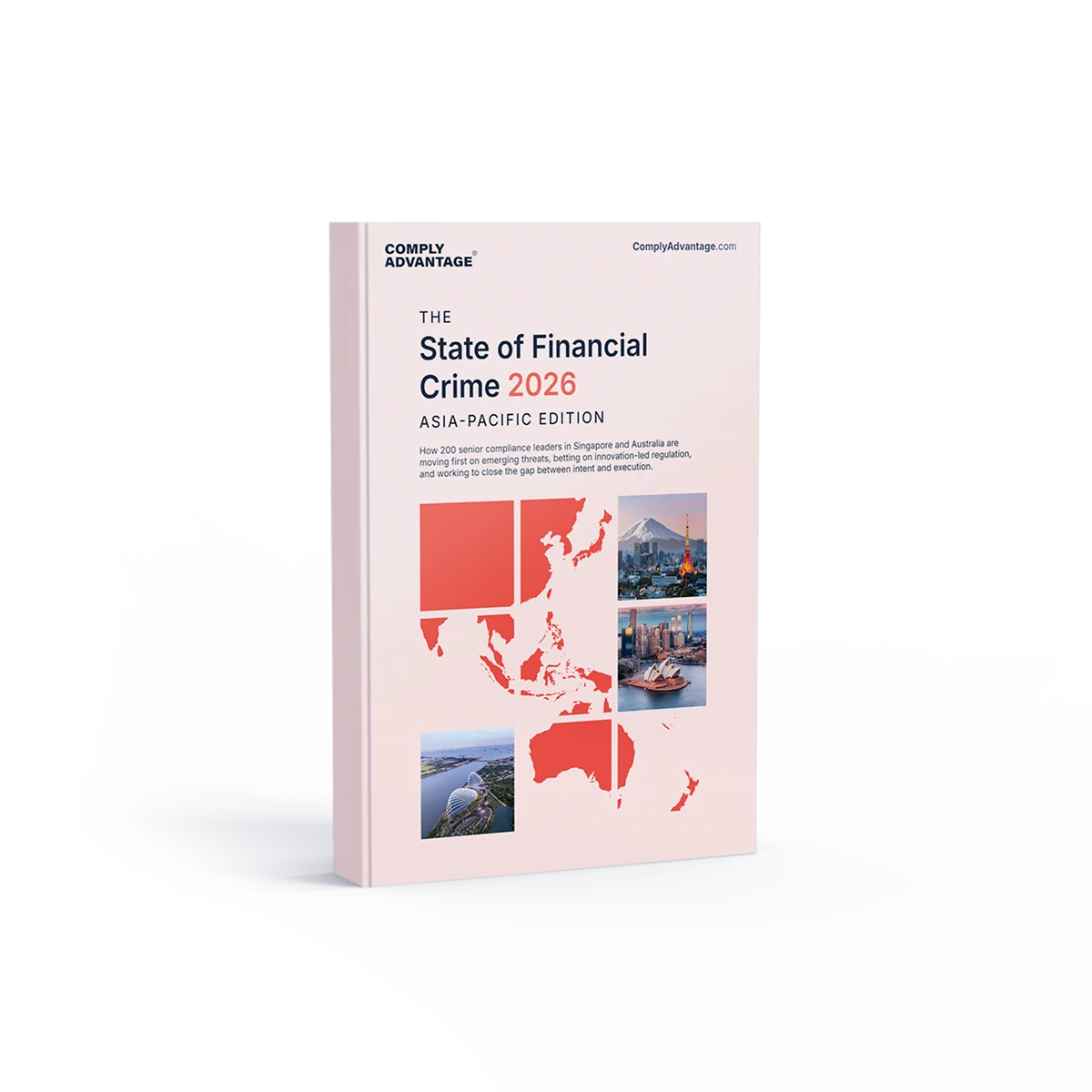
The release of the sixth annual State of Financial Crime 2026 report by ComplyAdvantage has signaled a pivotal moment for the financial services industry in the Asia-Pacific (APAC) region. Drawing from an extensive survey of 200 senior compliance decision-makers across Singapore and Australia, the report illuminates a landscape where the rapid adoption of financial technology is being mirrored by an equally sophisticated evolution in criminal tactics. As real-time payments become the standard across these major financial hubs, the report warns that the speed of illicit activity is now matching the speed of legitimate commerce, creating an environment where traditional "stop-and-check" compliance methods are increasingly obsolete.
The Dual Frontier of Innovation and Risk
The central thesis of the 2026 report revolves around the paradox of progress. Singapore and Australia have long been at the forefront of financial innovation, with both nations aggressively pursuing "cashless" societies and real-time settlement infrastructures. However, this same infrastructure has provided fertile ground for what the report describes as the "industrialization" of financial crime. The survey reveals that 200 senior compliance leaders are currently navigating a high-stakes transition, moving toward a "first-mover" advantage against emerging threats while balancing the pressure to support business growth through innovation rather than restriction.
According to the findings, the primary challenge is no longer a lack of intent. Compliance departments across the APAC region are well aware of the risks and have expressed a strong desire to modernize. Instead, the "gap between intent and execution" has emerged as the most significant hurdle. This gap is characterized by legacy technology stacks that cannot keep pace with real-time data, a shortage of specialized talent capable of managing AI-driven compliance tools, and the sheer volume of transactions that require screening in milliseconds.
Chronology of the Evolving Threat Landscape
To understand the current state of financial crime in 2026, it is necessary to examine the trajectory of the last five years. The report provides a chronological context that explains how the region arrived at this juncture.
Between 2020 and 2022, the COVID-19 pandemic accelerated the digital transformation of banking in APAC. This period saw a massive influx of retail investors and the proliferation of digital wallets. By 2023, criminals had begun to exploit these new channels using basic automation. However, 2024 marked a turning point with the widespread availability of generative AI, which allowed bad actors to create highly convincing deepfakes for identity fraud and automate phishing campaigns at an unprecedented scale.
In 2025, the rise of "Money Laundering-as-a-Service" (MLaaS) became the dominant trend. Criminal syndicates began operating like technology startups, offering pre-packaged laundering services to other bad actors. By the time the 2026 report was commissioned, these MLaaS platforms had become highly sophisticated, utilizing "mule-on-demand" networks and automated layering techniques that move funds across borders before traditional batch-processing compliance systems can flag them.
Supporting Data: The Cost of the Compliance Gap
The report provides several key data points that underscore the urgency of the situation. In Singapore, where the Monetary Authority of Singapore (MAS) has introduced the COSMIC (Collaborative Sharing of ML/TF Information & Cases) platform, compliance leaders reported a 35% increase in the detection of "complex" laundering schemes compared to the previous year. However, the cost of compliance continues to rise, with Australian firms reporting an average 12% year-on-year increase in operational spending related to Anti-Money Laundering (AML) and Counter-Terrorism Financing (CTF).
Furthermore, the survey indicates that 68% of compliance leaders in Australia and Singapore believe that real-time payment rails are the "most vulnerable" point in their current infrastructure. Despite this, 74% of respondents stated they are prioritizing "innovation over restriction," suggesting that financial institutions are unwilling to slow down transaction speeds to improve security, choosing instead to invest in more advanced, automated detection technologies.
The shift toward AI-driven compliance is also evident in the data. Nearly 60% of surveyed firms in the APAC region have now integrated some form of machine learning into their transaction monitoring systems. Yet, only 22% of these firms believe they are utilizing these tools to their full potential, further highlighting the execution gap mentioned in the report’s executive summary.
Official Responses and Regulatory Shifts
The findings of the ComplyAdvantage report align with recent statements from regional regulators. In Singapore, the MAS has been vocal about the need for "shared responsibility" in the fight against financial crime. Following the high-profile $3 billion money laundering case in 2023, Singaporean authorities have tightened requirements for family offices and increased scrutiny on cross-border fund flows. Industry analysts suggest that the 2026 report’s findings will likely embolden regulators to push for even more stringent real-time reporting requirements.
In Australia, AUSTRAC (the Australian Transaction Reports and Analysis Centre) has been overseeing the implementation of "Tranche 2" reforms, which extend AML/CTF obligations to "gatekeeper" professions such as lawyers, accountants, and real estate agents. The ComplyAdvantage report suggests that these professionals are currently the "weakest link" in the Australian ecosystem, as they often lack the sophisticated compliance technology found in major banks.
Compliance officers interviewed for the report expressed a mix of optimism and concern. "We are moving at the speed of the rails," noted one senior compliance director at a Singapore-based fintech. "But the criminals are often the ones laying the tracks. We need a fundamental shift from reactive monitoring to predictive intelligence if we are to close the gap between what we want to achieve and what our systems actually allow us to do."
Analyzing the Rise of Money Laundering-as-a-Service
A significant portion of the 2026 report is dedicated to the analysis of MLaaS. This phenomenon represents a shift from disorganized crime to a corporate-style model. MLaaS providers offer a range of services, including the provision of "clean" corporate shells, the management of synthetic identities, and the use of "crypto-mixers" to obscure the trail of illicit funds.
The report notes that in the APAC region, MLaaS is often facilitated by the high volume of legitimate trade finance. By embedding illicit transactions within the complex documentation of global shipping and trade, criminals can move millions of dollars with a low risk of detection. The industrialization of this process means that even low-level criminals now have access to sophisticated laundering techniques that were once the exclusive domain of major cartels.
For compliance teams in Singapore and Australia, this means that traditional "red flag" indicators are becoming less effective. MLaaS providers are adept at mimicking legitimate behavioral patterns, making it necessary for compliance systems to look beyond individual transactions and instead analyze broader network relationships and behavioral anomalies over time.
Broader Impact and Implications for the Future
The implications of the State of Financial Crime 2026 report extend beyond the compliance department. For the broader economy in Singapore and Australia, the ability to secure real-time payment networks is a matter of national economic security. If trust in these systems erodes, the "innovation-first" approach that has driven growth in the APAC fintech sector could be jeopardized.
The report suggests that the next two years will be defined by a "technological arms race." As financial institutions deploy more advanced AI to detect crime, criminal syndicates will use adversarial AI to probe for weaknesses in those very systems. This will necessitate a move toward "open compliance," where institutions share anonymized threat intelligence in real-time to create a collective defense.
Moreover, the "gap between intent and execution" identifies a critical need for a cultural shift within financial institutions. Compliance can no longer be viewed as a "back-office" function or a "check-the-box" exercise. Instead, it must be integrated into the product development lifecycle. The report concludes that the winners in the 2026 financial landscape will be those who view compliance not as a restriction on innovation, but as a prerequisite for it.
As Singapore and Australia continue to serve as the gateway for capital flows in Asia, the findings of this sixth annual report serve as both a warning and a roadmap. The transition to real-time, AI-driven finance is irreversible; the only question remains whether the regulatory and operational foundations of the region’s financial institutions can be reinforced quickly enough to withstand the industrial-scale threats of the modern era.
Conclusion: Bridging the Execution Gap
The ComplyAdvantage State of Financial Crime 2026 report makes it clear that the APAC region is at a crossroads. While the commitment to innovation is unwavering, the operational reality of managing risk in a real-time environment is proving to be a formidable challenge. For the 200 senior leaders surveyed, the path forward involves a radical reassessment of how technology, data, and human expertise are deployed.
By highlighting the rise of MLaaS and the vulnerabilities of real-time payment rails, the report provides a necessary reality check for an industry that has perhaps moved faster than its safety nets allowed. Closing the gap between intent and execution will require not just more spending, but smarter spending—prioritizing integrated, agile systems that can adapt as quickly as the threats they are designed to stop. As the APAC region continues to lead the world in financial innovation, its success in curbing the industrialization of financial crime will set the standard for the rest of the global financial community.