For years, the rhythm of the global banking sector could be measured not just by quarterly earnings reports and interest rate adjustments, but by the predictable cadence of corporate return-to-office (RTO) announcements. January, May, and September have long served as the industry’s unofficial transition markers—strategic windows when financial institutions traditionally rally their workforces back toward physical corporate headquarters. Whether timed to the fresh start of a new calendar year, the lull preceding the summer holiday season, or the post-Labor Day autumn reset, these months have historically seen management teams push for more robust, visible office attendance.
In the immediate wake of the COVID-19 pandemic, Labor Day emerged as a vital industry benchmark for tightening remote work policies and testing the boundaries of workforce flexibility. As the health crisis receded and organizations transitioned into a permanent post-emergency paradigm, pre-Memorial Day policy announcements quickly became standard practice across Wall Street and global financial capitals. Banks began issuing annual corporate "reminders" and, in some cases, formal "letters of education" shortly after the new year—a polite yet firm corporate greeting designed to establish that the boundaries of remote work were shrinking.
However, the monolithic march toward rigid, universal desk-bound policies has increasingly given way to a fragmented, institution-by-institution landscape. Over the past year, major banking organizations have adopted drastically divergent tactics regarding corporate real estate and personnel management.
The Divergent Landscape of Modern Banking Workplaces
While some financial institutions have doubled down on aggressive, blanket attendance requirements, others have adopted nuanced, hyper-specific constraints or surprising operational flexibility.
Consider the widening spectrum of North American and European banking policies. Toronto-Dominion Bank (TD) instituted a four-day in-office requirement, while Truist and PNC Financial Services mandated a strict five-day office week for their employees. Simultaneously, Bank of America began enforcing granular scheduling controls, prohibiting employees from working remotely on consecutive days and scrutinizing precisely which days of the week staff could operate outside corporate towers.
In stark contrast, Goldman Sachs CEO David Solomon—widely viewed as an early pioneer of the aggressive post-COVID push to empty home offices and repopulate trading floors—offered a surprising pragmatic pivot. Noting that Goldman Sachs operates without a rigid five-day numerical mandate, Solomon remarked last October, "We don’t have a policy. We work." This juxtaposition highlights a growing strategic divide: while traditional commercial and regional lenders increasingly rely on blanket mandates to rebuild corporate culture, premier investment banking operations are discovering that productivity and output can sometimes transcend rigid desk-counting metrics.
The Barclays Backlash: A Clash Between Union and Management
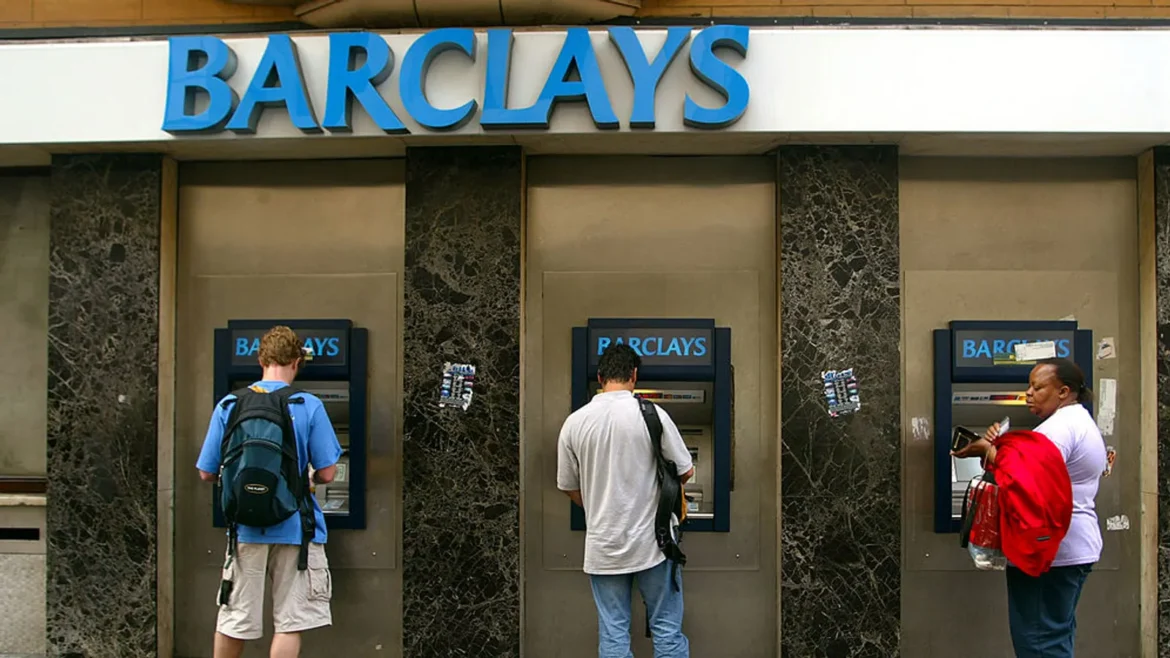
While North American institutions navigate these operational pivots, an intense industrial dispute has erupted across the Atlantic. British banking giant Barclays is facing fierce internal resistance over its decision to increase minimum office attendance requirements.
Under the policy announced by Barclays leadership in July, general staff are required to work from physical corporate offices at least three days a week, a step up from the previous two-day baseline. For managing directors and other senior leaders, that requirement stretches to four days. The policy changes, slated to take effect next month, are projected to impact approximately half of the bank’s 45,000 U.K.-based employees, with operations and technology teams shouldering the heaviest adjustments.
In response, thousands of Barclays staff members have mobilized through Unite, the prominent workers’ union representing roughly 80% of the bank’s U.K. workforce, according to Rick Coyle, a national officer at the organization. Unite launched an open letter and an aggressive advocacy campaign demanding that leadership completely reverse its decision.
The union’s demands are comprehensive and granular. Unite is calling for mandatory exemptions from the three-day rule for any employee whose daily commute exceeds 40 minutes or 35 miles each way. Furthermore, the union is petitioning for flexible start and end times, split shifts for parents and primary caregivers, and specific scheduling accommodations designed to help employees avoid notoriously congested peak public transit hours. To offset the direct financial toll of increased travel fares, office attire, and meals, Unite is also pressing Barclays to issue a one-off cost-of-living stipend by March 2027, alongside a strict one-day-a-week cap for staff with long-term caring responsibilities.
"Our members think that Barclays is trying to fix a problem that doesn’t exist," Coyle stated in an interview with the Financial Times. "Unite will be speaking to Barclays about the strength of feeling in the days ahead."
Corporate Defense and the Legislative Backdrop
Barclays leadership has defended its strategy, maintaining that physical proximity is essential for collaboration, mentorship, and operational cohesion, even as employee pushback intensifies.
"We recognise the benefits of balancing flexibility for colleagues with the importance of working together in our physical locations," Barclays said in an official corporate statement. "Our minimum time in office requirements vary by business area, reflecting the nature of the work and the needs of the business. This means that most of our colleagues who are not already working in the office three days [a week] will align with our broader approach across the bank."
While the bank has engaged in ongoing dialogues with Unite representatives, leadership has thus far declined to meet the union’s core demands for broad exemptions and financial compensation.
The standoff at Barclays occurs against a rapidly evolving legal and political backdrop in the United Kingdom. The U.K. government recently unveiled sweeping legislative proposals aimed at dismantling corporate roadblocks to flexible employment. Under the proposed legal changes, employers would be legally required to conduct formal, face-to-face meetings with any worker requesting remote or flexible work arrangements, and must provide a rigorous, objective, and "justifiable reason" to deny such requests, according to reports from The Times of London.
This regulatory shift underpins Unite’s central argument: that management has failed to provide a credible, data-driven justification for uprooting established work routines. In its formal open letter, the union emphasized that Barclays "is not able to provide an evidence-based rationale for increasing minimum office attendance requirements."
Highlighting the bank’s own internal corporate communications, Unite pointed out that workers have continued to post robust financial results, drive successful digital transformations, and achieve high operational performance while operating under the previous hybrid models. "These achievements have been repeatedly recognised in recent internal communications from senior leaders," the union noted. "In this context, Unite does not believe that significantly increasing mandatory office attendance represents a proportionate or necessary response."
Broader Implications for the Financial Sector
The escalating conflict at Barclays serves as a critical bellwether for the future of white-collar employment across the global financial services industry. As banks attempt to reconcile the long-term shift toward distributed workforces with traditional executive preferences for in-person oversight, they are increasingly running up against organized labor movements and shifting regulatory frameworks.
For years, major financial institutions wielded outsized leverage over their workforces, utilizing tight labor market conditions and corporate prestige to enforce sweeping attendance edicts without significant pushback. However, the maturation of hybrid work infrastructures, coupled with rising costs of living, grueling daily commutes, and emerging legal protections for flexible work, has fundamentally altered the power dynamic.
The outcome of the Barclays-Unite impasse will likely establish a powerful precedent for other European and international financial institutions grappling with workforce management. If labor unions successfully extract structural concessions, commute-based exemptions, and financial offsets from major banks, it could trigger a wave of similar pushback across the financial sector. Conversely, if management successfully enforces its mandate without major concessions, it may embolden other global financial institutions to tighten the screws on remote work, cementing a permanent return to traditional corporate operations.
As banks navigate the delicate balance between cultural cohesion, operational efficiency, and employee retention, the traditional seasonal cycle of return-to-office decrees is proving to be anything but routine. What began as a temporary pandemic-era accommodation has transformed into a fundamental ideological battleground over the future of modern labor—one where neither corporations nor workers are willing to yield easily.