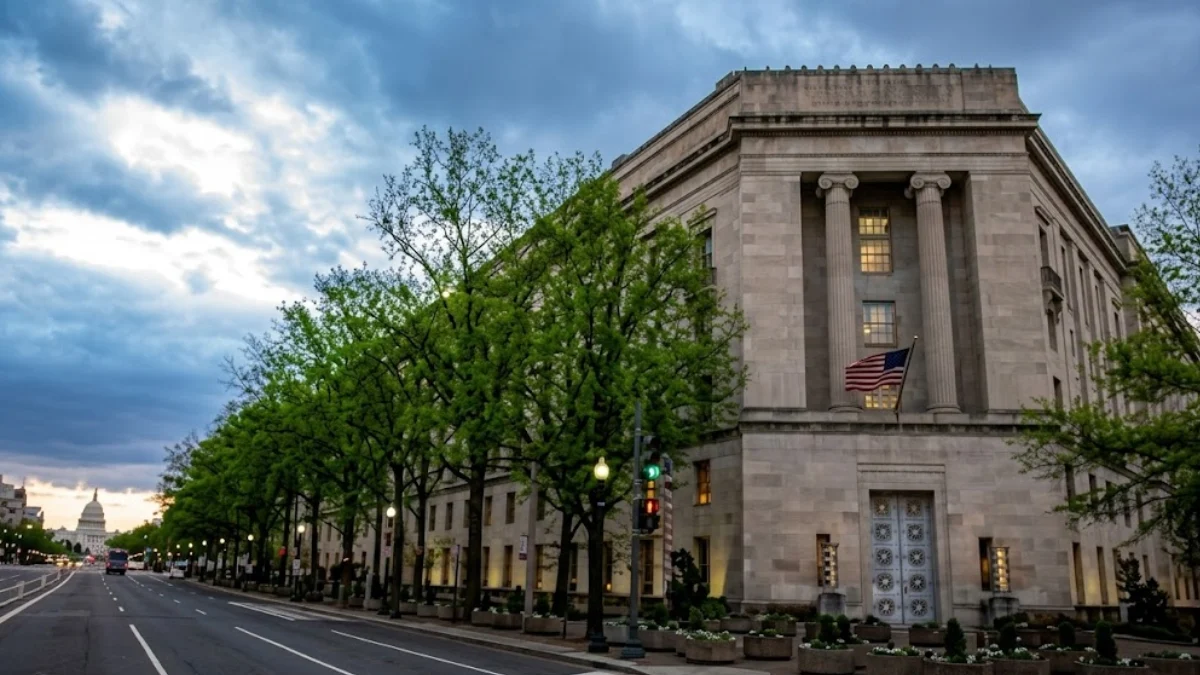
In a decisive and multi-faceted blow against digital piracy, the United States Department of Justice (DOJ) announced the successful seizure of more than 1,000 internet domains that were found to be engaged in the unauthorized streaming of matches during the FIFA World Cup. These enforcement actions, carried out in coordination with international law enforcement agencies and private sector stakeholders, represent one of the most significant efforts to date to protect intellectual property rights surrounding a major global sporting event. The seizures were executed over three separate phases during the tournament, building upon an initial wave of enforcement that saw nearly 400 sites shuttered by the end of the previous month. This sustained campaign underscores the federal government’s commitment to safeguarding the commercial integrity of the 2026 FIFA World Cup, which is being hosted across multiple cities in the United States, Canada, and Mexico.
The investigation was spearheaded by the Immigration and Customs Enforcement Homeland Security Investigations (HSI) Washington Field Office, working in tandem with the National Intellectual Property Rights Coordination Center (IPR Center). According to federal officials, the primary objective of the operation—codenamed "Operation Offsides"—was to disrupt the infrastructure used by criminal organizations to profit from the theft of copyrighted content while simultaneously protecting American consumers from the myriad of cybersecurity risks associated with illicit streaming platforms.
Strategic Enforcement and Operation Offsides
Operation Offsides serves as the domestic pillar of this enforcement strategy. It focuses specifically on identifying and seizing domains that facilitate the real-time, unauthorized broadcast of World Cup matches as they occur. Assistant Attorney General A. Tysen Duva of the Justice Department’s Criminal Division emphasized that these actions are not merely about copyright protection but are also a matter of national economic security and consumer safety.
“The sustained effort to seize more than a thousand domains dedicated to illegally streaming the World Cup confirms the administration’s commitment to intellectual property rights and to the success of the 2026 FIFA World Cup,” Duva stated. He further noted that the unauthorized broadcast of these matches fuels the operations of transnational criminal organizations, diverting revenue from legitimate rights holders and the host nations.
Director Ivan J. Arvelo of the National Intellectual Property Rights Coordination Center echoed these sentiments, highlighting the link between digital piracy and broader criminal activity. “The unauthorized broadcast of World Cup matches violates intellectual property rights and fuels criminal organizations,” Arvelo said. Through Operation Offsides, the IPR Center has leveraged its partnerships with the private sector to identify infringing domains with high precision, ensuring that the excitement of the World Cup reaches fans through secure, licensed channels.
Global Coordination and Operation Red Card
While Operation Offsides focused on domestic and domain-level enforcement, a parallel international effort known as "Operation Red Card" targeted the broader piracy ecosystem across the Western Hemisphere. Coordinated by the Justice Department’s International Computer Hacking and Intellectual Property (ICHIP) program, this operation involved law enforcement authorities from Argentina, Brazil, Chile, Colombia, the Dominican Republic, Ecuador, Paraguay, and Peru.
A pivotal moment in this international cooperation occurred on July 1 and 2, when a high-level intergovernmental meeting was held in Bogotá, Colombia. The summit brought together the Colombian Attorney General’s Cybercrime Unit, the Specialized Directorate Against Organized Crime, and HSI Attaché offices to synchronize their efforts. These coordinated actions resulted in the blocking of a staggering number of illegal streaming sites across the region:
- Colombia: 1,140 sites blocked
- Brazil: 309 sites blocked
- Dominican Republic: 256 sites blocked
- Ecuador: 223 sites blocked
- Peru: 28 sites blocked
- Argentina: 14 sites blocked
In addition to digital enforcement, Colombian authorities conducted 13 nationwide search-and-seizure operations targeting the physical manufacture and distribution of counterfeit sports apparel. These raids led to 11 arrests and subsequent convictions, dealing a significant blow to the black market for World Cup-related merchandise.
The Takedown of "Los Ciberinfiltrados"
One of the most notable successes of Operation Red Card was the dismantling of a sophisticated cybercriminal group known as "Los Ciberinfiltrados." According to investigators, this group had been operating since at least 2024, utilizing advanced technical methods to bypass security protocols. The group allegedly accessed telecommunication systems illegally and sold pirated streaming content through fraudulent credentials, the use of Virtual Private Networks (VPNs) to mask their locations, the interception of security codes, and the manipulation of corporate system profiles.
On July 10, during Phase II of the operation, an ICHIP-mentored cybercrime prosecutorial team from the Colombian Attorney General’s Office executed simultaneous raids in Bogotá, Soacha, Maríalabaja, Manatí, and Sincerín. Four key members of Los Ciberinfiltrados were arrested. This group was specifically targeted for their role in facilitating the unauthorized distribution of World Cup matches to thousands of subscribers across South America.
Risks to Consumers: Malware and Identity Theft
A central theme of the DOJ’s messaging throughout these operations has been the severe risk posed to the general public. Federal agents warned that illicit streaming websites are frequently used as delivery mechanisms for malicious software (malware). Deputy Executive Associate Director Matthew Millhollin of HSI provided a stark warning to fans attempting to access "free" streams.
“Criminals operating these unauthorized platforms are already willing to break the law when they stream copyrighted World Cup games; they might also be planning to inject malware or steal your payment information,” Millhollin stated. He urged consumers to protect their online presence by sticking to official streaming partners.
Technical analysis of seized domains often reveals scripts designed to harvest user data, install ransomware, or enlist the user’s device into a botnet. By seizing these domains, the DOJ and HSI are effectively removing these "digital traps" from the internet, preventing unsuspecting fans from becoming victims of financial fraud or identity theft.
Legal Foundations and Private Sector Partnerships
The legal basis for the domain seizures is rooted in an affidavit filed in the U.S. District Court for the Eastern District of Virginia. The affidavit supported a seizure warrant, asserting that the domains were being used to violate federal copyright laws by providing real-time streams of protected content. HSI special agents confirmed the infringement by accessing the sites and documenting the unauthorized broadcasts as they were happening.
This massive enforcement action was made possible through an unprecedented level of cooperation with the private sector. FIFA, as the international governing body of association football, holds the exclusive rights to sanction and stage the tournament. They worked closely with law enforcement to identify infringing URLs. Other major media and entertainment entities provided supporting information and technical assistance, including:

- beIN Media Group: A major global sports broadcaster.
- NBC Universal: A primary rights holder for World Cup broadcasts.
- Motion Picture Association’s Alliance for Creativity and Entertainment (ACE): A leading global coalition dedicated to protecting the legal market for creative content.
- Ultimate Fighting Championship (UFC) and Warner Brothers: Both of which have extensive experience in combating live-event piracy.
The involvement of the Computer Crime and Intellectual Property Section (CCIPS) of the Justice Department’s Criminal Division was also critical. Attorney Jacob Mercer, Senior Counsel Brian Mund, and Assistant Deputy Chiefs Adrienne Rose and Christopher Merriam have been instrumental in the prosecution and legal strategy. Since 2020, CCIPS has secured the conviction of over 180 cyber and intellectual property criminals and has facilitated the return of more than $350 million in funds to victims.
Chronology of the 2026 World Cup Enforcement Campaign
The crackdown did not happen overnight but was the result of a meticulously planned timeline of events:
- Early 2024: HSI and the IPR Center begin monitoring digital trends and identifying high-traffic piracy hubs ahead of the tournament.
- June 17: Phase I of the international operation begins in Colombia, focusing on the seizure of counterfeit merchandise and apparel.
- Late June: The first major wave of domain seizures occurs in the U.S., resulting in nearly 400 sites being taken offline.
- July 1-2: The Bogotá intergovernmental meeting solidifies the "Operation Red Card" framework for South American partners.
- July 3-9: HSI agents in the U.S. execute a second wave of seizures as the tournament progresses into the knockout stages.
- July 10: Phase II of Operation Red Card culminates in the arrest of the Los Ciberinfiltrados group in Colombia.
- Tournament Conclusion: The final tally of seized domains surpasses 1,000, with over 2,000 additional sites blocked internationally.
Broader Impact and Future Implications
The success of Operation Offsides and Operation Red Card sets a powerful precedent for the future of intellectual property enforcement. As the 2026 FIFA World Cup continues to captivate a global audience, the message from the Department of Justice is clear: the digital borders of the United States will be defended against piracy, and international cooperation is stronger than ever.
Beyond the immediate protection of the World Cup, these operations strengthen the ICHIP program, which provides technical assistance to foreign law enforcement and judicial partners. By training international prosecutors and investigators, the U.S. is helping to build a global network capable of tackling the borderless nature of cybercrime.
The economic implications are also significant. By steering viewers toward legitimate platforms, law enforcement ensures that the billions of dollars invested by broadcasters and sponsors are protected. This revenue, in turn, supports the infrastructure of the sport, from youth development programs to the maintenance of the world-class stadiums hosting the matches in the U.S., Canada, and Mexico.
As the legal proceedings against the arrested individuals continue and the seized domains remain under the control of the U.S. government, officials remind the public that the safest and best way to experience the world’s most popular sporting event is through authorized channels. The fight against digital piracy is an ongoing battle, but with over 1,000 domains seized, the "offside" flag has been firmly raised against those who seek to profit from the theft of the beautiful game.