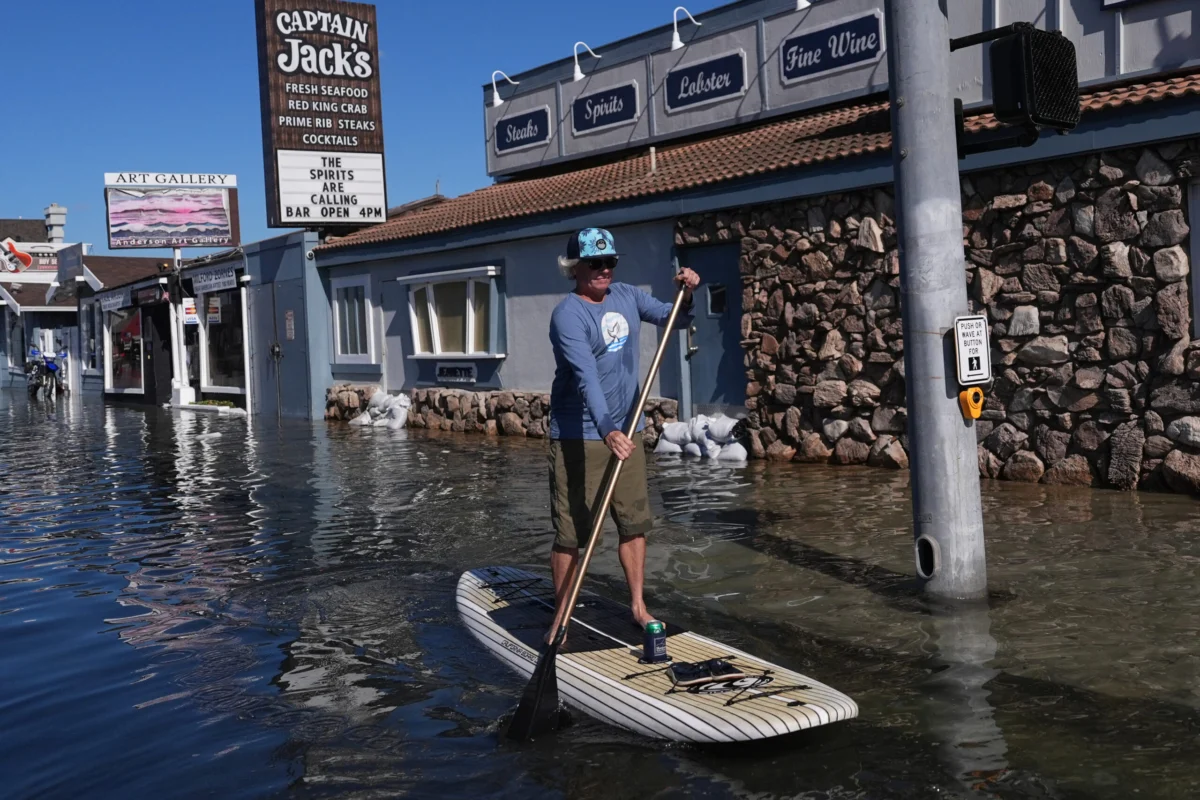
The United States coastline, from the sun-drenched shores of Southern California to the bustling barrier islands of South Florida and the historic harbors of the Carolinas, is currently experiencing a period of extreme tidal inundation. Triggered by the convergence of astronomical alignments and compounded by atmospheric disturbances, these "king tides"—the highest tides of the year—have breached sea walls, flooded critical transit arteries, and infiltrated residential properties. While these high-water events are a periodic occurrence dictated by the gravitational choreography of the Earth, moon, and sun, the current cycle has reached a severity that experts describe as historic, forcing a reevaluation of coastal resilience and infrastructure preparedness.
The Science Behind the Surge
At their core, king tides are a natural phenomenon occurring when the moon reaches its perigee—the point in its orbit closest to Earth—during a full or new moon phase. This alignment maximizes the gravitational pull on the world’s oceans. However, the current event is not a simple product of lunar mechanics. Meteorologists across multiple jurisdictions have identified a "perfect storm" of secondary environmental factors that have significantly amplified the water levels beyond standard projections.
In Florida and the Southeastern Atlantic, the National Weather Service (NWS) has pointed to a stark pressure gradient. Strong high-pressure systems positioned to the north are interacting with low-pressure zones lingering over the Caribbean, creating a persistent, basin-wide swell that pushes massive volumes of water toward the coast. This atmospheric configuration acts as a physical pump, elevating baseline sea levels before the lunar tide even begins its ascent.
On the Pacific Coast, the situation is further complicated by the presence of a super El Niño event. This climatic pattern has resulted in significantly elevated ocean temperatures. Because warmer water is less dense and occupies more physical space—a process known as thermal expansion—the volume of the Pacific has effectively increased. Furthermore, the arrival of Kelvin waves—subsurface pulses of warm water that traverse the ocean and elevate sea levels as they hit the continental shelf—has provided an additional, invisible boost to the tide, pushing water levels well above historical benchmarks.
A Chronology of the Inundation
The onset of this tidal event began earlier this week, coinciding with the full moon. By mid-week, the flooding had shifted from a manageable nuisance to a significant public safety challenge.
In Southern California, the escalation was rapid. By Tuesday, residents in Huntington Beach reported water creeping into garages and patios that had remained dry for decades. By Wednesday, the situation had deteriorated to the point where the Pacific Coast Highway, a primary arterial route through Orange County, was closed to traffic in sections as seawater surged over the road. Onlookers captured footage of paddleboarders navigating flooded intersections, a surreal visual testament to the height of the tide.
In Florida, the impact was felt heavily in the infrastructure surrounding the Fort Lauderdale boat show. Attendees found themselves navigating flooded streets adjacent to major exhibition venues, as the high water levels overwhelmed municipal drainage systems. Simultaneously, in the Miami area, Virginia Key recorded its highest king tide in three decades of data collection, falling just shy of records typically reserved for hurricane-driven storm surges.
The Carolinas, particularly in cities like Charleston and Myrtle Beach, have faced similar challenges. Urban centers that are already prone to "sunny day flooding" saw seawater inundating low-lying streets, prompting officials to issue repeated warnings regarding the hazards of saltwater intrusion and the potential for dangerous rip currents.
Data and Historical Context
The severity of the current event is underscored by the record-breaking measurements taken by the National Weather Service. Record high tides have been documented this week in Santa Barbara, San Pedro, San Diego, and La Jolla.
In North Carolina, the reach of these tides extended into the Outer Banks, where coastal erosion concerns have been heightened by the persistent surf. For residents like Lorraine Friedman, a 75-year-old resident of Sunset Beach, the data is less important than the reality of the damage. After living in the community for nearly 30 years and experiencing only one previous flooding event two decades ago, Friedman reported that the water had breached three layers of sandbags, marking two consecutive days of interior flooding with more predicted for the following day.
The statistical significance of this event is best summarized by the NWS Miami office, which noted that the water levels observed at Virginia Key were comparable only to those seen during major tropical cyclones. When a king tide achieves hurricane-level heights without the presence of a storm, it provides a sobering look at how baseline sea-level rise is narrowing the margin of error for coastal residents.
Official Responses and Public Safety Directives
Government agencies, including the National Oceanic and Atmospheric Administration (NOAA) and local departments of public works, have maintained a high state of alert. The guidance from meteorological offices has been consistent: stay away from the water and avoid driving through flooded streets.
"It’s been a rough beach week," said Chris Fisher, a meteorologist with the NWS in Miami. "The beach conditions are going to continue to be rough through the weekend. It’s been a good week to stay out of the water and stay away from the beaches."
Beyond immediate safety warnings, local municipalities are working to manage the logistical fallout. In cities with advanced drainage systems, pumps are being operated at maximum capacity, though the sheer volume of seawater often exceeds the designed capacity of these systems. The closure of highways and the disruption of local businesses serve as a reminder that the economic impact of these floods extends far beyond the immediate damage to residential property.
Broader Implications for Coastal Resilience
The events of this week highlight a growing vulnerability in American coastal infrastructure. While king tides are predictable, the compounding effect of sea-level rise and climatic anomalies like El Niño is creating a new "new normal."
Analysts suggest that the current flooding is a preview of the challenges that low-lying coastal cities will face with increasing frequency in the coming decades. The infrastructure in many of these communities—designed for a different era of sea levels—is increasingly unable to cope with the combined pressure of tidal flux and intensified atmospheric conditions.
There is a growing consensus among urban planners and civil engineers that traditional mitigation strategies, such as sandbagging and localized drainage improvements, are becoming insufficient. The shift toward more comprehensive solutions, such as the elevation of critical infrastructure, the installation of high-capacity tidal gates, and, in some extreme cases, managed retreat, is moving from a theoretical discussion to an urgent policy necessity.
The environmental implications also extend to coastal ecosystems. Saltwater intrusion into freshwater marshes and the accelerated erosion of beaches can have long-term consequences for local biodiversity and tourism-dependent economies. As the tide eventually recedes this weekend, the focus will shift from emergency response to assessment, with many municipalities likely to seek federal assistance to repair infrastructure that has been stressed beyond its design limits.
Ultimately, the week’s events serve as a potent reminder of the interface between natural lunar cycles and a changing global climate. As the water begins to retreat, the record-breaking nature of this tide will likely remain a key data point in the ongoing dialogue regarding how the United States manages its most vulnerable—and most valuable—coastal assets in an era of environmental uncertainty.