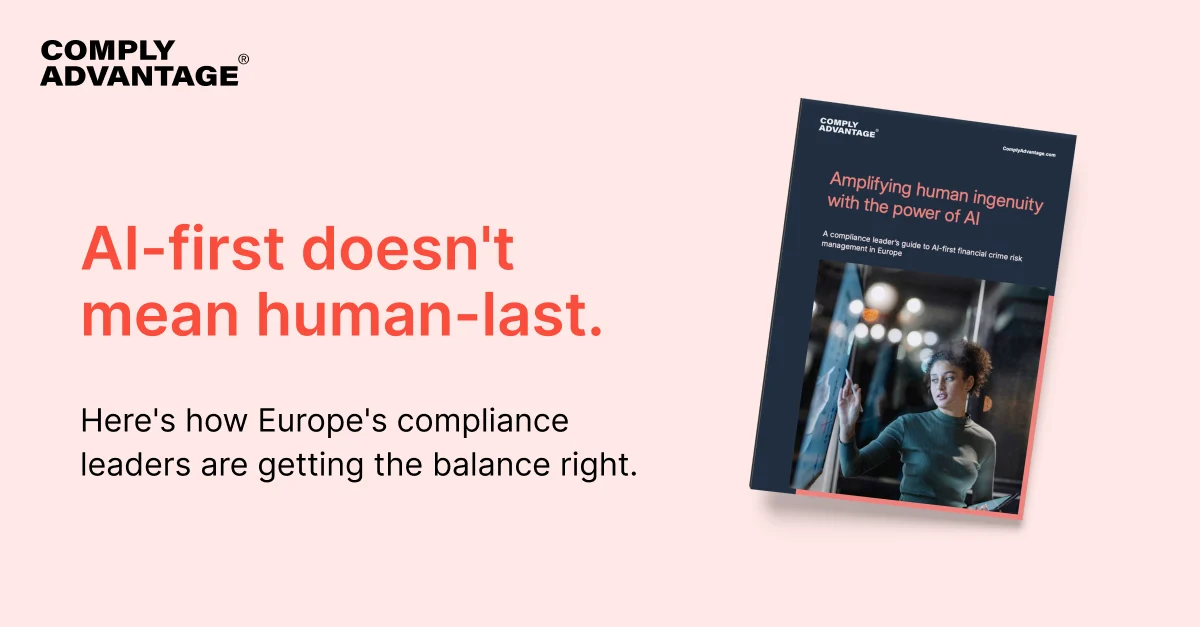
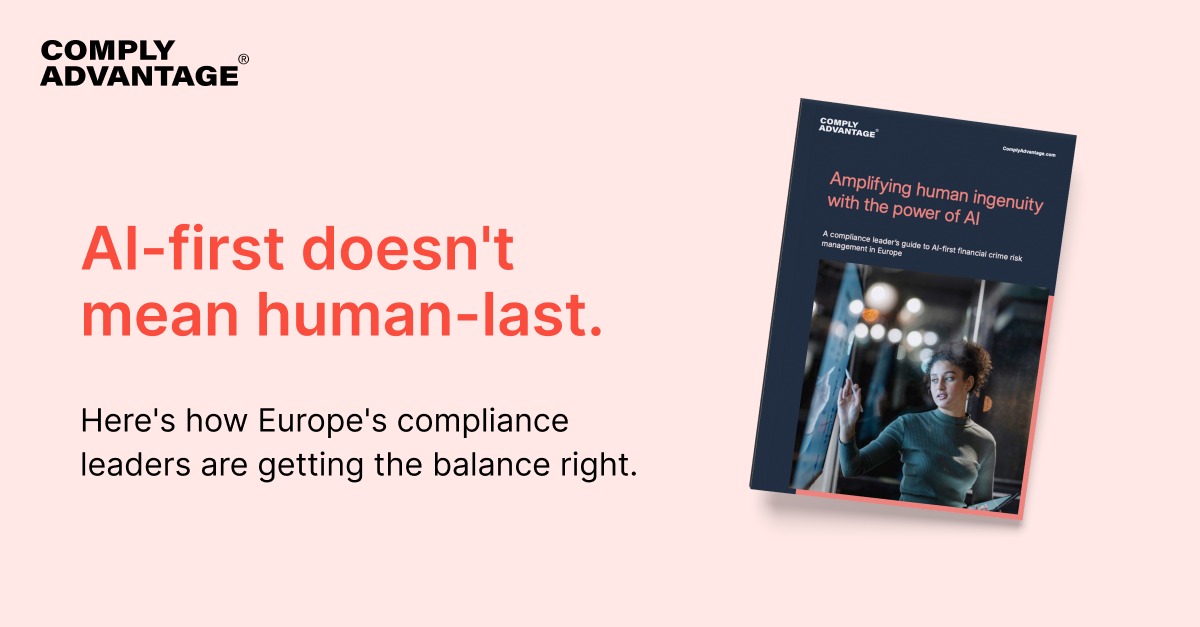
The rapid evolution of financial technology has ushered in a sophisticated era of financial crime, prompting a fundamental shift in how European compliance leaders approach risk management. ComplyAdvantage, a global leader in AI-driven financial crime risk detection, has released a comprehensive new guide titled "Amplifying Human Ingenuity with the Power of AI," which outlines a strategic roadmap for financial institutions to integrate artificial intelligence into their compliance frameworks. This guide, developed from insights gathered at the Future of Compliance Europe summit, emphasizes that while AI is a transformative tool, the preservation of human judgment remains the cornerstone of effective risk mitigation.
As the financial landscape becomes increasingly digital, the "arms race" between illicit actors and compliance professionals has intensified. Criminal organizations are now utilizing generative AI and automated systems to scale attacks, create synthetic identities, and bypass traditional security measures at speeds that legacy systems struggle to match. In response, the compliance sector is moving beyond the initial skepticism of automated technologies, transitioning toward a model where AI acts as a force multiplier for human expertise rather than a replacement for it.
The Context of the Future of Compliance Europe Summit
The insights within the new guide are rooted in the high-level discussions held during the Future of Compliance Europe summit, a pivotal gathering of Chief Compliance Officers (CCOs), regulators, and technology innovators. The summit addressed the growing "compliance gap"—the space between the increasing complexity of regulatory requirements and the limitations of aging technology stacks.
Throughout the event, a recurring theme emerged: the necessity of moving from a "reactive" to a "proactive" compliance posture. Industry leaders noted that the traditional reliance on rules-based systems, which flag transactions based on static parameters, is no longer sufficient in an environment where money laundering techniques evolve daily. The consensus among attendees was that the industry is at a crossroads, where the successful adoption of AI will determine the long-term viability of financial institutions in an increasingly scrutinized global market.
A Strategic Shift: AI as a Design Discipline
One of the central arguments presented in the ComplyAdvantage guide is that AI implementation should be treated as a "design discipline" rather than a mere "procurement decision." This distinction is critical for European firms navigating the complexities of the EU AI Act and other regional regulations.
Treating AI as a procurement decision often leads to "black box" implementations—where software is purchased and integrated without a deep understanding of its internal logic or how it aligns with the specific risk appetite of the institution. Conversely, treating AI as a design discipline involves a holistic approach to how the technology interacts with human workflows. The guide identifies four core disciplines that characterize the most successful AI-integrated compliance programs:
- Strategic Alignment and Risk Calibration: AI systems must be tailored to the specific geographical and sectoral risks an organization faces, ensuring that the technology is focused on the most relevant threats.
- Data Integrity and Lifecycle Management: For AI to be effective, it requires high-quality, real-time data. Leading firms are investing in data "hygiene" to prevent the "garbage in, garbage out" phenomenon that can lead to missed alerts or excessive false positives.
- Human-in-the-Loop (HITL) Architecture: The guide stresses the importance of designing systems where AI handles the heavy lifting of data processing and pattern recognition, but final decisions—especially those involving nuanced ethical or legal judgment—remain with human investigators.
- Transparency and Explainability: As regulators demand more accountability, compliance teams must be able to explain how their AI arrived at a specific risk score. This "explainable AI" (XAI) is essential for maintaining trust with both regulators and customers.
Supporting Data: The Rising Cost of Financial Crime
The push for AI integration is driven by staggering economic realities. According to data from the United Nations Office on Drugs and Crime (UNODC), it is estimated that between 2% and 5% of global GDP is laundered annually, amounting to as much as $2 trillion. In Europe alone, the cost of financial crime compliance has risen significantly, with some estimates suggesting that mid-to-large-sized financial institutions spend upwards of $50 million annually on AML (Anti-Money Laundering) and KYC (Know Your Customer) processes.
Despite these massive investments, legacy systems continue to yield high rates of "false positives"—alerts that appear suspicious but are actually legitimate transactions. Industry reports indicate that in many traditional setups, up to 95% of alerts are false positives, leading to "alert fatigue" among compliance staff and allowing actual criminal activity to slip through the cracks. The ComplyAdvantage guide highlights that AI-driven systems can reduce these false positives by up to 70%, allowing human investigators to focus their ingenuity on the 5% of cases that represent genuine threats.
The Regulatory Landscape and the EU AI Act
The release of this guide is timely, given the recent finalization of the European Union’s AI Act. As the world’s first comprehensive horizontal legal framework for AI, the Act classifies certain financial applications of AI as "high-risk." This designation requires firms to adhere to strict requirements regarding risk management, data governance, and human oversight.
European compliance leaders are currently navigating these new requirements, which mandate that AI systems used for credit scoring or risk assessment in financial services must be transparent and traceable. The ComplyAdvantage guide provides a framework for firms to meet these regulatory burdens without sacrificing the efficiency gains that AI provides. By emphasizing human judgment, the guide aligns with the EU’s "human-centric" approach to technology, ensuring that machines do not make autonomous decisions that could negatively impact a consumer’s financial standing or legal rights.
Industry Responses and Official Perspectives
While the guide serves as a strategic manual, it also reflects the broader sentiment of the financial community. Statements from various stakeholders at the Future of Compliance summit suggest a mix of urgency and cautious optimism.
"The challenge for modern compliance isn’t just detecting crime; it’s doing so at the speed of the modern economy," noted one participant at the summit. "AI gives us the eyes to see patterns in billions of data points, but humans provide the context. You cannot automate the ‘gut feeling’ of a seasoned investigator who understands the subtle nuances of a complex corporate structure."
Regulators have also weighed in, albeit with a focus on accountability. The general stance from European banking authorities is that while they encourage the use of innovative technology to combat money laundering, the ultimate responsibility for compliance failures lies with the board of directors and the compliance officers, not the software provider. This reinforces the guide’s premise that AI must be a tool that augments human capability rather than a replacement for professional responsibility.
Chronology of AI Adoption in Compliance
The journey toward the current state of AI in compliance has moved through several distinct phases:
- 2000s–2010s: The Era of Rules-Based Systems. Compliance was largely manual, supplemented by basic software that flagged transactions based on simple "if-then" logic.
- 2015–2020: The Rise of Machine Learning. Institutions began experimenting with machine learning to identify anomalies. This period saw the first significant reduction in false positives.
- 2021–2024: The Integration of Generative AI and Large Language Models (LLMs). The current phase, where AI can now summarize complex regulatory documents, draft suspicious activity reports (SARs), and conduct deep-web research on entities in seconds.
- 2025 and Beyond: The Era of Human-AI Symbiosis. As outlined in the new guide, the future involves a seamless integration where AI handles the "science" of data and humans handle the "art" of investigation.
Broader Impact and Long-Term Implications
The implications of "Amplifying Human Ingenuity with the Power of AI" extend beyond the immediate needs of compliance departments. For the broader financial services industry, the successful implementation of these strategies means a more stable and secure global economy. When financial institutions can effectively block the flow of illicit funds, they directly impact the ability of terrorist organizations, human traffickers, and drug cartels to operate.
Furthermore, the shift toward AI-enhanced compliance has significant implications for the workforce. The role of the compliance officer is evolving from a data-entry and manual-checking role into one of a "data-driven investigator." This transition requires a new set of skills, including data literacy and an understanding of algorithmic bias.
In conclusion, the ComplyAdvantage guide serves as a vital resource for European firms at a time of unprecedented technological change. By focusing on the four disciplines of AI design and maintaining human judgment at the center of the process, financial institutions can close the gap between criminal innovation and regulatory defense. As AI continues to reshape the world, the goal remains clear: to build a financial system that is not only faster and more efficient but also more resilient and more human.