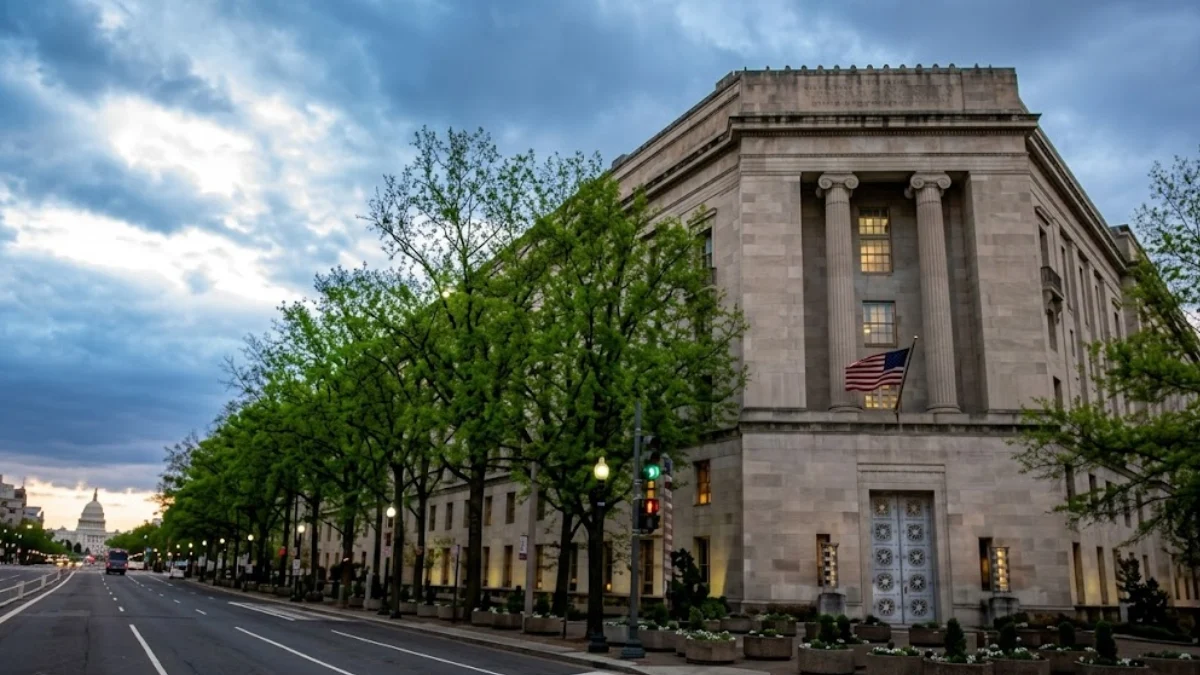
EyePoint Pharmaceuticals, Inc., a specialty biopharmaceutical company based in Watertown, Massachusetts, has reached a formal agreement with the United States Department of Justice to pay more than $4.6 million to settle allegations of violating the False Claims Act. The settlement addresses claims that the company engaged in an illegal kickback scheme designed to induce Ambulatory Service Centers (ASCs) to purchase and dispense DEXYCU, a long-acting intraocular steroid used for treating inflammation following cataract surgery. According to the settlement terms, the company will pay $4,657,463.18 to the federal government, alongside an additional $21,518.68 to various participating states whose Medicaid programs were affected by the alleged misconduct.
The resolution of this case highlights the federal government’s ongoing commitment to policing the relationships between pharmaceutical manufacturers and healthcare providers. The allegations centered on a period spanning from January 1, 2019, through March 1, 2023, during which EyePoint allegedly utilized financial incentives and "assurance" programs to manipulate the market for DEXYCU, potentially compromising medical decision-making and increasing costs for federal healthcare programs such as Medicare and Medicaid.
The Nature of the Allegations: The Assurance Program and Free Samples
At the heart of the government’s case was the commercial launch and subsequent marketing of DEXYCU in 2019. DEXYCU is an injectable medication administered at the conclusion of cataract surgery to control postoperative inflammation. Because the drug is administered in a surgical setting, its reimbursement is typically handled through federal programs under specific billing codes. The United States alleged that EyePoint recognized that financial risk—specifically the risk that a provider might not be fully reimbursed by an insurer—could deter ASCs from choosing DEXYCU over cheaper or more established alternatives.
To mitigate this risk and ensure high volume sales, EyePoint allegedly implemented what it termed an "Assurance Program." Under this program, EyePoint reportedly offered to reimburse or compensate ASCs if a health insurer denied a claim for DEXYCU or if the reimbursement amount fell below the ASC’s actual purchase cost. By providing this financial safety net, the government argued that EyePoint effectively removed the financial risk associated with the drug, creating an unlawful inducement for providers to select EyePoint’s product over others.
Furthermore, the government alleged that EyePoint provided ASCs with excessive quantities of free samples of DEXYCU. While providing samples for patient use is a common industry practice, the Department of Justice contended that these samples were distributed in such high volumes that they functioned as a form of kickback. By providing free units, the company allowed ASCs to lower their overall cost of goods or even profit from the spread between the zero-cost sample and the reimbursement received for other units, thereby incentivizing the continued use and purchase of the medication.
Chronology of the Case and Legal Framework
The investigation into EyePoint Pharmaceuticals was initiated following a whistleblower lawsuit filed under the qui tam provisions of the False Claims Act. The case, captioned U.S. ex rel. AFCE LLC, et al., v. EyePoint Pharmaceuticals, Inc., was filed in the United States District Court for the District of Massachusetts. Under the False Claims Act, private citizens or entities (known as relators) can sue on behalf of the government when they have evidence of fraud against federal programs. If the government’s intervention or subsequent settlement is successful, the relator is entitled to a portion of the recovery.
In this instance, the relator, AFCE LLC, will receive $791,768.74 as its share of the federal settlement. The timeline of the case reflects several years of intensive investigation:
- January 2019: EyePoint launches DEXYCU and begins the alleged "Assurance Program" and sample distribution strategy.
- 2021: The whistleblower complaint is filed under seal, prompting a federal investigation led by the Justice Department’s Civil Division and the U.S. Attorney’s Office.
- March 2023: The period of the alleged misconduct concludes as federal oversight and investigative pressure mount.
- 2024-2025: Negotiations lead to the final settlement agreement and the imposition of a Corporate Integrity Agreement.
The settlement is a result of a coordinated effort involving the Commercial Litigation Branch (Fraud Section) of the Justice Department, the FBI, and the Department of Health and Human Services Office of Inspector General (HHS-OIG).
Corporate Integrity Agreement and Future Compliance
As a condition of the settlement, EyePoint Pharmaceuticals has entered into a comprehensive five-year Corporate Integrity Agreement (CIA) with the HHS-OIG. This agreement is a common tool used by the federal government to ensure that healthcare companies that have settled fraud allegations do not repeat their mistakes.
The CIA requires EyePoint to implement a series of rigorous compliance measures, including:
- Independent Monitoring: The company must engage an Independent Review Organization (IRO) to conduct regular audits of its marketing and sales practices, specifically focusing on its relationships with healthcare providers and the distribution of samples.
- Executive Accountability: Senior leadership at EyePoint will be required to certify the company’s compliance with federal healthcare program requirements annually.
- Compliance Training: Mandatory training for employees regarding the Anti-Kickback Statute and the False Claims Act.
- Reporting Requirements: EyePoint must report any "reportable events"—potential violations of law—directly to the HHS-OIG within specified timeframes.
Failure to adhere to the terms of the CIA can result in significant stipulated financial penalties or, in extreme cases, exclusion from participation in federal healthcare programs like Medicare and Medicaid, which would be catastrophic for a pharmaceutical manufacturer.
Official Statements and Government Response
Federal officials were clear in their condemnation of the alleged practices, emphasizing that financial incentives should never dictate medical care.
"Kickbacks by pharmaceutical companies increase the cost of drugs used by patients and paid for by federal health care programs," stated Assistant Attorney General Brett A. Shumate of the Justice Department’s Civil Division. "The Civil Division will hold accountable anyone who pays unlawful kickbacks."
United States Attorney Leah B. (Simeone) echoed these sentiments, noting that her office remains vigilant in protecting the integrity of the healthcare system. "Through these efforts, we protect patients by removing providers’ financial incentives to prescribe or dispense products that may not be medically necessary for the patient and protect the public from fraud, waste, and abuse."
Scott J. Lampert, Acting Deputy Inspector General for Investigations at HHS-OIG, highlighted the betrayal of trust inherent in kickback schemes. "Pharmaceutical companies that attempt to boost profits through unlawful kickbacks undermine the integrity of federal health care programs and betray the patients who rely on them. We will aggressively pursue any entity that seeks to corrupt medical decision-making."
Broader Implications for the Pharmaceutical Industry
The EyePoint settlement serves as a stark warning to the pharmaceutical industry regarding the use of "patient assistance" or "reimbursement assurance" programs. While these programs are often marketed as a way to help patients access medication, the government increasingly views them with skepticism when they appear to insulate providers from financial risk or serve as a surrogate for price discounts that are not properly disclosed.
From a regulatory standpoint, this case underscores two critical legal pillars:
- The Anti-Kickback Statute (AKS): This law prohibits the knowing and willful payment of "remuneration" to induce the purchase of items or services paid for by a federal healthcare program. The EyePoint case demonstrates that "remuneration" is defined broadly, encompassing not just cash but also "assurance" against loss and excessive free goods.
- The False Claims Act (FCA): Claims for payment submitted to Medicare or Medicaid that result from a violation of the Anti-Kickback Statute are considered "false" under the FCA, leading to treble damages and significant per-claim penalties.
This settlement also reflects the priorities of the newly launched Task Force to Eliminate Fraud and the National Fraud Enforcement Division. These administrative bodies were established to enhance the government’s ability to detect and prosecute fraud in federal programs, which currently costs American taxpayers billions of dollars annually.
Impact on Healthcare Providers and Patients
For Ambulatory Service Centers and individual practitioners, the EyePoint case is a reminder of the legal risks involved in accepting aggressive marketing incentives. When a manufacturer offers to "guarantee" reimbursement or provides an unusually high volume of samples, it creates a potential liability for the provider if those incentives lead to the submission of claims to federal insurers.
For patients, the impact of such schemes is often indirect but profound. When financial incentives drive the selection of a drug, there is a risk that the choice is not based solely on clinical efficacy or patient-specific needs. Furthermore, these practices contribute to the inflation of healthcare costs, as federal programs are forced to pay for medications that might have been chosen over more cost-effective alternatives due to the hidden financial arrangements between the manufacturer and the provider.
As EyePoint Pharmaceuticals begins its five-year period under federal monitoring, the case stands as a significant entry in the Department of Justice’s ongoing "war on fraud." It illustrates the powerful role of whistleblowers and the extensive resources the federal government is willing to deploy to ensure that medical decisions remain in the hands of clinicians, unclouded by illegal financial inducements.