
American Growth Insurance (AGI), an Atlanta-based insurance technology and distribution firm, has officially entered the market with a mission to redefine the traditional brokerage model through the integration of advanced artificial intelligence. Supported by a substantial capital commitment of nearly $70 million from Rockbridge Growth Equity and the prominent venture capital studio Atomic, AGI is positioning itself as a tech-forward solution for independent insurance agencies struggling to maintain pace with industry giants. The company’s launch marks a significant moment in the ongoing evolution of the United States insurance sector, where the "middle market" of brokerages has increasingly found itself squeezed by massive consolidators and a rapidly changing technological landscape.
The foundation of AGI rests on a proprietary AI-enabled platform designed to optimize every facet of the insurance agency lifecycle, from lead generation and underwriting to policy management and client retention. Unlike many tech startups that attempt to disrupt the industry from the outside, AGI’s strategy involves a hybrid approach: acquiring established independent agencies and equipping them with a specialized operating model that leverages AI to drive outsized growth. With plans to execute a series of strategic acquisitions through 2026, the company aims to build a national footprint that combines local expertise with institutional-grade technology.
Leadership and the Vision for AI Integration
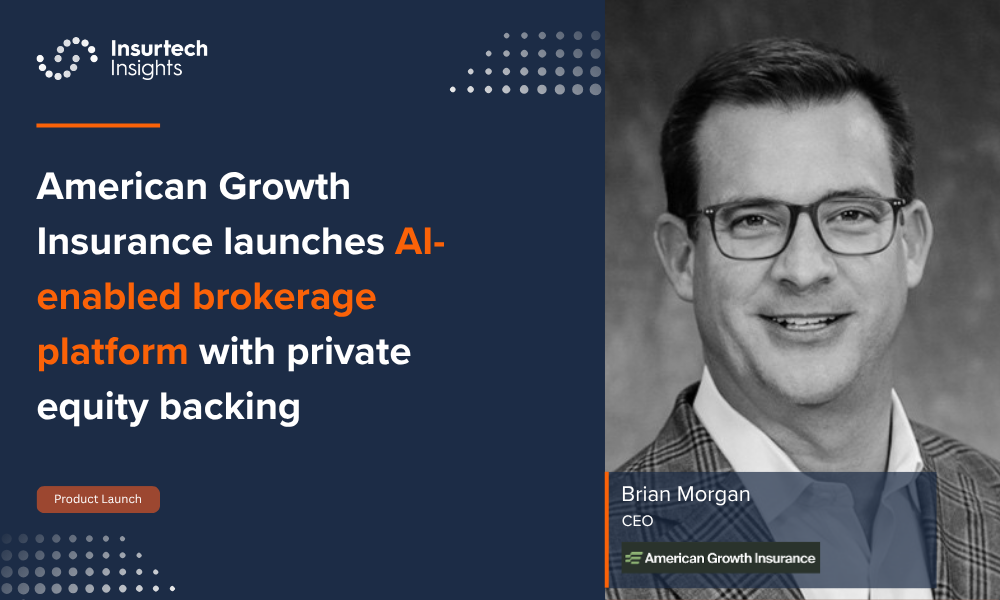
At the helm of American Growth Insurance is Chief Executive Officer Brian Morgan, a seasoned veteran with over three decades of experience in the insurance distribution space. Morgan previously served as the Chief Revenue Officer at Keystone Agency Partners, where he played a pivotal role in scaling brokerage operations. His transition to AGI reflects a broader industry trend where traditional insurance leaders are migrating toward technology-centric platforms to solve long-standing inefficiencies in the agency model.
Morgan’s leadership team spent the better part of the last year in a "stealth" development phase, collaborating closely with 10 partner insurance agencies to refine the AI platform. This pilot period was crucial for ensuring that the technology addressed the practical, day-to-day challenges faced by brokers rather than offering purely theoretical solutions. The results of these collaborations were significant; participating agencies reported average profit improvements exceeding 50%. These gains were attributed to a dual-pronged effect: a sharp increase in top-line revenue driven by AI-assisted sales tools and a simultaneous boost in operational productivity as automated systems handled routine administrative tasks.
The AI operating model developed by AGI is not merely a software suite but a holistic framework for agency management. It utilizes machine learning algorithms to analyze vast datasets, identifying cross-selling opportunities and predicting client churn before it occurs. For the agent, this means less time spent on manual data entry and more time focused on high-value advisory services, which remains the cornerstone of the insurance relationship.
Addressing the Widening Gap in the Brokerage Market
The emergence of AGI comes at a time of unprecedented consolidation within the U.S. insurance brokerage industry. Data from MarshBerry, a leading investment banking and consulting firm for the insurance industry, highlights a stark disparity in the market. Currently, the 50 largest insurance brokerage firms in the United States control a staggering 96% of total brokerage revenue. This leaves the remaining thousands of independent firms—including those ranked between 50 and 100—vying for a mere 4% of the market share.
Furthermore, the growth trajectories of these two groups are diverging. MarshBerry’s research indicates that firms ranked in the 50-to-100 bracket have seen an average five-year compound annual growth rate (CAGR) of approximately 7.1%. While respectable, this is less than half the growth rate achieved by the industry’s top 50 firms, which have utilized their massive capital reserves to invest in technology and aggressive M&A strategies.
AGI’s platform is specifically designed to bridge this gap. By providing smaller and mid-sized agencies with the same level of technological sophistication—if not more—than the industry leaders, AGI seeks to level the playing field. The company’s value proposition to agency owners is clear: join a platform that provides the capital for growth and the AI tools to ensure that growth is profitable and sustainable.
The Investor Perspective: Why Insurance is Ripe for AI
The $70 million investment from Rockbridge Growth Equity and Atomic is a testament to the perceived value of AI in the service sector. Atomic, known for its rigorous approach to company building, did not arrive at the insurance sector by accident. Michael Stenclik, Vice President at Atomic, revealed that the firm conducted a comprehensive evaluation of approximately 1,000 different service-based industries before identifying insurance distribution as the sector with the highest potential for AI-driven transformation.
The rationale behind this choice lies in the inherent nature of the insurance agency model. It is a data-heavy industry that relies on complex risk assessment, high-volume documentation, and constant communication—all areas where modern AI excels. Unlike sectors that are easily fully automated, insurance still requires a "human in the loop" for complex advisory and relationship management. This makes it a perfect candidate for "augmented intelligence," where AI enhances human performance rather than replacing it.
Rockbridge Growth Equity, with its deep expertise in tech-enabled services and financial sectors, provides the late-stage scaling expertise necessary to transform AGI from a platform into a market leader. The synergy between Atomic’s venture-building capabilities and Rockbridge’s private equity muscle suggests a long-term commitment to reshaping the insurance landscape.
Strategic Acquisition and Growth Timeline
AGI’s roadmap is ambitious, with a clear focus on the next 24 months. The company has stated its intention to complete several significant agency acquisitions before the end of 2026. This "buy-and-build" strategy is a common fixture in the insurance world, but AGI’s differentiator is the immediate integration of its AI operating model post-acquisition.
The acquisition strategy is expected to target agencies that have strong local reputations and solid books of business but lack the resources to modernize their technology stacks. By folding these agencies into the AGI ecosystem, the parent company can realize immediate synergies. For instance, an acquired agency’s historical data can be fed into AGI’s AI engines to uncover untapped revenue streams within existing client portfolios.
This timeline reflects the urgency of the current market. As interest rates and economic conditions fluctuate, agencies are looking for stable partners that can offer more than just a payout. AGI’s focus on "operational alpha"—generating returns through better management and technology rather than just financial engineering—is intended to appeal to the next generation of agency principals.
The Private Equity Debate and Industry Implications
The launch of AGI occurs against a backdrop of intensifying scrutiny regarding the role of private equity in the insurance sector. While the influx of capital has fueled growth and consolidation, it has also sparked a debate among academics and regulators. Recent research from the University of Chicago Law School has raised concerns about the potential downsides of the private equity model, which now controls more than $9 trillion in assets globally.
The research suggests that the private equity focus on short-term financial returns can sometimes come at the expense of long-term investment, employee stability, and broader stakeholder interests. In the context of insurance, critics worry that an over-emphasis on "EBITDA growth" could lead to reduced service levels for policyholders or increased financial risk if the debt used to fund acquisitions becomes unmanageable.
AGI, however, appears to be positioning itself as a counter-narrative to these concerns. By focusing on AI-driven productivity and organic growth, the company argues that its model creates value through efficiency rather than cost-cutting. The "50% profit improvement" cited in their pilot program was driven by increased revenue and productivity—indicators of a healthy, expanding business rather than a shrinking one. Nevertheless, as AGI scales, it will likely be watched closely by industry observers to see how it balances the demands of its private equity backers with the long-term needs of the independent agencies it acquires.
The Future of Insurtech and Operational Alpha
The broader implications of AGI’s launch extend to the entire Insurtech movement. For years, the first wave of Insurtech was defined by "direct-to-consumer" models that sought to bypass agents entirely. Many of these ventures struggled with high customer acquisition costs and the realization that consumers still value professional advice for complex insurance needs.
The "second wave" of Insurtech, which AGI represents, focuses on empowering the agent. This shift recognizes that the most effective way to modernize the insurance industry is to provide the existing distribution network with better tools. If AGI can successfully prove that its AI platform can consistently double the growth rate of mid-sized agencies, it may set a new standard for what "operational excellence" looks like in the brokerage world.
As 2026 approaches, the success of American Growth Insurance will likely be measured by two metrics: the number of agencies it successfully integrates and the measurable impact of its AI on those agencies’ bottom lines. In a market where 96% of the revenue is held by the top 50 firms, AGI is betting $70 million that technology can finally break the stranglehold of the industry giants and usher in a new era for the independent agent. For the Atlanta-based firm, the journey has just begun, but the stakes for the future of insurance distribution could not be higher.