
American Growth Insurance (AGI) has officially entered the insurance distribution market with the launch of a sophisticated, AI-enabled brokerage growth platform, supported by approximately $70 million in committed equity funding. The substantial capital injection comes from a strategic partnership between Rockbridge Growth Equity, a middle-market private equity firm, and Atomic, a prominent venture capital studio known for building companies from the ground up. Headquartered in Atlanta, Georgia, AGI is positioning itself as a transformative force in the insurance sector, specifically targeting the acquisition and modernization of independent insurance agencies and brokerages across the United States.
The core mission of AGI is to identify high-potential independent agencies and integrate them into a unified, AI-native ecosystem. This model is designed to cater to both commercial and personal lines of insurance, bridging the gap between traditional, relationship-based brokerage services and the efficiency of modern computational technology. By leveraging artificial intelligence to handle back-office operations, data analysis, and lead generation, AGI aims to empower brokers to focus more on client advisory roles and less on administrative burdens.
Strategic Foundation and the Pilot Phase
The public launch of American Growth Insurance is the culmination of over a year of intensive development and practical testing. During this period, the company collaborated with 10 independent agencies to refine its proprietary operating model. This pilot phase served as a laboratory for AGI’s "native AI" approach, where technology is not merely an external tool added to existing workflows but is built into the very architecture of the firm’s operations.
The results from these pilot partnerships have been significant. According to data released by the company, participating agencies experienced an average increase in profitability of more than 50%. This growth was driven by a dual-pronged effect: a substantial uptick in revenue generation coupled with drastic improvements in operational productivity. By automating routine tasks such as policy renewals, documentation management, and basic risk assessments, the AI platform allowed producers to spend more time on high-value business development activities.
Following the successful testing phase and the completion of its initial acquisition, AGI has set ambitious financial targets. The leadership team intends to pursue an aggressive mergers and acquisitions (M&A) strategy, with the objective of surpassing $10 million in annual revenue by the end of 2026. This trajectory reflects a broader trend in the insurance industry where tech-enablement is becoming the primary differentiator for agency consolidators.
Leadership and Operational Philosophy
At the helm of American Growth Insurance is Chief Executive Officer Brian Morgan, a seasoned veteran with over three decades of experience in the insurance industry. Morgan’s career spans several of the most influential firms in the sector, providing him with a comprehensive understanding of the brokerage landscape. His previous roles include serving as the Chief Revenue Officer at Keystone Agency Partners, as well as holding senior leadership positions at Marsh, Willis, Integro Insurance Brokers, and The Plexus Groupe.
Morgan’s leadership is defined by a move away from the traditional "roll-up" strategy often employed by private equity-backed consolidators. In a standard roll-up, agencies are often acquired, rebranded, and integrated into a rigid corporate structure where local expertise can be diluted. Conversely, Morgan emphasizes that AGI views itself as an "operating partner" rather than a mere acquirer.
"American Growth Insurance is building out the next-generation, national insurance brokerage platform," Morgan stated. "AGI will deploy custom-built native AI technology, tailored to the operations of our partner firms, which is designed to facilitate collaboration and producer development. Unlike traditional acquirers, AGI is an operator that’s seeking true partnerships with independent agencies and brokerages."
This partnership-first approach is intended to preserve the local relationships and specialized expertise that independent brokers have built over decades. By providing these brokers with the technological resources of a national firm, AGI allows them to compete more effectively against larger, direct-to-consumer digital insurers while maintaining the "high-touch" service model that clients in the commercial and personal lines space continue to value.
The Role of Strategic Investors: Rockbridge and Atomic
The $70 million commitment from Rockbridge Growth Equity and Atomic highlights a strong belief in the viability of AI-driven insurance distribution. Rockbridge, which focuses on technology-enabled services and financial services, provides the institutional stability and capital necessary for a sustained M&A campaign. Atomic, on the other hand, contributes the technical prowess and innovation-first mindset required to build a native AI platform.
Tony Pulice, a partner at Rockbridge Growth Equity, noted that the platform is specifically designed to solve the "tech debt" problem facing many smaller agencies. "AGI’s goal is to help smaller brokers leverage technology while supporting the high-touch service their customers demand," Pulice explained. Many independent agencies lack the capital or the technical expertise to build their own AI tools, making them vulnerable to larger competitors. AGI provides an exit strategy for these owners that also ensures their business remains technologically relevant.
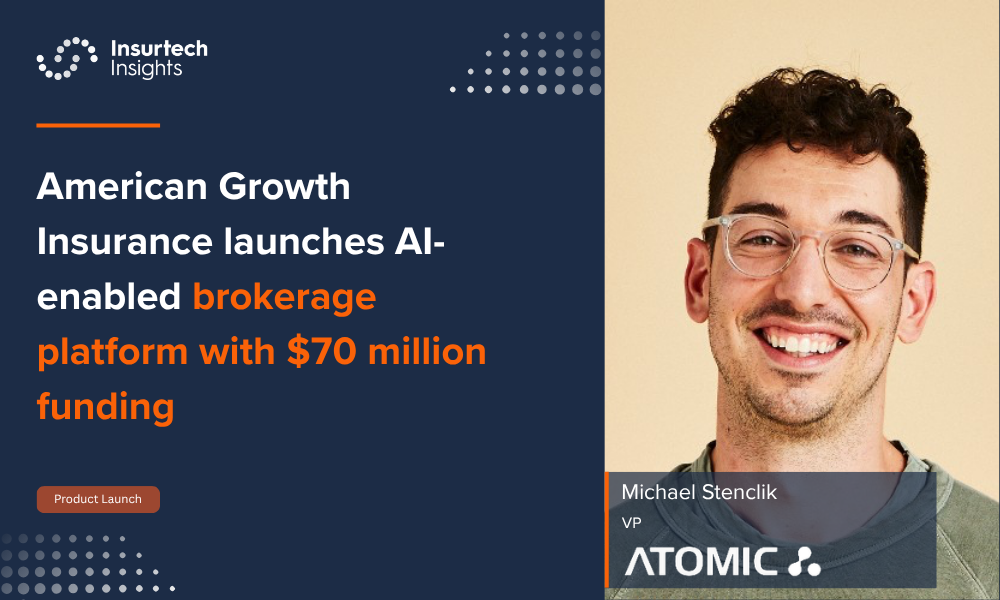
Michael Stenclik, Vice President at Atomic, provided insight into why the venture studio chose the insurance distribution category for its latest major project. "Insurance distribution is a massive category that has never been rebuilt from the architecture up," Stenclik said. "The value of AI compounds only when it shapes the whole operating company rather than sitting on top of it as another tool."
This "architecture-up" philosophy suggests that AGI’s platform includes more than just chatbots or basic automation. It likely involves predictive analytics for underwriting, automated market searching for better premiums, and AI-driven CRM (Customer Relationship Management) systems that can predict client needs before they arise.
Industry Context: The Shift Toward Insurtech 2.0
The launch of AGI arrives during a pivotal moment for the insurance industry, often referred to as the "Insurtech 2.0" era. While the first wave of insurtech focused largely on direct-to-consumer models and disrupting the agent, the current wave focuses on empowering the agent. Industry analysts have noted that despite the rise of digital-only platforms, the majority of complex commercial insurance and high-value personal lines are still transacted through brokers.
The integration of AI into this sector addresses several critical industry challenges:
- Talent Shortage: The insurance industry faces an aging workforce and a struggle to attract younger talent. AI-driven platforms make the profession more attractive to a tech-savvy generation by removing the drudgery of paperwork and focusing on data-driven strategy.
- Margin Compression: As commissions come under pressure and operational costs rise, agencies must find ways to do more with less. The 50% profit increase seen in AGI’s pilot programs suggests that AI is the primary lever for expanding margins in a competitive market.
- Data Utilization: Independent agencies sit on vast amounts of proprietary data but often lack the tools to analyze it. AI can mine this data to identify cross-selling opportunities and predict churn.
- Speed to Market: In a volatile risk environment, the ability to quickly quote and bind policies is a major competitive advantage. Automation significantly reduces the turnaround time for policy issuance.
Timeline and Future Projections
The timeline for American Growth Insurance suggests a rapid scaling phase over the next 24 to 36 months. Having completed its initial testing and secured its first official acquisition, the company is now actively vetting a pipeline of independent agencies that fit its cultural and operational criteria.
The geographic focus on Atlanta as a headquarters is also strategic. Atlanta has emerged as a major hub for both financial technology (Fintech) and insurance technology (Insurtech), providing AGI with access to a deep pool of technical and insurance talent.
By the end of 2026, the company’s target of $10 million in revenue will likely be just the baseline. If the 50% profitability improvement holds true across a larger portfolio, AGI could quickly become one of the most efficient brokerage platforms in the United States. The company’s success will likely be measured not just by its top-line growth, but by its ability to maintain the high retention rates of the brokers and clients it acquires.
Conclusion and Broader Implications
The entry of American Growth Insurance into the market signifies a shift in how the insurance industry views consolidation. The "bigger is better" mantra of the past is being replaced by "smarter is better." As AI continues to evolve, the gap between tech-enabled brokerages and legacy firms is expected to widen.
For independent agency owners, the arrival of a well-funded, tech-forward partner like AGI offers a new path forward. It provides a way to monetize their life’s work while ensuring that their clients benefit from the latest technological advancements. For the broader insurance market, AGI serves as a real-world case study on how artificial intelligence can be used to revitalize a traditional industry without losing the human element that remains central to risk management and client trust.
As the company moves toward its 2026 goals, the industry will be watching closely to see if the AI-native model can be scaled across diverse geographic regions and complex insurance lines. If successful, American Growth Insurance may provide the blueprint for the future of the American insurance brokerage.