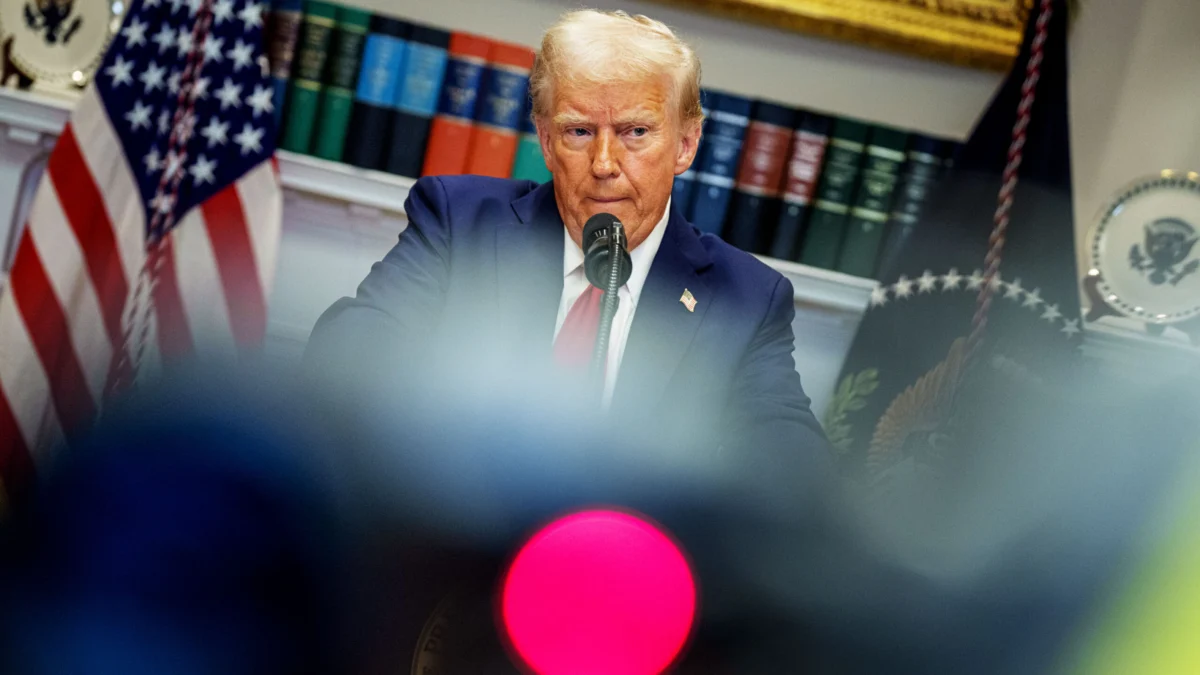
The escalating debate over artificial intelligence, particularly concerning the rise of advanced open-source models from China, has erupted into public spatting among advisors and former advisors to former President Donald Trump. Over the weekend, prominent figures within Trump’s AI and technology circles engaged in sharp exchanges on social media, revealing deep divisions on how to address the perceived threat posed by increasingly capable Chinese AI systems to American technological leadership and economic interests. The core of the dispute appears to be the launch of Kimi, a free, open-source large language model developed by Chinese AI company Moonshot, which observers suggest rivals the performance of proprietary models from leading U.S. companies like OpenAI and Anthropic.
The Kimi Catalyst and the Divide Within Trump’s Orbit
The recent public disagreements began with pointed criticisms directed at major American AI firms. David Sacks, who served as Trump’s AI and crypto "czar" until March, publicly lambasted Anthropic’s AI models as "lobotomized" and "woke." Simultaneously, Emil Michael, a significant figure within the Pentagon’s AI strategy, derided a new head of strategic futures at OpenAI as a "supreme village idiot." These barbs, seemingly unprompted by immediate policy announcements, were a direct reaction to the burgeoning competition and the strategic implications of China’s advancements in AI, particularly with the release of Kimi.
The emergence of Kimi and similar Chinese AI models presents a complex dilemma for Trump and his policy advisors. These open-source alternatives challenge the business models of U.S. AI giants, which rely on paid access to their advanced models. As U.S. companies like OpenAI and Anthropic have become significant drivers of economic growth and innovation, the prospect of China offering comparable, if not superior, AI capabilities for free poses a dual threat: economic disruption and a geopolitical disadvantage. Anton Leicht, a fellow at the Carnegie Endowment, articulated this concern on X, stating that these Chinese models represent "a threat for an administration that really doesn’t want more economic bad news." Indeed, the news of advanced Chinese AI models has already begun to impact U.S. stock markets, with shares of AI-related companies experiencing volatility.
Navigating the AI Landscape: Open Source vs. Government Control
The internal conflict within Trump’s advisory circles reflects a broader ideological struggle concerning the role of government in regulating and fostering the AI industry. On one side, figures like David Sacks have voiced skepticism towards U.S. AI companies seeking government protection from open-source competition. Sacks has argued that the popularity of Chinese AI models stems from their fewer usage restrictions, while implicitly downplaying the state-controlled nature of the Chinese tech ecosystem. This perspective aligns with a more libertarian approach, advocating for minimal government intervention and favoring open innovation.
However, Sacks’s departure from his formal advisory role has coincided with a shift in emphasis within the Trump camp towards a more interventionist stance. This new direction is rooted in the growing recognition of AI’s potential national security implications. The argument posits that as AI models become increasingly powerful, the government must assume a more active role in overseeing their development and deployment to mitigate potential risks. This thinking has informed the current White House’s review process, which aims to vet AI models for security vulnerabilities before their release.
A Policy Review Under Scrutiny
This proposed White House review process has itself become a point of contention. Dean Ball, a former Trump AI advisor now affiliated with OpenAI, criticized the initiative, labeling it a "de facto licensing regime for frontier AI." Ball suggested that Trump might employ a form of soft power, aiming to dissuade U.S. companies from utilizing Chinese models like Kimi. This suggestion, however, was met with sharp disapproval from Emil Michael, who, alongside Secretary of Defense Pete Hegseth, has been a key liaison with AI firms. Michael vehemently rejected the idea of subtle government coercion, emphasizing a preference for "the democratic process not some Deep State scheme." This exchange highlights a fundamental disagreement on the methods and legitimacy of government intervention in the AI sector.
The Underlying Challenge: Chip Access and Model Training
Crucially, the public discourse has largely overlooked the foundational elements that enable the development of sophisticated AI models like Kimi. For a significant period, both the Biden administration and the early stages of Trump’s second term prioritized restricting China’s access to advanced semiconductor technology. However, these export controls have seen some relaxation. Notably, Trump’s administration made a controversial decision to permit Nvidia to increase chip sales to China, in exchange for a revenue share for the U.S. government. Despite these measures, and allegations of chip smuggling, the specific hardware used by the company behind Kimi to train its model remains a subject of speculation.
Distillation and the Fight Against Intellectual Property Theft
A plausible explanation for Kimi’s rapid advancement lies in the practice of "distillation." This technique involves training AI models on the outputs generated by other, more established AI models. OpenAI and Anthropic have long raised concerns about Chinese AI companies engaging in this practice, arguing that it constitutes intellectual property theft. In response to these complaints, the Trump administration announced in April a series of measures aimed at curbing such activities.
Despite these efforts, Kimi is now freely available, demonstrating a capability that closely rivals that of Anthropic’s models. The U.S. government itself had previously deemed an Anthropic model so potent that it was briefly taken offline due to national security concerns. The recent public exchanges among Trump’s advisors underscore a growing realization that China’s AI capabilities are advancing at a rapid pace, posing a significant challenge to U.S. dominance. However, the differing viewpoints on how to respond reveal a lack of consensus on the precise nature of the threat and the most effective path forward. The debate highlights the complex interplay of economic competition, national security imperatives, and the philosophical differences surrounding technological regulation in the age of artificial intelligence.
Broader Implications for the AI Ecosystem
The skirmishes among Trump’s advisors signal a critical juncture for U.S. AI policy. The emergence of powerful, open-source alternatives from China forces a re-evaluation of strategies that have long prioritized proprietary development and commercial licensing. This situation is further complicated by growing public distrust of AI companies, as evidenced by recent regulatory actions like New York’s ban on new data center construction. Many Americans may view the struggles of large AI firms with little sympathy, questioning the government’s role in protecting corporate interests.
The situation also raises questions about the efficacy of current U.S. export controls and the broader strategy for maintaining a technological edge. If China can develop advanced AI models without relying on direct access to the most cutting-edge chips, or through methods like distillation, then current policies may need significant recalibration. The challenge for any future administration, including a potential Trump presidency, will be to forge a cohesive strategy that balances innovation, economic competitiveness, national security, and public trust in the rapidly evolving field of artificial intelligence. The fractured opinions within Trump’s camp suggest that finding such a consensus will be an arduous task.