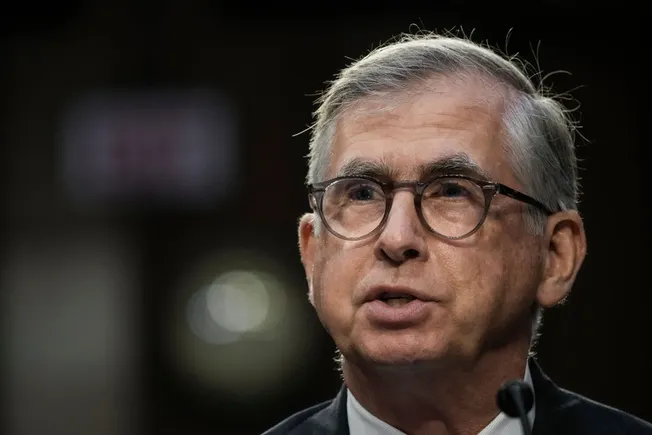
The impending leadership change at Truist Financial, with Mike Lyons set to assume the Chief Executive Officer role from Bill Rogers on September 1, is poised to inject a fresh wave of energy and a sharper focus on enhanced performance and accelerated growth, according to outgoing CEO Bill Rogers. This strategic transition marks a pivotal moment for the Charlotte, North Carolina-based financial institution as it navigates a dynamic economic landscape and intensifies its pursuit of improved profitability and market expansion.
Rogers, who has steered Truist since 2021, articulated his confidence in Lyons’s ability to propel the $550 billion-asset bank forward. He indicated that Lyons will bring "some acceleration, some assurance, and in fairness, some intensity" to the bank’s strategic objectives. This transition, carefully orchestrated over more than a year, aims to ensure a seamless handover of leadership, with Rogers transitioning to the role of Executive Chair through April 2027, at which point he plans to retire.
A Proven Leader for a New Chapter
Mike Lyons arrives at Truist with a distinguished track record in the financial services sector. His most recent role as CEO of payments giant Fiserv, preceded by his tenure as president of PNC Bank, has equipped him with a comprehensive understanding of both traditional banking operations and the rapidly evolving landscape of financial technology and payments. This dual expertise was a significant factor in his selection, as analysts have broadly characterized Lyons as a "welcome outsider" bringing a "fresh perspective" precisely when the bank seeks a strategic impetus.
During Truist’s second-quarter earnings call, Rogers underscored the board’s conviction in Lyons’s leadership capabilities. "Mike’s an accomplished and respected financial services leader with a proven ability to drive growth, improve performance, and create long-term shareholder value," Rogers stated. "Throughout the selection process, it was clear to our board that he’s the right leader for its future." This alignment between Lyons and the board on Truist’s strategic direction and opportunities is seen as a crucial element for successful execution moving forward.
The succession planning process, as described by Rogers, was a deliberate and comprehensive undertaking. "We’ve been at this for well over a year," he explained, "thinking about my timeline, but more importantly, thinking about what’s the right time for the company, and are we hitting on cylinders, and is this the right time for transition?" The board’s ideal candidate profile prioritized a deep understanding of the bank’s core business, coupled with insights into technology, payments, and an ability to anticipate future market trends – what Rogers termed understanding "where the proverbial puck is going." Lyons, by all accounts, fits this profile "perfectly."
Driving Performance and Shareholder Value
The appointment of an external CEO often raises questions about continuity and the immediate impact on established goals. In this regard, Rogers directly addressed analyst inquiries regarding Lyons’s commitment to Truist’s long-term financial targets. When UBS analyst Erika Najarian questioned Lyons’s expectations for achieving the bank’s target of a 16% to 18% return on tangible common equity, Rogers was unequivocal: "Mike came in here to lead and run a high-performing company, and I don’t think there’ll be any doubt on that." This statement signals a clear mandate for Lyons to drive operational efficiencies and strategic initiatives aimed at boosting profitability.
The broader implications of bringing in an "outsider" were also acknowledged. Najarian pointed out that such appointments can sometimes be "a little bit jarring" for existing top talent within a bank. Rogers responded by emphasizing Truist’s ongoing commitment to talent retention and development. "We re-recruit everyone every day," he stated. "We’re on that journey." He further highlighted the benefit of clarity in leadership transitions: "Also, certainty helps. There was probably a little uncertainty of my timeline, and now we have a lot of certainty." This certainty, he believes, will be a stabilizing factor for employees, particularly in a competitive talent market.
Navigating a Competitive Landscape
The financial services industry, especially in major banking hubs like Charlotte, is characterized by intense competition for talent. The presence of industry giants such as JPMorgan Chase, Citi, and Sumitomo Mitsui Banking Corp., all of which are expanding or establishing a significant footprint in the city, underscores the need for Truist to maintain a compelling environment for its employees. Rogers emphasized that "the best thing for top performers is an incredible platform, career opportunity, and a lot of certainty."
Rogers employed a relay race analogy to describe the leadership handover, suggesting that the baton is being passed to enable the next runner to "run the last lap at a lot of speed." While he refrained from detailing specific strategic blueprints Lyons might implement, the metaphor suggests a focus on maximizing momentum and execution. Wells Fargo analyst Mike Mayo aptly summarized the sentiment with a touch of humor, observing, "Hopefully, no one drops the baton." This highlights the critical importance of a smooth and effective transition for the bank’s future success.
Financial Performance and Strategic Outlook
Truist’s recent financial performance provides a backdrop to this leadership transition. In its second quarter, the bank reported a net income of $1.5 billion, an increase of approximately 27% year over year, on revenue that grew 5.5% to $5.3 billion. Despite this positive trend, Truist slightly trimmed its full-year revenue growth guidance to a range of 3.5% to 4%, down from a previous estimate of 4%. This recalibration suggests a cautious outlook or a strategic adjustment in response to prevailing economic conditions.
On the deposit front, Chief Financial Officer Mike Maguire noted some observable shifts in customer behavior. Truist is experiencing "some increased rate-seeking behavior and migration into higher-rate products." While average deposits saw a modest year-over-year increase of 1.1% to $405 billion, the cost of interest-bearing deposits rose by 1 basis point to 2.1% quarter-over-quarter, and total deposit costs edged up by 1 basis point to 1.56%. Rogers clarified that this deposit migration is more a reflection of client behavior than intense competitive pressure, characterizing it as a "trend that we’ve seen that’s continued." This insight into deposit dynamics will be a key area for Lyons to manage as he aims to optimize the bank’s funding costs and balance sheet structure.
The Road Ahead: A Focus on Strategic Execution
The appointment of Mike Lyons signifies Truist’s commitment to a forward-looking strategy. His background in payments and technology, coupled with his proven leadership in driving performance, suggests a potential emphasis on digital transformation, innovation in customer offerings, and the optimization of operational efficiencies. The bank’s substantial asset base and its integrated model, born from the merger of BB&T and SunTrust, present both opportunities and challenges. Lyons’s mandate will be to harness these strengths while addressing any lingering integration complexities and adapting to the evolving demands of the financial services consumer.
The transition from Rogers to Lyons is more than just a change in personnel; it represents a strategic pivot towards a more performance-driven culture and an accelerated approach to growth. The coming months will be crucial in observing how Lyons translates his experience and the board’s strategic vision into tangible results, aiming to solidify Truist’s position as a leading super-regional bank and deliver sustained value to its shareholders. The success of this transition will be closely watched by investors, employees, and competitors alike, as it charts the future course for one of America’s significant financial institutions. The emphasis on a "high-performing company" and "accelerated growth" sets a clear benchmark for the new leadership’s tenure.