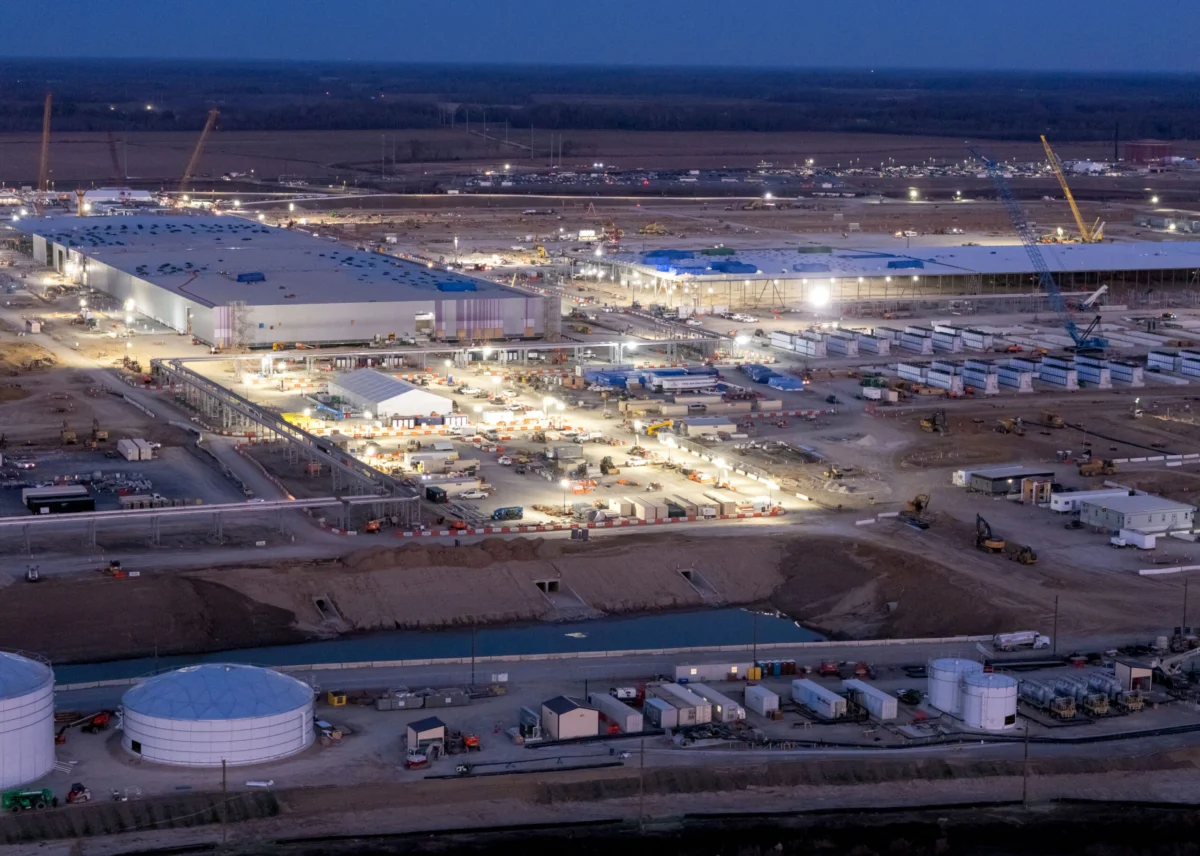
The modern artificial intelligence boom rests on a staggering accumulation of financial exposure, corporate engineering, and unprecedented capital expenditure. When Jessica Wachter, a finance professor at the University of Pennsylvania’s Wharton School and former chief economist of the Securities and Exchange Commission (SEC), set out to evaluate the macroeconomic impact of artificial intelligence over the coming years, she chose to bypass the endless debates regarding the ultimate utility, societal integration, and behavioral adoption of neural networks. Instead, she anchored her research in an indisputable baseline reality: a select group of technology conglomerates, colloquially known as hyperscalers, are channeling historic sums of money into the physical infrastructure required to power the AI revolution.
Rather than trying to forecast the precise trajectory of machine learning advancements, Wachter and her collaborator focused on a straightforward corporate finance question. They calculated the earnings growth these hyperscalers will need to generate by 2027—when total capital expenditures are projected to approach $1.1 trillion—simply to justify their current spending schedules. This unvarnished accounting methodology strips away the optimistic tech-sector narrative to expose the sheer weight of the ongoing physical buildout.
The resulting metrics are sobering. According to their findings, these technology leaders will need to increase their core productivity by a factor of 2.7 by the year 2030 to achieve an operational break-even point. This calculation factors in the cost of capital, an assumed 15 percent investor return, and the accelerated depreciation of physical assets. While Wachter notes that achieving this milestone is theoretically possible—pointing to the economic growth experienced during the United States information technology boom that began in the mid-1990s—she emphasizes a critical caveat: compressing a decade-long productivity expansion into a mere handful of years creates severe systemic vulnerabilities. Should these profit goals go unmet, the financial consequences could cascade into corporate bankruptcies, leading the researchers to conclude that the current infrastructure sprint risks becoming the largest capital misallocation in modern economic history.
The Infrastructure Spending Spree and Revenue Disconnect
The sheer scale of the artificial intelligence infrastructure buildout defies historical precedent. Throughout the current fiscal year, hyperscaler entities—principally Alphabet, Microsoft, Amazon, Meta, and strategic infrastructure partners such as Oracle—are expected to expend approximately $750 billion on massive data center installations dispersed across geographic regions. Projections compiled by major financial institutions indicate that cumulative AI capital investments by these firms could exceed $5 billion over a four-year window.
Despite this unprecedented capital deployment, a pronounced divergence persists between expenditures and incoming revenues. Gary Gensler, former SEC chair during the Biden administration and currently a professor at the MIT Sloan School of Management, highlights the immediate financial imbalance. While corporations commit trillions to hard infrastructure, total artificial intelligence revenues across the broader market are tracking at roughly $150 billion to $200 billion annually. The core challenge facing the market, Gensler notes, is that current spending lacks commensurate revenue generation. The critical unresolved question for capital markets is whether these massive up-front costs will ever yield sustainable financial returns.
This imbalance carries profound implications for both the enterprise balance sheets of the tech giants and the broader United States economy, with sector investments rapidly expanding toward three percent of national Gross Domestic Product. Compounding the risk is the fundamental uncertainty surrounding long-term computational demand. Although foundation models have demonstrated remarkable progress, market forecasters remain divided over whether future computational requirements will continue to scale upward or whether algorithmic efficiencies will ultimately reduce the demand for raw computing power, potentially stranding billions of dollars in specialized hardware.
The Balance Sheet Strain and the Depreciation Trap
Financial pressures within the sector have intensified as these enterprises transition from funding developments via accumulated cash reserves to borrowing significant external capital. Free cash flow—defined as operating cash flow minus capital expenditures—has begun dipping into negative territory for several major technology firms. Alphabet, historically renowned for generating and retaining vast reserves of liquid capital, reported in a recent quarterly financial release that its nearly $120 billion in revenue was entirely consumed by infrastructure outlays, resulting in a free cash deficit of approximately $5.9 billion—the first such shortfall recorded since the company’s initial public offering in 2004.
While these corporations maintain deep financial reserves that insulate them from immediate distress, the rising cost of debt is beginning to test investor patience. More critically, the risks are no longer confined to the balance sheets of Silicon Valley; they are diffusing into the broader financial system through increasingly complex lending instruments.
Compounding this debt exposure is the rapid depreciation cycle of advanced graphics processing units (GPUs) and specialized compute hardware, which typically account for roughly 60 percent of total data center costs. Because the computational performance of elite data center chips doubles approximately every two years, owners of newly constructed facilities face a mandatory reinvestment cycle. Without continuous multi-billion-dollar upgrades to acquire next-generation hardware before the end of the decade, newly built installations risk obsolescence, transforming state-of-the-art facilities into stranded assets. Mihir Kshirsagar of Princeton’s Center for Information Technology Policy warns that neglected facilities could quickly devolve into commercial hulks scattered across the landscape.
The Triple Parlay: Revenues, Productivity, and Public Sentiment
To justify their current trajectory, hyperscalers must simultaneously win a complex, interdependent triple wager identified by market analysts: they must generate unprecedented enterprise revenues, artificial intelligence must trigger widespread macroeconomic productivity growth, and these proprietary frontier models must maintain pricing power against a proliferation of inexpensive open-source and alternative architectures.
Economists emphasize that the second leg of this wager—economy-wide productivity growth—remains the most critical yet elusive milestone. While corporate buyers have eagerly adopted initial software-as-a-service subscriptions and token-based enterprise tools, long-term sustainability requires tangible bottom-line improvements. Businesses must realize genuine efficiencies that translate into measurable national productivity expansion.

Daron Acemoglu, an MIT economist and Nobel laureate, cautions that market sentiment will inevitably sour if broad-based productivity gains fail to materialize, dragging down both capital investment and top-line revenue growth. Empirical data reflects this tension. A recent multinational survey of approximately 6,000 senior business executives across the United States, the United Kingdom, Germany, and Australia revealed that roughly 90 percent of respondents have observed no measurable productivity increases attributable to artificial intelligence over the past three years, though many anticipate modest gains over the medium term.
However, these anticipated corporate efficiency gains often rely heavily on workforce reductions. If the realization of AI-driven productivity is fundamentally tied to job displacement, the resulting public and political backlash could mirror or exceed the local resistance already encountered around data center zoning and environmental footprints. Consequently, a fourth implicit wager emerges: local communities and the general public must perceive tangible, equitable benefits from the infrastructural transformation taking place in their backyards.
Financial Engineering and Interconnected Risk
As capital requirements outpace internal cash generation, the financial architecture supporting these data centers has grown increasingly complex. According to estimates by Morgan Stanley, more than half of the projected $2.9 trillion that hyperscalers will allocate toward data center construction between 2025 and 2028 will rely on external financing mechanisms.
This borrowing has catalyzed a proliferation of sophisticated financial engineering reminiscent of pre-recession debt structures. Financial institutions, pension funds, and private credit vehicles are increasingly exposed to data center debt—often embedded invisibly within diversified retirement accounts and insurance portfolios.
A prime illustration of this intricate financing model is Meta’s Hyperion data center project in Richland Parish, Louisiana. Initially announced in late 2024 as a two-gigawatt computing campus with a $10 billion budget, the project expanded rapidly. By the following year, projected costs escalated toward $30 billion, prompting Meta to restructure the development by transferring an 80 percent equity stake to private-credit firm Blue Owl Capital through a joint venture named Beignet.
Under the operational framework, specialized entities such as Laidley LLC serve as landlords operating the physical site, while Meta subsidiary Pelican Leap LLC acts as the tenant under a series of overlapping four-year leases. These lease durations strategically align with the expected operational lifespan of the underlying GPU hardware. While this structure affords Meta corporate flexibility, it transfers residual risk to external investors. If Meta exercises its right to terminate leases early, financing partners could be left holding empty physical shells devoid of operational cash flow.
Meta subsequently expanded the Richland Parish project further, targeting five gigawatts of computing capacity with a total estimated capital expenditure of $50 billion. To meet the unprecedented electrical demand of this campus and associated expansions, regional utility Entergy Louisiana initiated plans to construct a series of natural gas-fired power plants, ultimately scaling projected local electrical generation capacity to roughly 7.5 gigawatts—six times the total electrical consumption of the city of New Orleans.
Community Concerns and the Ratepayer Burden
The rapid deployment of heavy industrial power infrastructure to service private technology installations has ignited sharp local debates regarding economic exposure and utility rate structures. While Entergy and corporate stakeholders emphasize long-term purchase agreements intended to protect existing ratepayers, regional consumer advocates and public interest analysts remain skeptical.
Logan Burke, executive director of the Alliance for Affordable Energy, points out the inherent risks should projected computational demand fluctuate or if technology partners alter their deployment strategies over the multi-decade lifespan of the power plants. If corporate tenants downsize operations or abandon regional facilities prematurely, residential and small-business ratepayers could be left absorbing the capital and maintenance costs of surplus energy infrastructure. Paul Arbaje, a senior analyst at the Union of Concerned Scientists, underscores the core ethical concern: private corporate entities are making aggressive speculative wagers on proprietary technology, while local utility customers are potentially being forced to underwrite the associated physical infrastructure risks.
Toward the Day of Reckoning
While predicting the exact timing of a market correction remains difficult, economic historians note that prolonged speculative excesses inevitably encounter structural retrenchment. Gary Gensler suggests that whether spending plateaus next year or peaks toward the end of the decade as capacity saturation is reached, a market normalization phase is statistically certain.
Observers emphasize that a financial correction in public equities and speculative credit markets should not be conflated with the failure of the underlying technology itself. Silicon Valley venture capitalists frequently observe that market crashes historically serve to purge irrational exuberance, redirecting capital toward sustainable, practical applications. The parallel expansion of telecommunications infrastructure during the dot-com bubble of the late 1990s ultimately laid the physical fiber-optic foundation for the modern digital economy, even as countless early-stage dot-com enterprises collapsed.
Nevertheless, the current artificial intelligence cycle introduces a novel systemic risk: the financial viability of the underlying technology has been inextricably bound to an unprecedented, debt-financed real estate and energy infrastructure buildout. As public pushback mounts, competitive pressures intensify from lean open-source models, and financing webs grow increasingly convoluted, the ultimate intersection of capital expenditure, macroeconomic productivity, and corporate profitability will determine whether this trillion-dollar gamble fortifies the global economy or tests its structural limits.