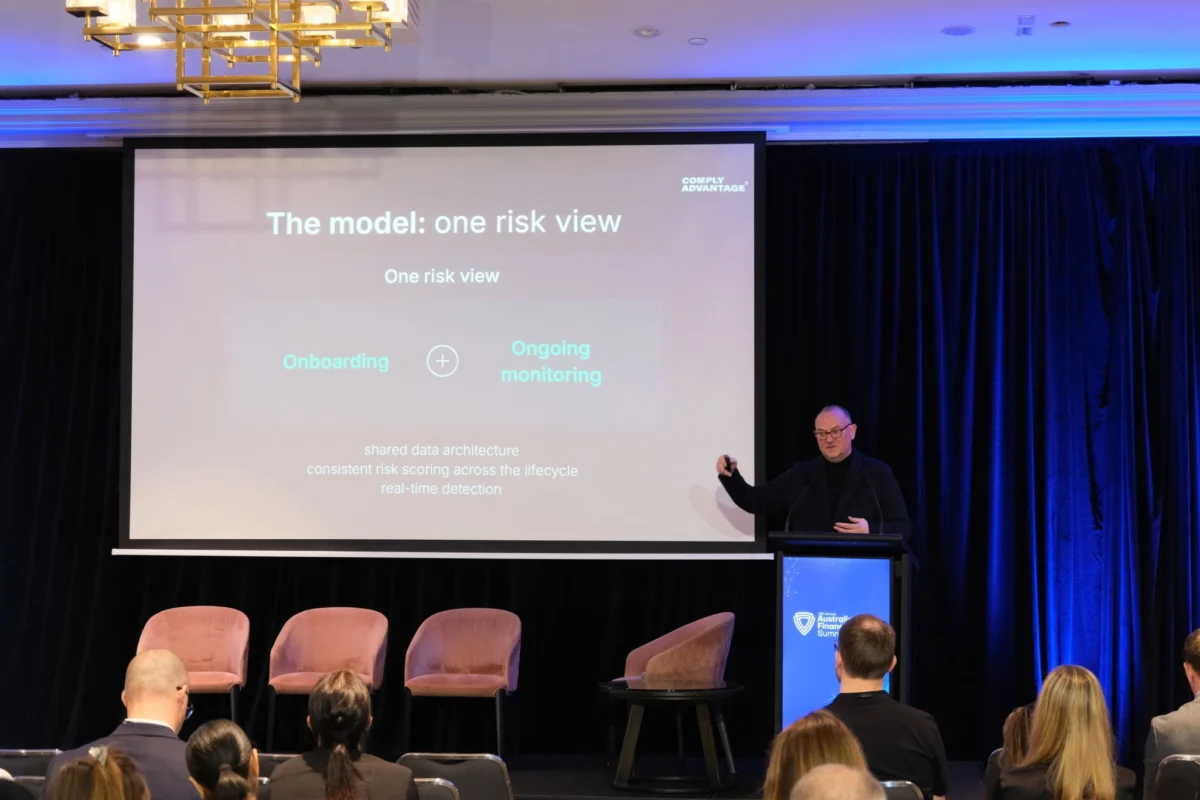
Effectiveness is the singular term defining the current regulatory epoch, a sentiment underscored by global financial crime experts at the Australian Financial Crime Summit (AFCS) held in Sydney on September 1, 2026. As the financial landscape grows increasingly volatile, the disconnect between onboarding protocols and ongoing transaction monitoring has emerged as a systemic vulnerability. Andrew Davies, Global Head of Financial Crime Compliance (FCC) Strategy at ComplyAdvantage, articulated a stark reality for the industry: no compliance team can credibly demonstrate effectiveness while operating within fragmented, siloed technical ecosystems.
The Australian financial sector is currently grappling with a convergence of record-breaking scam losses, the implementation of expansive new anti-money laundering (AML) legislation, and a shifting technological landscape characterized by AI-driven document fraud. In 2025, the National Anti-Scam Centre recorded $2.18 billion in losses stemming from 274,577 reports. These figures, while alarming, are merely a symptom of a broader issue: the inability of institutions to synthesize customer data into a cohesive, actionable risk profile.
A Chronology of Regulatory Pressure
The regulatory environment in Australia has undergone a rapid evolution over the past eighteen months, placing significant strain on traditional compliance architectures.
- January 2025 – December 2025: The period saw a surge in sophisticated scam tactics, prompting the publication of the Targeting Scams Report 2025, which highlighted the $2.18 billion loss to the Australian public.
- July 1, 2026: A landmark date for the industry as Tranche 2 AML/CTF obligations officially took effect. This regulatory expansion brought approximately 80,000 previously unregulated businesses—including lawyers, accountants, and real estate agents—into the scope of AUSTRAC oversight.
- September 1, 2026: The Australian Financial Crime Summit in Sydney served as a focal point for industry leaders to discuss the operationalization of these new, more stringent requirements.
- March 31, 2027: This date marks the deadline for the implementation of the Scams Prevention Framework. Banking, telecommunications, and digital platform operators are required to integrate with the Australian Financial Complaints Authority (AFCA) to meet rigorous new detection and reporting standards.
The Data Gap: Why Fragmentation Undermines Security
The modern compliance department is often a victim of its own historical growth. Over the years, firms have layered disparate software solutions to address specific requirements: one system for KYC (Know Your Customer) onboarding, another for sanctions screening, and a third for transaction monitoring. According to research from ComplyAdvantage’s State of Financial Crime 2026 report, more than 50% of compliance leaders manage their workflows across eight to ten separate systems.
This fragmentation creates a "handoff" problem. When a customer is onboarded, they are assigned a risk score based on initial due diligence. However, when that customer moves into the ongoing monitoring phase, that initial context is frequently lost. The monitoring system often lacks access to the nuanced data collected during onboarding, creating a blind spot where subtle shifts in behavior—which might indicate money laundering or human trafficking—go unnoticed.
Andrew Davies argues that this lack of connectivity is fundamentally incompatible with a risk-based approach. "How can you be effective in implementing a risk-based approach if you have siloed systems?" he asked at the summit. The implications are not just regulatory; they are operational. Without a unified view of the customer, compliance teams are forced to manually reconcile data, leading to higher false-positive rates, increased operational costs, and, ultimately, a diminished ability to detect real financial crime.
Moving Beyond FRAML: The New Scope of Financial Crime
The industry has historically relied on the "FRAML" model, which seeks to integrate fraud and AML under one operational umbrella. While this was a necessary step forward, it is no longer sufficient. Global financial crime has evolved into a sophisticated, network-based threat. Criminal enterprises are no longer confined to simple money laundering; they are increasingly involved in complex supply chains that span human trafficking, narcotics distribution, and proliferation financing.
The International Labour Organization (ILO) estimates that 50 million people are trapped in modern slavery worldwide. The proceeds from these activities flow through the same global payment networks used by legitimate businesses. Bodies such as the Financial Action Task Force (FATF) and the Monetary Authority of Singapore (MAS) have responded by broadening the definition of financial crime to include bribery, corruption, and the financing of illicit supply chains, such as the global fentanyl trade.
Detection, therefore, must shift from a transactional exercise to a network-based one. Because transnational crime networks operate as cross-border enterprises moving between $1.6 trillion and $2.2 trillion annually, the compliance response must be equally agile. As Davies noted, "Financial crime is a network problem, so we have to solve this network problem with networks ourselves."
Implications for Business and Consumer Trust
The pressure to achieve compliance is often viewed as a cost center, but forward-thinking organizations are beginning to see it as a commercial imperative. In an era where digital safety is a primary consumer expectation, the ability to protect a customer relationship from fraudulent interference is a key differentiator.
When a firm implements effective financial crime controls, it is not merely checking a regulatory box; it is reinforcing the lifetime value of the customer. Trust is the currency of the financial system. If a bank, digital platform, or telecom provider fails to protect its users, the reputational damage often far exceeds the direct cost of regulatory fines.
"By having effective financial crime controls, you’re actually reinforcing that relationship and the lifetime earnings that you get from your customers," Davies stated. "People expect that your financial services products are safe and secure, and it engenders trust in not only your organization but also in the financial system at large."
The Path Toward Integration: Orchestration Over Overhaul
For many firms, the prospect of replacing their entire legacy technology stack is daunting and often prohibitively expensive. However, experts suggest that a "rip and replace" strategy is not the only path to modernization. The emergence of orchestration layers provides a more pragmatic alternative.
An orchestration layer acts as a unified interface that sits atop existing systems, drawing together data from onboarding, screening, and monitoring to provide a "single pane of glass" view of the customer. This approach allows firms to maintain their existing investments while bridging the gap between disparate data sets. It ensures that the integrity and continuity of data are preserved as the customer lifecycle progresses, mitigating the risks associated with siloed information.
Measuring Effectiveness: A Three-Dimensional Approach
To satisfy both internal stakeholders and external regulators, compliance teams must move toward a quantifiable measurement of their effectiveness. A robust measurement strategy should focus on three distinct dimensions:
- Risk Exposure: Understanding the firm’s total risk footprint through a single, synthesized view of the customer.
- Operational Remediation: Tracking how efficiently the organization identifies, investigates, and resolves alerts across all channels—onboarding, screening, and ongoing monitoring.
- Business Impact: Assessing how compliance controls contribute to the overall stability and growth of the firm, including the reduction of fraud-related losses and the enhancement of customer trust.
By feeding investigation outcomes directly back into the screening and monitoring loops, firms create a self-learning cycle. Every alert handled and every case closed provides data that refines the system, making the next cycle more effective than the last.
As the regulatory landscape continues to tighten, the role of the compliance professional is changing. They are no longer just administrators; they are the "vanguard" of the financial system. By leveraging data, technology, and human expertise, they protect not only the integrity of the financial markets but also the most vulnerable segments of the global population. As Davies concluded, "Those vulnerable portions of the population—they should be protected by the data, and the technology, and your expertise."
The transition toward integrated, network-aware compliance is no longer optional. With the March 2027 deadline for the Scams Prevention Framework approaching, the window for firms to reconcile their siloed systems is closing. The message from the 2026 Australian Financial Crime Summit is clear: in a world of connected crime, silence and silos are the greatest liabilities a business can hold. Integration is the only path to true effectiveness.