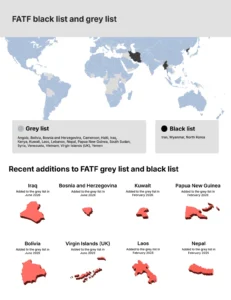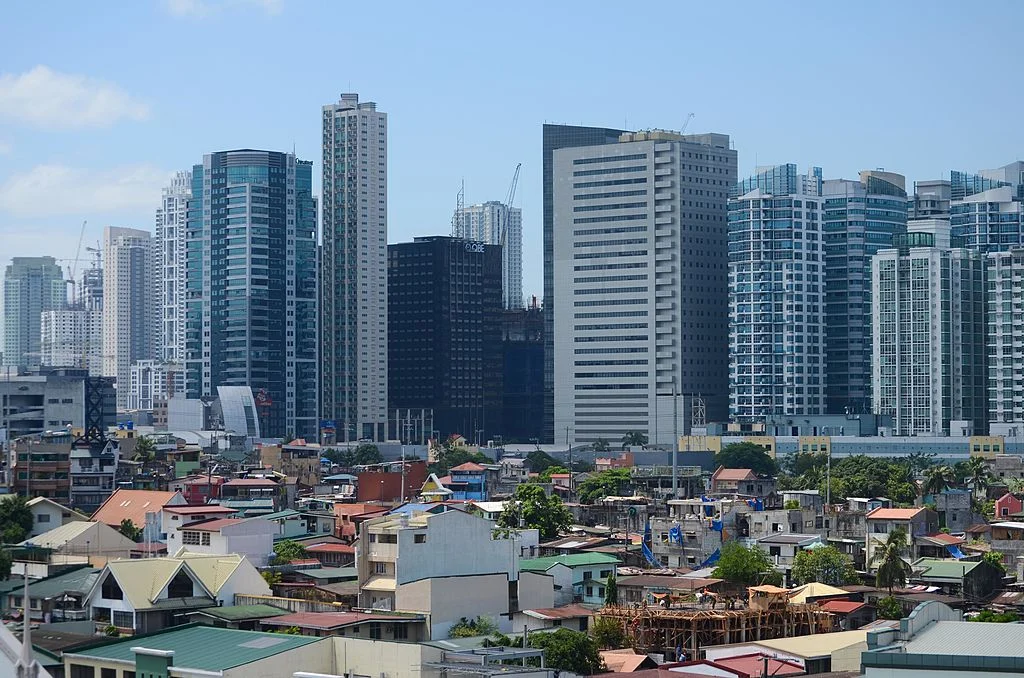
The Philippines officially exited the Financial Action Task Force (FATF) greylist in February 2025, marking the end of a rigorous four-year period of increased international monitoring. While the move was widely celebrated by policymakers and global investors as a victory for the country’s sovereign reputation and economic credibility, a granular analysis reveals that the true impact of the greylisting was felt far from the boardroom. For the millions of Overseas Filipino Workers (OFWs) who anchor the national economy, the designation functioned as a quiet, regressive tax, inflating the cost of sending life-sustaining remittances back to their families.
A Chronology of Supervision and Reform
The Philippines’ journey onto the FATF watchlist began in June 2021, when the global money laundering and terrorist financing watchdog determined that the nation had failed to address significant deficiencies in its Anti-Money Laundering and Countering the Financing of Terrorism (AML/CFT) frameworks. The FATF required the Philippines to execute an 18-point action plan, a tall order that demanded structural shifts in how the country monitored high-risk sectors.
The subsequent four years were defined by a series of legislative and regulatory pivots:
- June 2021: The FATF officially adds the Philippines to the "jurisdictions under increased monitoring" list, citing gaps in the regulation of casinos, junket operators, and the oversight of beneficial ownership.
- 2022–2023: The Bangko Sentral ng Pilipinas (BSP) and the Anti-Money Laundering Council (AMLC) begin intensifying enforcement, particularly regarding digital assets and Money Service Businesses (MSBs).
- July 2024: President Ferdinand Marcos Jr. announces a total ban on Philippine Offshore Gaming Operators (POGOs) during his State of the Nation Address, citing their involvement in criminal enterprises, scam hubs, and money laundering.
- February 2025: Following an on-site evaluation confirming the successful implementation of the 18-point action plan, the FATF removes the Philippines from the greylist.
- June 2026: The full implementation of the Anti-Financial Account Scamming Act (AFASA) marks a transition toward real-time, transaction-level oversight.
The Mechanism of De-Risking
To understand why the greylist felt like a tax, one must examine the phenomenon of "de-risking." When the FATF flags a jurisdiction, international correspondent banks—the vital pipes through which global finance flows—perceive the risk of doing business in that country as outweighing the potential profit. Rather than investing in the costly compliance measures required to monitor transactions from "high-risk" areas, many international banks simply terminate their relationships with local Philippine banks and money transfer operators.
This withdrawal creates a bottleneck. With fewer correspondent banking channels available, the remaining providers face higher operational costs, which are inevitably passed on to the end-users: the migrant workers. The World Bank has long observed that when de-risking occurs, the cost of remittances spikes. Given that OFWs sent home a record US$35.63 billion in 2025—representing roughly 7.3% of the nation’s GDP—even a marginal increase in transfer fees equates to hundreds of millions of dollars leaking out of the pockets of the working class and into the coffers of financial intermediaries.
Economic Implications and Capital Inflows
The impact of being on the FATF watchlist extends beyond the personal cost to the diaspora. International Monetary Fund (IMF) research on 89 emerging economies indicates that greylisting typically results in a decline in capital inflows by an average of 7.6% of GDP. Foreign Direct Investment (FDI) often contracts by roughly 3%, as investors seek jurisdictions with lower "compliance friction."
For a developing economy like the Philippines, the cost of being "grey" is not just the lost investment, but the lost efficiency of capital. The country has spent years attempting to align with the United Nations’ target of reducing remittance costs to 3% or lower. The greylist acted as a headwind, effectively counteracting the progress made by the BSP to digitize and lower the barriers for inward remittances from major hubs like the Gulf states, Singapore, and the United Kingdom.
Official Perspectives and the Challenge of Sustainability
Following the removal from the list, Governor Eli M. Remolona Jr. of the Bangko Sentral ng Pilipinas addressed the banking sector, emphasizing that the exit is not an invitation to lower one’s guard. In his March 2025 address, Governor Remolona underscored that the challenge lies in the "durability" of the reforms.
"The goal is not merely to satisfy the FATF for the sake of an exit," notes financial crime expert Iain Armstrong. "The goal is to move from a culture of remediation—where the country changes its laws only when the watchdog comes knocking—to a culture of integrated financial hygiene."
The shift toward the AFASA regulatory framework, which requires firms to monitor and act on suspicious activities "inside the transaction" rather than through retrospective reporting, is evidence of this new strategy. This proactive stance is intended to convince international correspondent banks that the Philippine financial system is fundamentally more secure, thereby reducing the likelihood of future de-risking events.
The Road to 2027
As the Philippines looks toward the next FATF evaluation in 2027, the stakes are significantly higher. The government has signaled that it will not revert to the lax oversight that allowed POGOs and other illicit financial conduits to flourish. The integration of artificial intelligence in monitoring, combined with a more aggressive stance against beneficial ownership opacity, suggests that the Philippine government is attempting to modernize its entire AML/CFT infrastructure.
However, the "two-cheers" approach—acknowledging the success of the delisting while remaining cautious—is the prevailing sentiment among analysts. The burden of proof remains with the Philippines. If the country can prove that its institutions have internalized these controls, it may finally break the cycle of high-cost remittances.
For the Filipino nurse in London or the construction worker in Riyadh, the success of these reforms is not a matter of high-level economic theory. It is a matter of household stability. Every basis point saved in transfer fees represents school tuition, healthcare for elderly parents, or savings for a future home. The "reputational win" touted by officials is, in reality, a long-overdue restoration of fairness for those who keep the Philippine economy afloat.
Ultimately, the lesson of the past four years is that systemic financial crime compliance is not a peripheral administrative task; it is an essential public service. By ensuring that the banking system is robust, transparent, and efficient, the state protects its most vulnerable economic contributors from being penalized for the failures of the system at large. Whether the Philippine financial sector can maintain this high standard of diligence in the absence of the constant threat of a FATF audit will be the true test of the next two years. For now, the country has earned a reprieve, but the pressure to deliver long-term, sustainable, and transparent financial governance remains as acute as ever.